

Lydall Industrial Filtration Textile Manufacturing (EMEA) Limited products
Standard Felt
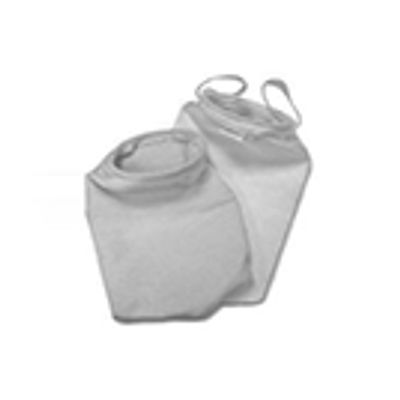
Lydall - Liquid Filtration Strainer
Lydall Industrial Filtration offers a comprehensive range of strainer felts designed to cover a very wide range of liquid filtration applications. The standard media are made from polyester, polypropylene or nylon in scrim supported and Fibrelox™ forms depending on the end application. Other fibers can be supplied subject to minimum order constraints. As these materials are used in a very specific type of filter they are almost always used at widths of 600mm and so are held in stock at that size.
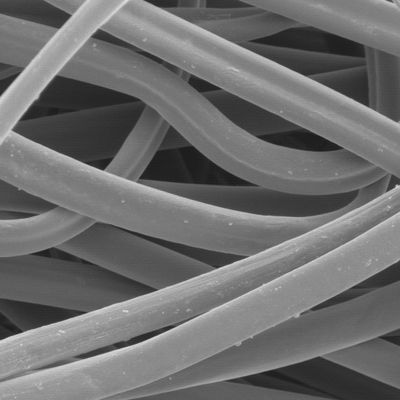
Lydall - High Temperature Meta Aramid Fiber
Meta Aramid is a high temperature fiber, suitable up to 200°C in dry conditions; care is needed when used in moist environments at high temperatures as it is prone to hydrolysis which will chemically degrade the fibers. The original fiber was known as Nomex from Du Pont though today a number of alternative fibers with the same basic chemistry are available so many applications simply specify `aramid`. The fiber is self-extinguishing with an LOI of around 30%.
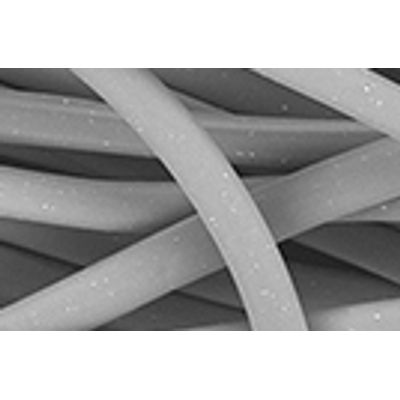
Lydall - Polyester Filter Media
Polyester is the most versatile, most cost-effective and most widely used filter media for dust collection. It is strong, abrasion resistant can work up to 150°C and has good resistance to common acids, solvents and oxidizing agents. Its one weakness is a tendency to hydrolyze which results in a loss of strength and toughness as the fibers break down and turn to powder. Polyester, being a `commodity` fiber, is available in a significant range of deniers (effectively diameters) and so a wide range of needlefelt products can be designed to match the demands of the filter; from very high collection efficiency (with very fine fibers) to low efficiency products (using coarse fibers) where flow is more important than collection. A wide variety of chemical and thermal treatments are available for polyester, the most common being superglaze to improve dust release and liquid repellency to assist with sticky.
Lydall - High Temperature Polyimide Fiber
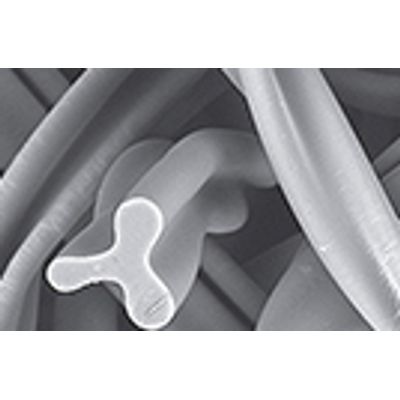
Polyimide is a high temperature fiber which under dry conditions can be operated up to 230°C. It also benefits from a tri-lobal cross section which greatly enhances its filtration efficiency to the point that it is sometime used with much less expensive fibers to boost dust collection. In this application it usually forms a cap on the surface of the felt to exploit this property effectively. It is a fiber with good chemical and thermal resistance, with only PTFE really exceeding it. Some care is needed with oxidizing agents such as NO2 and the fiber can be sensitive to hydrolytic attack in hot wet conditions.
Lydall - Chemical Resistant Polypropylene Fiber
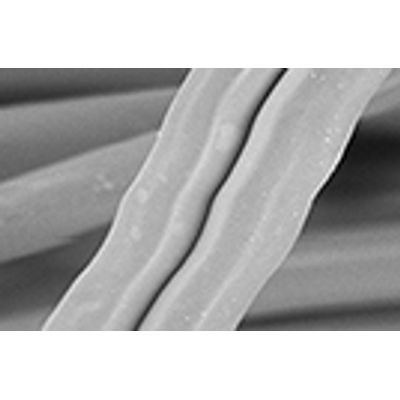
Polypropylene is the lowest rated common fiber as far as temperature is concerned, but it exhibits one of the best chemical resistances, properties which match well with many specialist industries. Under dry, non-aggressive conditions it will operate continuously at 90°C. It is a very low density fiber (it floats in water) and as a consequence it tends to produce quite thick felts for a given area weight; around 30% thicker than polyester. Due to their chemical structure, the fibers don`t hydrolyze, their weakness is a susceptibility to oxidation, so care is needed if strong oxidizing agents are present.
Performance Felt

Lydall - Model Checkstatic - Anti-Static Filter Media
Many dusts are prone to the build-up of static electricity. Flour is perhaps one of the best known. Historically explosions from handling powder were fairly common. Perhaps one of the most famous was in Washburn, UK, A Mill where 18 people were killed and 6 mills were destroyed in total. To reduce these dangers anti-static filter media were developed, allowing the dissipation of any charge which may have been built up on the bags.
Lydall - Model MicroFelt - Fiber Technology for Dust Particle Filtration
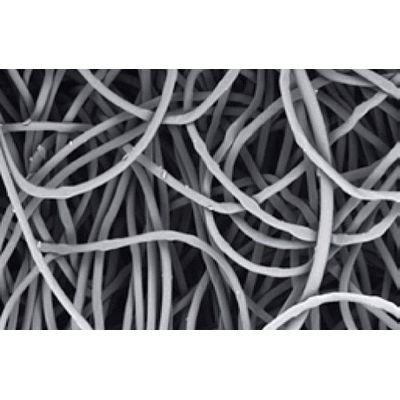
Tighter environmental legislation and a more responsible approach to pollution have driven a shift to ever lower emissions from filter units. A simple, cost-effective route is to reduce the coarseness of the fibers in the product in order to reduce the pore size of the felt. This then captures smaller dust particles with the benefit of lowered emissions.
Lydall - Model Glasstech - ePTFE Laminated Glass Fabric Filtration Systems
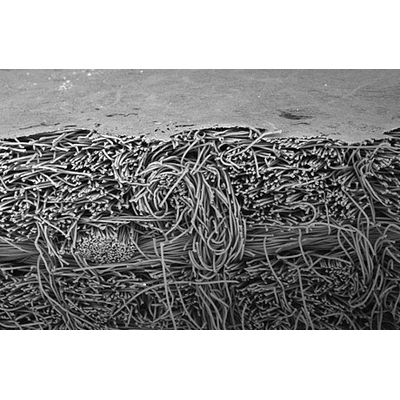
Glasstech products are one branch of the Duotech range of ePTFE laminated products, and typically employ impregnated woven glass fabrics as the support for ePTFE membranes. In these systems, the filtration is performed by the membrane which is mechanically supported by a woven fiberglass substrate. Most applications either use a lightweight system for reverse air cleaning mechanisms or a heavyweight quality to stand up to the additional rigors of pulse jet cleaning.
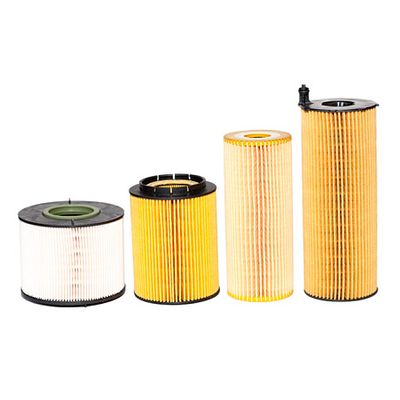
Lydall - Model Pleatlox - Pleatable Filter Media
As process technologies within the Air Pollution Control industry continue to evolve, increased demands for advancements in filter media performance must be met. In response to this challenge, Andrew Webron Limited is now proud to introduce Pleatlox - a complete line of pleatable filter media for today`s pleated bag or cartridge manufacturer. Using the versatility of the needlepunch nonwoven process, combined with unique fiber blends and proprietary fabric constructions, a Pleatlox media is now available for use in any environment and across all dust collection applications. Today, Pleatlox pleatable products are providing filtration solutions in industries such as Agricultural, Chemical, Food and Pharmaceutical, Rock Dust, and Power Generation. Pleatlox is available in Polyester, Polypropylene, Aramid, and PPS.
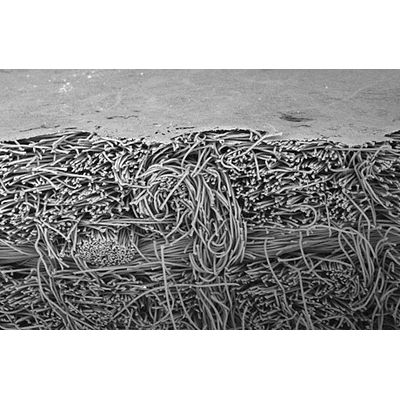
Lydall - Model Duotech - High-Performance Filter Media
A high-performance filter media delivering a host of benefits for industrial dry filtration applications. Each product in the Duotech range comprises a base textile substrate onto which an expanded microporous PTFE membrane is laminated. The membranes we employ are able to arrest very fine dust particles on their surface whilst being permeable to gas through the billions of tiny pores that make up their construction. The membrane is laminated to a substrate for reasons of support alone with particulate in the process gas being collected on the surface of the membrane with no reliance on the formation of a surface cake for collection efficiency, especially useful when considering non-agglomerative free-flowing dusts. The low surface energy of PTFE ensures excellent cleanability with near complete removal of dust from the filter surface at each cleaning cycle.