


Merck KGaA, Darmstadt, Germany
- Home
- Companies
- Merck KGaA, Darmstadt, Germany
- Applications
2 Applications found

Merck KGaA, Darmstadt, Germany applications
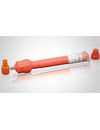
Isocyanates are used as a raw material to produce a number of products . Personal exposure can occur while the products made with isocyanates are being applied, or when the materials are removed by grinding or thermal degradation. Workers who are exposed to these compounds are at risk for respiratory disorders and asthma. The highly reactive nature of the isocyanate compounds and the low occupational exposure limits put high demands on both sampling and analytical techniques for monitoring of isocyanates in air.
We investigated the performance of the LC-MS and LC-MS-MS methods in the analysis of isocyanates using the new ASSET™ EZ4-NCO Dry Sampler. We found that the analytical method can successfully reach the quantitation limit for most isocyanates of 5 ng/mL in the final sample when LC-MS-MS analysis was used and the quantitation limit of 10 ng/mL when LC-MS analysis was used. All 11 compounds were well-resolved chromatographically using a 15 cm Ascentis Express C18 column.
Airborne aldehydes and ketones are collected by passing air through a cartridge containing 2,4-dinitrophenylhydrazine (DNPH). Carbonyl compounds react with the DNPH to form hydrazones, which are immobilized on the cartridge. These compounds can be easily eluted from the cartridge with acetonitrile and analyzed by HPLC with UV detection. Traditionally, this analysis including the workup contains a series of manual steps, which can become time-consuming and could incur experimental error.
Automating the extraction of LpDNPH S10 cartridges and putting it in-line with the HPLC analysis will significantly reduce manual labor using this technique and this will improve reproducibility of the method by reducing potential experimental errors by the operator. The automation and unattended operation of the method leads to high throughput for determining airborne formaldehyde and acetaldehyde.