

Mid-Mountain Materials Inc. articles
Commodity fabric coatings like polyvinyl chloride (PVC) and polyurethane (PU) are used in many different applications, but silicone-coated textiles have grown substantially in popularity over the years. Silicone coated fabric is used in a range of industries including aerospace, aluminum, automotive, oil and gas, and even food industry applications. The composition of silicone fabrics largely determines performance, with configurations ranging from 100% silicone to fabric topcoats.
Global spending on oil and gas production dropped historically in 2020, by an estimated 10%, with demand for fuel and travel dramatically decreasing across the globe. Although oil prices have begun to slowly increase since November, they are expected to remain below pre-pandemic levels for some time.
However, investment in renewables and other clean energy is increasing, meaning emission control is more important than ever. Companies face a new pressure to improve returns and control
Gretchen Reimbold
Maintaining national rail infrastructures is an extraordinarily difficult task. The U.S. rail network comprises almost 140,000 miles of track, encompassing freight, intercity, and passenger railroads. Each of these sees intensive daily use. As much as five million tons of freight and around 85,000 passengers are transported by rail every single day. That volume of traffic puts a significant strain on track components.
Gretchen Reimbold
Air leakage control is a critical activity for a wide spectrum of businesses. Contractors may be tasked with sealing building envelopes to prevent heat loss, thus energy wastage. Specialty manufacturers may be called upon to deliver precision fabricated parts that target specific pain points and air leakage paths. The only way to gain a deep understanding of where air infiltration, heat losses, or gas/particulate emissions are occurring in your workspace is through a thorough surveyance.
Gretchen Reimbold
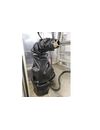
Automation has been a key performance driver in virtually all industries. Nowhere is this more apparent than on the construction line where complex yet repetitive assembly tasks have been delegated to robotic systems. You can largely trace the genesis of industrial robots to the 1960s and the early days of Silicon Valley; when high-performance semiconductors and the birth of the integrated circuit caused a boom in computer engineering.
Deploying robots in construction and
Gretchen Reimbold
Lightweighting is a critical part of the mandate for aeronautic engineers, who constantly tread a careful line between cost, efficiency, and performance. The price of getting it wrong can be catastrophic. That is why careful attention is paid to each and every component to ensure the comfort and safety of passengers and crew throughout the duration of their flights.
Constantly vetting the underlying fabricated parts and subsystems is a continuous process for commercial aircraft manufa
Before discussing aluminum protection, it is important to offer an explanation of what is meant by ‘primary’ and ‘secondary’ in the production, treatment, and application of the metal.
The term ‘primary aluminum’ refers to the forging of the metal from raw alumina. Then, utilizing the Hall–Héroult electrolytic reduction process, the collaborative compound is smelted to create aluminum alloys.
‘Secondary aluminum’ inv
Mid-Mountain’s latest offering of flame-resistant fabrics for pallet covers was created as a direct response to the very real risk of sudden fires which have been known to break out in the transportation of dangerous goods.
Unfortunately, freight fires are more common than you may think, and, as such, we have worked tirelessly to manufacture a material that can mitigate the risk of a major blaze by containing a fire and keeping it separate from other potentially flammable fabric
Silicone rubbers are highly stable elastomers that are broadly used in industrial engineering and sealing applications. They are a viscoelastic class of synthetic polymers composed of silicone with added organic functional groups. Also known as polysiloxane, silicones comprise an alternating molecular chain of silicon (Si) and oxygen (O). They are inherently lubricating and chemically inert. Adding organic functional groups, such as carbon (C) and hydrogen (H), to a polysiloxane backbone enha
Gretchen Reimbold
The term “industrial fabrics” covers a broad range of products comprised of high-performance raw textiles with a choice of end-use formats. This versatility enables one underlying material to service many different industries. For example, fiberglass can be modified to satisfy the requirements of applications in practically every market, from domestic to industrial insulation.
Industrial Fabrics: The Importance of Coatings
Fiberglass is the eponymo