


NOVOTEST products
Concrete Test
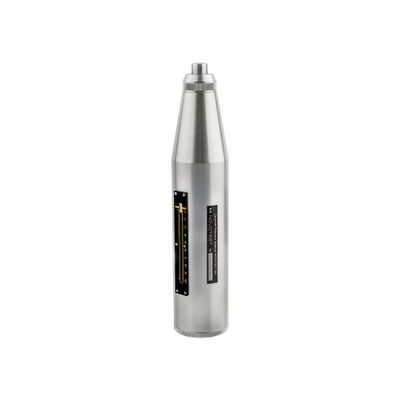
NOVOTEST - Model SH - Concrete Rebound Hammer
Concrete rebound hammer (sclerometer) – is a device for concrete and other building materials strength testing. The engineer Ernst Schmidt invented the construction of the sclerometer. The method is based on the impacting the impact plunger on the concrete surface with predetermined (normed) impacting energy and subsequent measuring of the height of the striker rebounding. The height of the striker rebounding will be proportional to the strength of concrete. The strength of concrete is determined with the calibration charts that are supplied with the instrument.
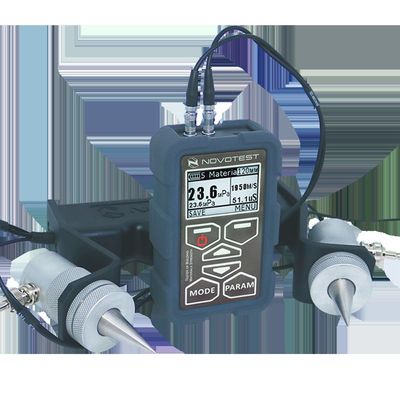
NOVOTEST - Model IPSM - Strength Meter
Strength Meter NOVOTEST IPSM is an Ultrasonic Pulse Velocity (UPV) tester for finding defects in concrete products, bricks and other solid materials based on the analysis of the propagation of ultrasonic waves in the material. Two transducers are connected to the device (transmitter and receiver), during operation, the device gets the time of propogation ultrasonic waves between the transducers, having a fixed base (distance between the transducers), the device calculates the velocity of ultrasonic waves in the material, based on which it is possible to build a correlation with the testing parameter. The method allows users to evaluate such parameters as strength, density, elastic modulus, sound index and other parameters that have a correlation with the velocity of propagation of ultrasound in the material. The device meets the ASTM C597-16 (Standard Test Method for Pulse Velocity Through Concrete).
Magnetic Testing
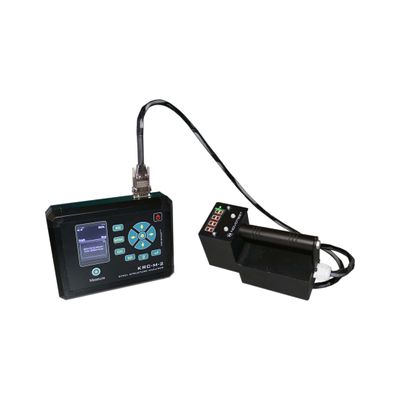
NOVOTEST - Model KRC-M2 - Steel Structure Analyzer (Coercive Force Meter)
Steel Structure Analyzer NOVOTEST KRC-M2 is designed for measuring coercive force of metal products in accordance with IEC 60404-7 and is used for non-destructive testing of chemical-thermal, thermal and thermomechanical treatments, evaluation of mechanical properties and residual stresses.
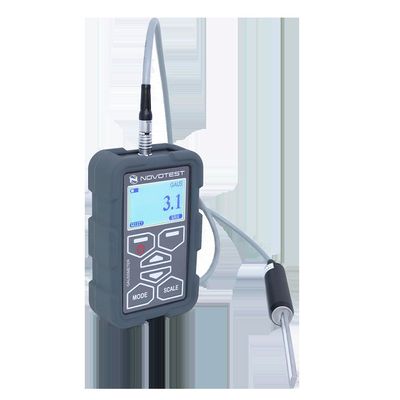
NOVOTEST - Model MF-1M - Magnetometer
Magnetometer NOVOTEST MF-1M is designed to control the residual magnetization and study the magnetic heterogeneity of the surface of ferromagnetic products, to control the level of residual magnetization before welding gas and oil pipes, to control the induction of static (DC), alternating (AC) and pulsed magnetic fields generated by various magnetic and electromagnetic devices, such as magnetic particle flaw detectors, magnetic tables and chucks of grinding machines, demagnetizing devices, permanent magnets etc.
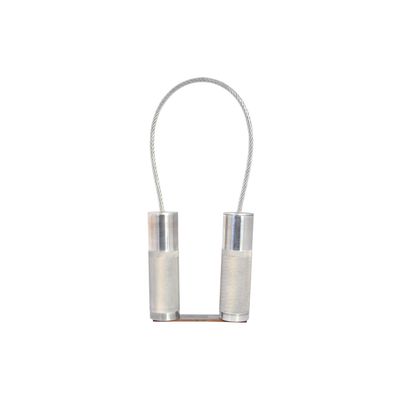
NOVOTEST - Model MPD-DC - Magnetic Flaw Detector (Magnetic Yoke)
Magnetic Flaw Detector (Magnetic Yoke) NOVOTEST MPD-DC applies in circumstances where the electric equipment mustn’t be used or prohibited by the rules. Device is used during magnetic particle inspection (where it is applicable) according to ASTM E 709, ASTM E 1444, ASME Section V Article 7 and MIL-STD-1949. Magnetic Flaw Detector NOVOTEST MPD-DC is used to detect surface and subsurface cracks of all kinds (flake, lack of fusion welded joints, tears etc.) in structures made of ferromagnetic materials. The device has two permanent magnets placed in a cylindrical shells, which are connected by a flexible magnetic wire, so it can be used for MPI of remote locations, corner welds and other products of various shapes and sizes.
Hardness Testing - Portable Hardness Testers
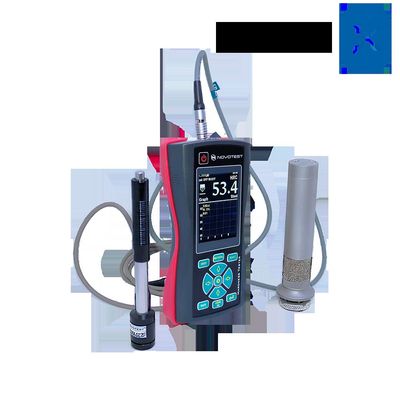
NOVOTEST - Model T-UD3 - Combined Hardness Tester
Combined Hardness Tester NOVOTEST T-UD3 combines two methods of measuring hardness by an indirect method: Ultrasonic Contact Impedance (ASTM A1038) and Leeb (ASTM A956). This makes the device the most versatile portable device in the world.
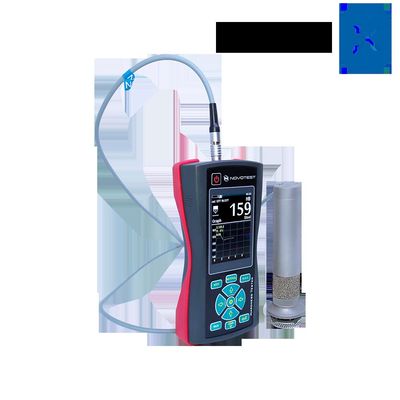
NOVOTEST - Model T-U3 - UCI Hardness Tester
The most popular portable hardness tester in the world is the Leeb hardness tester, however, there are tasks that using this method is very difficult or even impossible to solve. This is due to the physics of the method, which assumes the massiveness of the testing object, to ensure the inertness of the product when the Leeb’s impact body hits the surface with a given force. In order to solve a wider range of tasks on the rapid measurement of metal hardness, our company offers hardness testers that implement the method of ultrasonic contact impedance (UCI) in accordance with ASTM A1038. A vibrating rod (mechanical resonator) with a diamond tip acts as an indenter in these devices, when it indent into the material, the base frequency of the resonator changes, on the basis of which the hardness is calculated. This method has proven itself around the world and has been used in industry for over 50 years.
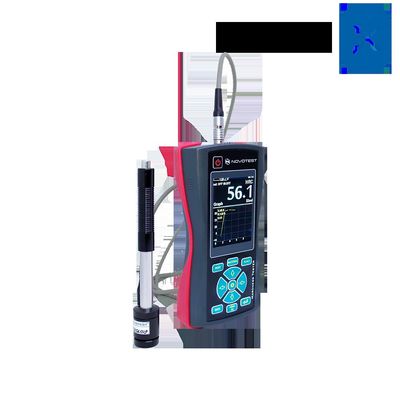
NOVOTEST - Model T-D3 - Leeb Hardness Tester
The most popular method in the world for testing the hardness of metals using a portable hardness tester is the Leeb method (ASTM A956). The so-called dynamic method for determining hardness is widespread due to its ease of use. The user does not need to have special skills and or knowledge in the field of hardness measurement, to carry out the measurement, it is necessary to charge up the impact body of the device’s probe, install the probe on the tested surface, press the release button of the probe and the hardness value will be displayed on the device screen.
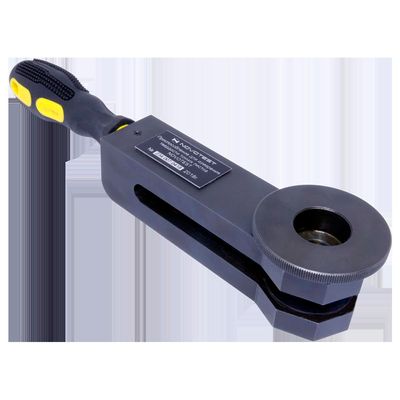
NOVOTEST - UCI Probe Test Stand
NOVOTEST UCI probe Test Stand is used to measure the hardness of superthin sheet products. It can be used with any U?I probes which are equipped with NOVOTEST hardness testers. The point is that the thin wall of the product, when the UCI probe indenter is indented into it, does not provide sufficient impedance (it deforms under the load of the probe). In order to compensate for this deformation, this device is used.
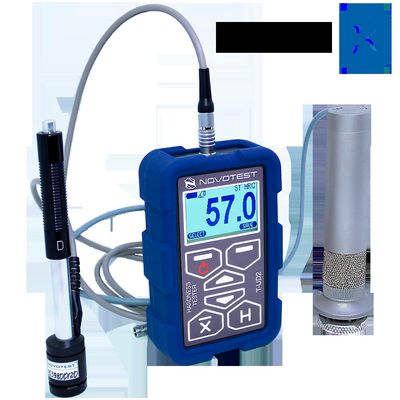
NOVOTEST - Model T-UD2 - Combined Hardness Tester
The Combined Hardness Tester NOVOTEST T-UD2 combines the advantages of two methods: U?I (ASTM A1038) and Leeb (ASTM A956), which makes it possible to solve almost any task of operational hardness testing. With this device, the user will be able to measure the hardness of both a large products with a rough surface and a small samples of complex shape and with a thin wall. This modification of the device has all functions for working with various materials and scales, which makes it an optimal device for non-destructive testing of metal hardness.