


Olson Instruments, Inc. products
Data Platforms
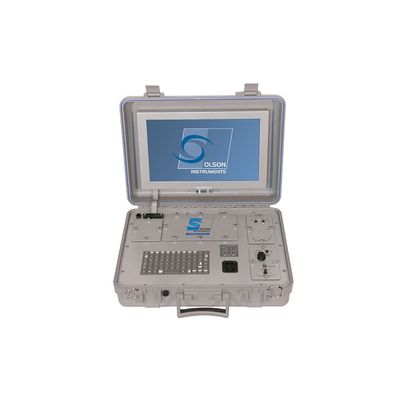
Olson - Freedom Data PC (FDPC) Multiple System Seismic Geophysical Platform
The ultimate in a professional, field ruggedized battery powered Nondestructive Testing & Seismic Geophysical Testing Platform...with several optional add-on test method capabilities! The Freedom Data PC (FDPC) multiple system platform provides the user with unmatched flexibility for stress-wave based NDT condition evaluation of concrete, masonry, asphalt, wood and other construction materials, as well as seismic testing of soil and rock. This platform provides complete data processing capability for nine different test method options as detailed in the tabbed charts below. By simply changing out the custom instrument modules, the user can quickly switch between tests using any of the available test method options purchased, while using similar software for data acquisition and analysis.
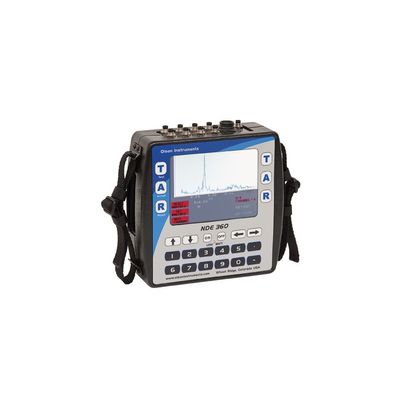
Olson - Model NDE 360 - Multiple System NDT Platform
The NDE 360 is the most versatile and expandable hand-held touch screen NDT Platform for Quality Assurance/Quality Control. Add on NDT Systems as you need them.
Seismic Test Systems for Platforms
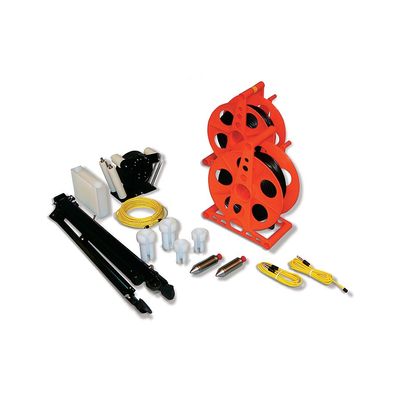
Olson - Crosshole Sonic Logging System
Olson`s Best Selling Nondestructive Testing System to Test Newly Placed Shaft Foundations. The Crosshole Sonic Logging system is the most accurate and reliable technique for assessing the integrity of deep foundation elements constructed on-site from concrete or grout. The system is designed for Quality Assurance (QA) testing of newly placed critical drilled shaft foundations and auger cast piles, but can also be applied to slurry walls, mat foundations, and mass concrete pours. Using water-filled access tubes, CSL testing provides assurance that the foundation concrete is sound with no defects such as soil intrusions, necking, sand lenses, voids, etc.
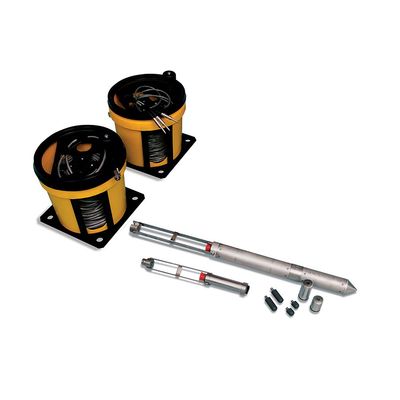
Olson - Crosshole and Downhole Seismic System
Crosshole and Downhole Seismic (CS/DS) investigations provide information on dynamic soil and rock properties.
Olson - Impact Echo (IE) System
Impact Echo (IE) investigations are performed to assess the condition or thickness of slabs, beams, columns, walls, pavements, runways, tunnels, and dams.

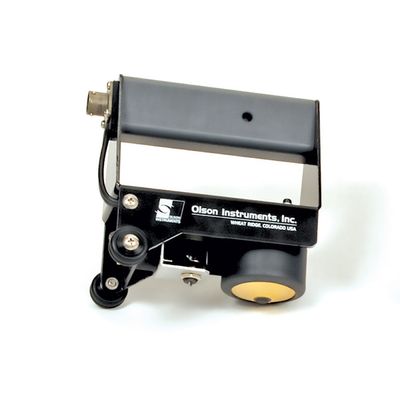
Olson - Impact Echo Scanning (IES) System
Impact Echo Scanning (IES) investigations are performed on large structural members with smooth concrete where shallow voids, honeycomb, cracking or delaminations are of primary concern. The Impact Echo Scanning (IES) system is designed for large area investigations of shallow voids, debonding/delamination, cracking, or honeycomb often found between an overlay on a bridge deck or surrounding dense rebar mats. IES is commonly used to evaluate post-tensioning (PT) cables used in reinforcing various structures and determining duct grout condition. The scanning technology allows tracing of ungrouted PT cables through slabs and beams. An advantage of the IES method is that only one side of the structure needs to be accessible for testing.
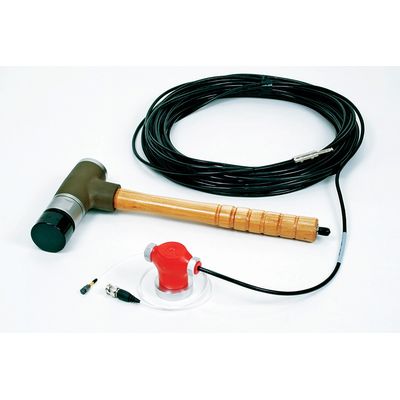
Olson - Sonic Echo/Impulse Response System for Pile Integrity Testing
Sonic Echo-Impulse Response is used for low strain integrity testing of piles and determination of deep foundation length. The Sonic Echo-Impulse Response test method (also known as the Pile Integrity Test, or PIT) is designed to determine the length and integrity of foundations when the top or part of the upper side of the foundation is accessible. This method can be used on both new and existing foundations and is performed by impacting the foundation and recording echoes from a defect or the foundation bottom with a nearby receiver(s). This Pile Integrity Test method works best for columnar type foundations such as piles and drilled shafts, but has also been used successfully on mat foundations, abutment walls, and similar structures. Sonic Echo-Impulse Response is applicable on concrete, wood, and round steel pipe foundations.
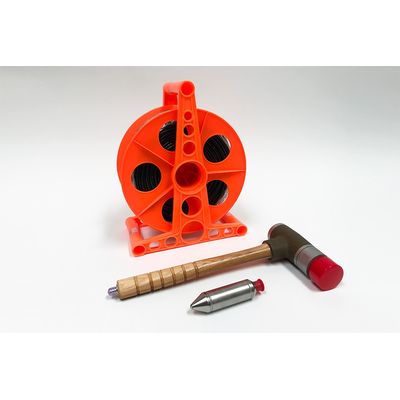
Olson - Parallel Seismic (PS) System
Parallel Seismic is more accurate, more versatile than other nondestructive surface techniques for determination of unknown foundation depths. Parallel Seismic (PS) systems are designed to determine the length and integrity of foundations when the top is not accessible or when the pile is too long and slender to test with echo techniques, or below a buried pile cap. Ultimately, Parallel Seismic testing provides information concerning the length and compressional velocity of foundations and can be used on concrete, wood, masonry, and steel foundations. This method also provides information about the soil below the foundation bottom.
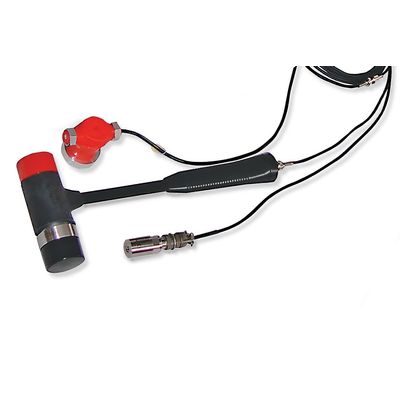
Olson - Slab Impulse Response (SIR) System
The Slab Impulse Response method is excellent for evaluating the condition of slab subgrade support. The Slab Impulse Response (SIR) system is designed to identify subgrade voids below slabs-on-grade less than two feet thick. In addition, the Slab IR test method can be used on other concrete structures to quickly locate areas with delaminations or voids in the concrete, if the damage is relatively shallow. Slab IR can be performed on reinforced and non-reinforced concrete slabs as well as asphalt or asphalt-overlay slabs. The Slab IR testing method is often used in conjunction with GPR for subgrade void detection and mapping. Collecting Slab IR data at multiple, densely spaced locations can improve the conclusions by mapping relative areas of higher and lower mobility. Relatively low mobility (velocity/force) and flexibility (displacement/force) qualitatively indicates that such an area appears to be more solidly supported than an area with relatively high mobility and flexibility.
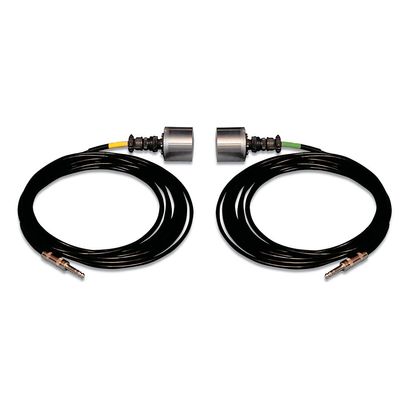
Olson - Ultrasonic Pulse Velocity (UPV) System
Ultrasonic Pulse Velocity (UPV) investigations are performed to assess the condition of structural members if access to both sides is available. Sonic Pulse Velocity (SPV) is performed on mass concrete over 10 ft (3 m) thick. The Ultrasonic Pulse Velocity (UPV) systems are designed to identify and map voids, honeycomb, cracks, delaminations, and other damage in concrete, wood, masonry, stone, ceramics, and metal materials. UPV tests are also performed to predict strength of early age concrete. The UPV methodology relies on direct arrival of compressional waves.