


OPSIS AB applications

Monitoring the air quality at and around airports can be done for several reasons. It may be a question of monitoring the pollutants that employees and passengers are exposed to, but it may also be a matter of studying the contribution of aviation and ground traffic to pollution. Regardless of purpose, monitoring can be a challenge. The location of the measurement site must be representative. A large number of gaseous components need to be monitored with high accuracy and high availability.
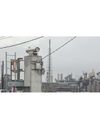
Benzene monitoring around refineries: Measuring benzene emissions from a refinery plant can be challenging, but OPSIS makes it easy. Benzene is a liquid hydrocarbon that evaporates rapidly when exposed to ambient air. It is one of the more common substances used in the chemical industry and is particularly prevalent at refineries and similar operations. Benzene causes cancer and is therefore subject to monitoring.
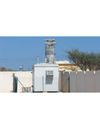
Monitoring of fugitive emissions from industrial facilities. Most of the OPSIS gas analysis systems are based on monitoring methods with open measurement paths. This provides a perfect tool for monitoring the air quality and detecting any gas leaks from industrial facilities so that staff and nearby residents can be alerted and measures can be taken quickly.

OPSIS offers flexible monitoring of particles in the ambient air, both for determining the concentrations in real time and through collection on filters that are also preserved and can be used to determine the composition of the particles.

Port environments can be particularly exposed to air pollution, both in gaseous form and as particles. The ships are an obvious source, but both activities related to the unloading and loading of goods and land traffic to and from the ports can also contribute. Monitoring the concentration of air pollutants can be done both in order to monitor the environment in general and to map the sources. In the case of emissions from ships, it may be of particular interest to monitor sulfur dioxide (SO2) levels near the stacks to confirm that low-sulfur oil is being used or that desulfurisation is activated.

How clean is the ambient air in our cities? A common strategy for monitoring the air quality in a city is to measure at ground level where people actually live and are at risk of exposure to air pollution. Often, there is also a requirement that the measurements are made in a place where you can expect the air pollution to be relatively high, which often means along one of the city`s busier streets. Limit values for air quality often apply precisely to these locations. OPSIS offers several monitoring systems for this type of monitoring.

The almost closed environment means that high levels of air pollution often occur inside the tunnels. The limit values for the pollutants are often higher in tunnels than in open ambient air because the exposure time is normally limited, but it may still be necessary to monitor that the limit values are not exceeded. Traffic tunnels often have to be provided with ventilation to keep the levels of air pollutants below the applicable limit values. To save energy, however, it is common not to operate the fans more than necessary. Only when the pollution levels approach the limit values are the fans started and then they run until the pollution levels drop. The measurement results from the monitoring can then also be used as a control signal for the ventilation.

There can be several purposes for monitoring the air quality in an urban area. If the aim is to assess what the residents are exposed to in the worst case, a so-called street-level monitoring is carried out. If the aim is to monitor the general levels of air pollution and follow up long-term trends, you should instead monitor further away from the busiest roads, for example at roof level.
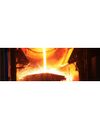
Process monitoring and monitoring of emissions from aluminium smelters can be a challenge due to high concentrations of for example hydrogen fluoride (HF) and dust. The use of sampling systems in such environments requires a lot of maintenance and is therefore costly. Such systems can also be unreliable. OPSIS offers better options.

Gas analysis in brick manufacturing: Process control and emissions monitoring at brick plants can be challenging due to high concentrations of hydrogen fluoride (HF) and dust. The use of extractive monitoring systems in such environments requires a lot of maintenance and can still cause major operational disruptions. However, the contactless technology offered by OPSIS solves the problems.