


OPSIS AB articles

Certification of management systems and products was probably not the first thing in mind when OPSIS was started more than 40 years ago, but it quickly became clear that it was not enough to simply promise that OPSIS is solid and the products worked. Most of the customers expected someone else to certify this.
This “someone else” turned out to be sev
Bengt Löfstedt

Aluminium is very suitable for recycling and remelting into new aluminium products, but there is also a lot of new production. In the latter case, aluminium is mainly extracted from the mineral bauxite.
In a first step towards metallic aluminium, bauxite is ground and mixed with sodium hydroxide and exposed to pressure and high heat. The result is aluminium oxide, also called alumina. In a second step, the alumina is subjected to electrolysis in a bath (a “pot&rd
Bengt Löfstedt
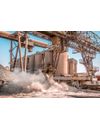
Cement production is a huge global industry. However, the basic production principles are simple: ground limestone is exposed to very high temperatures, close to 1,500 °C, whereby calcium carbonate reacts with silica minerals forming various calcium silicates.
Additives are then blended in to give the desired properties like curing time. Mixed with water, sand and gravel, the cement forms concrete which has almost unlimited usage areas within the construction ind
Bengt Löfstedt

Left to its own, the air quality inside a road tunnel would eventually make the tunnel impossible to travel in. The visibility would be impaired by high levels of particulates, and it would be difficult to breathe. Even relatively short exposures to the potentially very high levels of air pollutants could also have long-term health effects.
This is the reason why there are regulations on how bad the air quality may get inside the tunnels, and why there are big fans to
Bengt Löfstedt

In cold-climate areas, it is common to find vehicles with studded tyres during the winter season. This facilitates driving on icy roads. However, the use of such tyres causes wear of both the studs and the surface of the roads, and the result is high amounts of dust, notably in the shape of PM10 and finer fractions. Frequent sanding of the slippery roads also adds to the dust.
Initially, this may be less of a problem since the particles often become bound to the road surface by snow an
Bengt Löfstedt
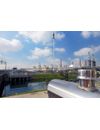
Many of the chemicals in play at chemical industries can be directly or indirectly harmful to living organisms. It is therefore essential to minimize planned emissions to air and to protect humans and the environment around the industries in case of unplanned releases of process gases.
Fence-line Monitoring
A clever approach to air quality monitoring at an industry is fence-line monitoring. It is what it sounds like: monitoring takes p
Bengt Löfstedt

In the introductory part of this short blog series (click here to read >>), we took a general look at the European emissions trading system ETS. However, it gets a bit more complicated than this through a variety of exemptions but played correctly, it also gives an opportunity to reduce the number of required emission permits and thereby also the associat
Bengt Löfstedt

A few years ago, OPSIS introduced the DX100 dioxins sampler primarily intended for waste-to-energy facilities required to monitor and report dioxins emissions. With a small extension, the same device can also be used for sampling of carbon dioxide (CO2). The system is also available for CO2 sampling only under the product name CO200. We are going to take a closer look at the cases where CO2 sampling is of interest, but first an introduction to the EU ETS.
Bengt Löfstedt

In April 2024, the EU Parliament adopted a provisional agreement with the EU countries on improved air quality in the EU. For a formal adoption, the text needs to be translated and confirmed by the Parliament and approved by the EU Council. These final pieces are expected to fall in place in October 2024.
New Air Quality Standards
The new directive replaces the current directives on air quality 2004/107/EC and 2008/50/EC, as amended. From a standa
Bengt Löfstedt
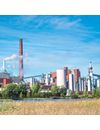
The smell associated with pulp production originates from different sulfur compounds. The most well-known is probably hydrogen sulfide, H2S (H-S-H) but there are also compounds like methyl mercaptan (CH3-S-H), dimethyl sulfide (CH3-S-CH3), and dimethyl disulfide (CH3-S-S-CH3). These four substances are collectively referred to as “total reduced sulfur”, TRS. Emissions of TRS together with the usual
Bengt Löfstedt