


- Home
- Companies
- Oxybee Solutions
- Products
Oxybee Solutions products
Waste Water Treatment System
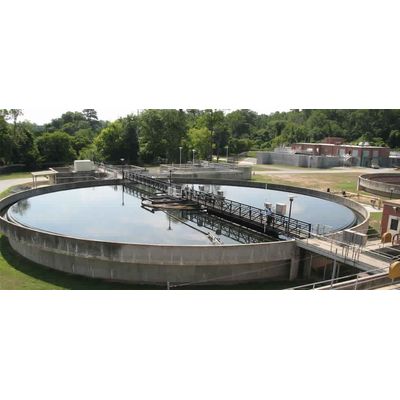
Oxybee - Sewage Waste Water Treatment - Activated Sludge Process (ASP) Plant
This is a conventional process to treat the hospital wastewater. In this process the wastewater is treated in open tank called aeration tank and air is supplied either through fixed / floating surface aerator or air blower to provide oxygen for the aerobic microbes. Around 12-15 hour hydraulic retention time is provided for the treatment of wastewater. The microorganisms utilize the oxygen in the air and convert the organic matter into stabilized, low-energy compounds such as NO3, SO4, and CO3 and synthesize new bacterial cells. The overflow carried to the adjacent clarification system contains active microbes and is required to be recycled back to aeration tank to maintain specified critical performance rating parameter like MLSS and F/M ratio.
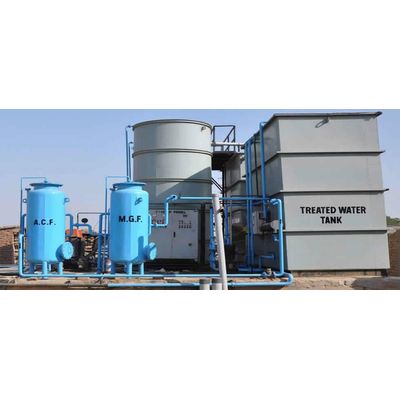
Oxybee - Moving Bed Bioreactor (MBBR)
The FBR process is the latest advance in attached growth aerobic biological treatment technology. FBR employs RING PAC MEDIA, neutrally buoyant bio film carrier elements, to achieve outstanding BOD/COD removal productivity from a compact bioreactor. In Fluidized Bed Reactors, the liquid to be treated is pumped through a bed of small media at a sufficient velocity to cause fluidization. In the fluidized state the media provide a large specific surface for attached biological growth and allow biomass concentrations in the range 10-40 kg/m3 to develop.
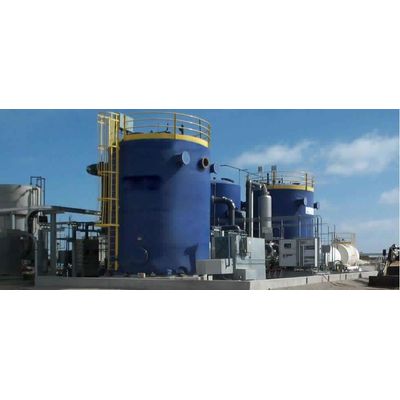
Oxybee - Fluidized Aerobic Bed Reactor (FAB)
The FBR process is the latest advance in attached growth aerobic biological treatment technology. FBR employs RING PAC MEDIA, neutrally buoyant bio film carrier elements, to achieve outstanding BOD/COD removal productivity from a compact bioreactor. In Fluidized Bed Reactors, the liquid to be treated is pumped through a bed of small media at a sufficient velocity to cause fluidization. In the fluidized state the media provide a large specific surface for attached biological growth and allow biomass concentrations in the range 10-40 kg/m3 to develop.