


Packaging Technologies & Inspection (PTI) products
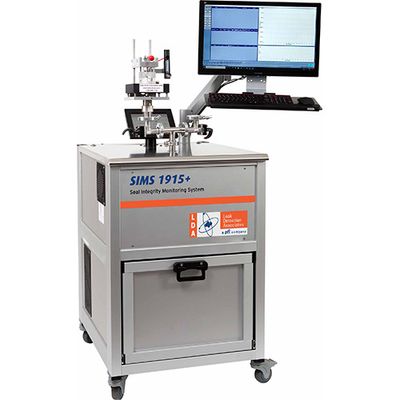
Model SIMS 1915+ - Seal Integrity Monitoring System
The most current model, the Seal Integrity Monitoring System (SIMS) 1915+, is the ideal choice for your helium based leak detection system. Using helium as the tracer gas, packages can be quantitatively tested to levels far exceeding the vacuum bubble and dye penetration test methods. This quantitative approach allows direct comparison across various packaging materials and forms, production line settings and stability storage conditions, supporting the entire lifecycle.
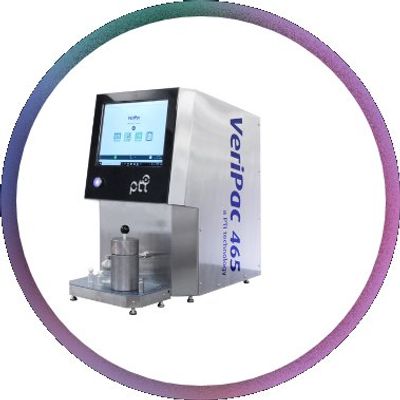
Vacuum Decay
Vacuum decay is a container integrity test method taking advantage of the fundamental physical properties. This test method which was proved over decades has been improved with the advancement of technology. Vacuum decay has been substantiated as one of the most practical and sensitive vacuum-based leak detection method. This test gives a reliable, reproducible, repeatable and accurate quantitative result with a pass or fail determination. Packages can be non-destructively evaluated using the VeriPac inspection method which is based on vacuum decay technology. Package types include filled and sealed rigid, semi-rigid and flexible packaging made of non-porous or porous materials. This vacuum decay method developed by PTI’s VeriPac instruments are capable of detecting leaks in the single digit micron range.

MicroCurrent HVLD Technology
Referenced in the new USP <1207> Chapter Guidance as a deterministic test method for container closure integrity testing. PTI packaging and inspection systems revolutionized the conventional HVLD method and introduced a groundbreaking new technology for the integrity testing for all parenteral and biological products including low conductivity liquids such as sterile water for injection. This unique method known as the Microcurrent HVLD utilizes about 50% less voltage and exposes the product and environment to less than 5% of the voltage when compared to conventional HVLD solutions.
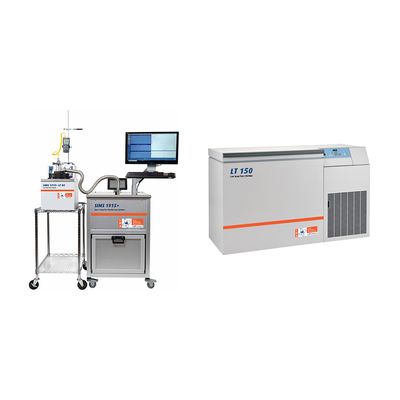
Low Temperature Test Systems
Complex drug and biologic formulations have resulted in a continuous drive toward deeper cold storage in an effort to maintain product quality attributes. In an effort to maintain product quality attributes of increasingly complex and delicate formulations, life science companies continue to drive toward deeper cold storage. These products, often cell or gene therapies, or proteinaceous in nature, often require storage at temperatures below -20°C, and are involved in storage and distribution environments incorporating dry ice (~-78.5°C), or even liquid nitrogen (~-200°C).
HSAM and Vial Filler
A critical component of a Leak Detection Associates custom helium leak testing system is the Head Space Analyzer Module (HSAM). The most up to date version of this unique device is the Model VM-2 which was designed by Leak Detection Associates. The HSAM features a probe that is the critical component for the determination of the helium concentration in the headspace of the container system. Fitted with an Integral Calibration Chamber that has a Calibrant Gas Flow Control Valve and equipped with a Universal Holder that enables various diameters systems to be tested, this system is easy to use and operate. Each unit delivered by Leak Detection Associates will come with three (3) Puncture Probes (two spares).

Helium Technology
Helium leak testing is defined as the act of finding leaks in different types of enclosed or sealed systems using helium as a “tracer” gas and its concentration is measured as it escapes due to leakage. A vial, consisting of a container and elastomeric closure, is a good example of a package system. A vial is helium-filled & is subjected to vacuum. The amount of helium escaping that package is quantitatively measured and stated as a leak rate. Other examples include a prefilled syringe, a foil pouch or a cold form blister card. Each of these package types is designed and intended to keep the drug product contained while keeping out any detrimental environmental contaminants, such as debris, microorganisms, or even gases. The helium leak detection method has the sensitivity to evaluate each of them.
Sniffer Probe Helium Leak Detection
Using the sniffer probe, the helium leak detector is able to detect specific amounts of helium leaking from a defect in a pressurized system. Generally, sniffer leak detection is used to locate leaks in parts or systems so that they can be identified and repaired. The part or system is first pressurized with the tracer gas. The operator then systematically scans suspect leak locations with the sniffer probe in order to identify a possible leak. The skill of the operator and the technique used can dramatically affect the results which is why the sniff probe method is not considered a quantitative leak testing method. Nevertheless, with the use of calibrated instruments, calibrated leak standards, and well trained operators, quantitative measurements can be made. The sniffer probe method can detect location-specific leaks over 100 times smaller than what can be detected using the old and outdated bubble method.
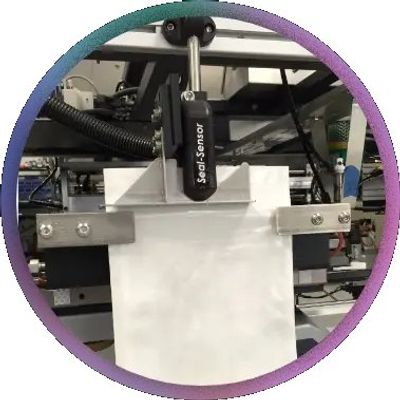
Seal Quality Inspection with Airborne Ultrasound Technology
Airborne ultrasound is a referenced technology in the new USP Chapter Guidance as a deterministic test method for seal quality testing, is an ASTM Test Method F3004 and FDA Recognized Standard for seal quality integrity testing. A pouch seal is a structural element that joins flat film material, and a component designed to close a pouch airtight. Traditional test methods e.g. peel strength or burst, can measure the joint strength of the seal, using destructive methods. However, this type of testing is often unreliable. A strong seal is not necessarily an airtight one, and the flow of gas or liquid through the seal (leak) is just one type of seal defect. As such, there is a fundamental challenge to any leak testing method, whether it is a fish tank-bubble, vacuum differential, or manual visual method, none of these methods detect non-leaking seal defects.
Package Test Fixtures for Helium Leak Detection
Out of the box, a Helium Leak Detector does not enable leak testing on a container or package system. An HLD is just one piece in an component matrix that creates a usable system, much the same way a display is part of a computer system. It is a useful and necessary component, but as an individual part, does not offer value. What sets Leak Detection Associates apart from instrument suppliers is our ability to take a helium detector, and build a custom leak testing system around it to meet client needs. A key contributor to this is the engineering and development of custom fixtures tailored to the component to be tested. With more than 20 years of design experience covering almost every conceivable container / package type material of construction, the Leak Detection Associates Engineering team can ensure that the helium leak system we provide to your company will be customized to your study goals and package configuration.
Pressure Decay Leak Testing
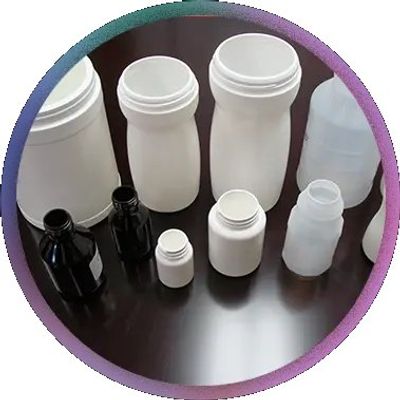
Various applications like plastic, blow molding, food, beverage and pharmaceutical industries require online leak testing. Leak detection of empty containers before the filling and sealing process is also essential step to assure complete container integrity. PTI`s VeriCon Series offers a complete line of leak tester configurations to accommodate various container specifications and application specific test performance using pressure decay leak testing method.