

PCA NV products
Filtration
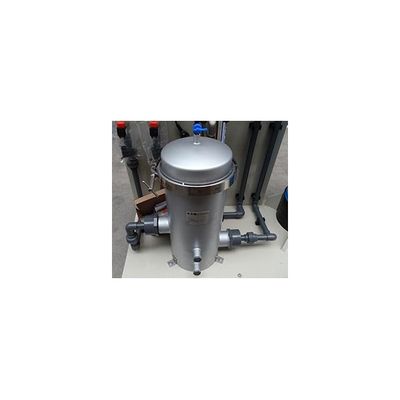
PCA - Filter System
A filter is a way to separate based on the particle size. The principle is the same as a sieve. Particles that are too big are withheld by the openings, while smaller particles or the fluid itself can pass through. Despite the fact that this seems to be a simple principle, the choice of the right filter is not easy.

PCA - Sand Filter Separation System
Sand filter separation is based on the size of the particles. In a sand filter, a container or vessel is filled with filter media (sand). The treated liquid flows from top to bottom through the filter media.
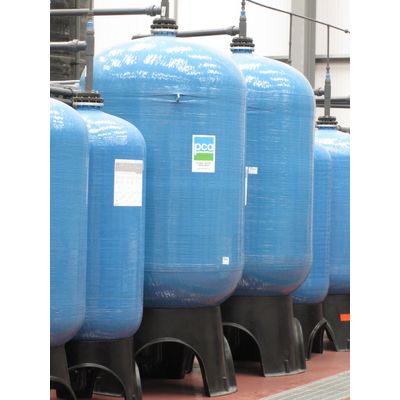
PCA - Activated Carbon Filter
Activated carbon is a type of carbon with a large specific surface. On this surface, lots of unwanted components can attach. This makes activated carbon an ideal filter medium. Adsorption to activated carbon works best on non-polar substances. Therefore it is excellent at removing colors, flavors and aromas. In the production of drinking water, activated carbon filters are responsible for adsorbing harmful organic components such as pesticides.
Softening
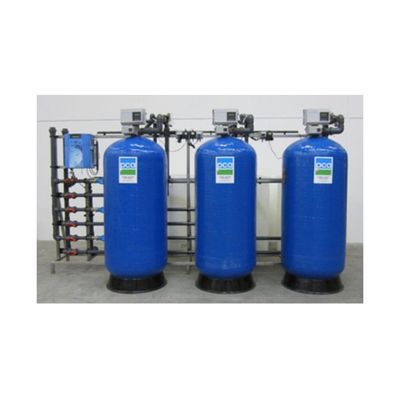
PCA - Water Softener System
A water softener is a type of ion exchanger where the Ca and Mg ions are exchanged, usually for sodium ions. A softener is designed in function of the incoming water hardness and the capacity. The harder the water, the more volume of resins needed to soften a certain volume of water.
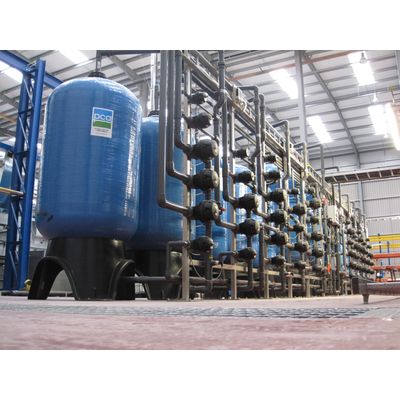
PCA - Cation Anion Ion Exchangers System
Cation-Anion ion exchangers are used to produce demineralised water. In this process, it is important that both positively and negatively charged ions are removed. Therefore a treatment in 2 steps is required. First the ion-rich water will flow into the cationresin-column. During the contact between the water and the resins, the positive ions will be exchanged for H+-ions. This exchange happens very fast, so there is no long contact time required. When these resins are saturated, there is a regeneration with acid (usually HCI or H2SO4).
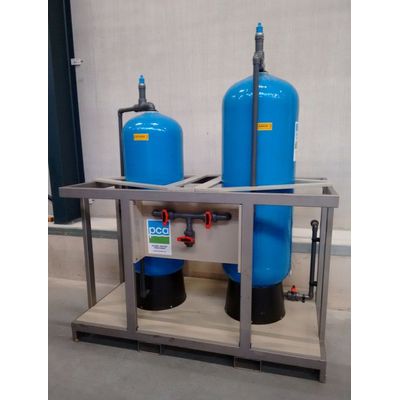
PCA - Mixed Bed Ion Exchanger Softener
Sometimes the demineralised water of an ion exchanger or RO is not of a sufficient quality and an extra treatment is needed. This is called `polishing`.
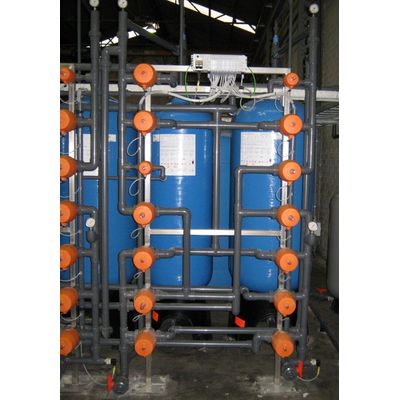
PCA - Selective Ion Exchanger
Apart from the standard cation-anion ion exchange, there is a large range of selective ion exchange systems available. These ion exchange-resins are particularly suited to remove specific components out of the water. Here it is important that this component is found in a relatively small concentration. If this concentration is too high, the ion exchange system needs to be regenerated too often. The regenerated liquid then contains too high of a concentration of the to be removed compound and subsequenlty this flow needs to be treated in another installation or the water needs to be evacuated externally.
Water Treatment
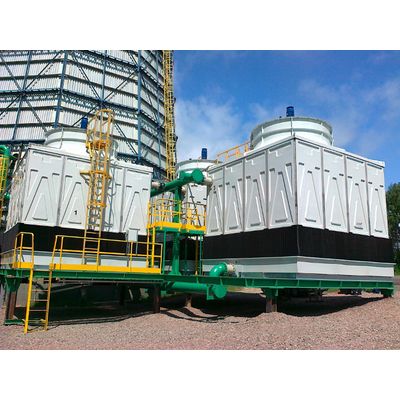
PCA - Cooling Water Treatment System
In various industries diverse types of cooling systems are used. Depending on the type of system all cooling water needs a particular treatment. The primary reasons therefor are: saving on consumption of cooling water and protection against corrosion, deposits (to preserve the heat-transfer) and biological growth (to avoid legionaire`s disease). PCA has developed a wide range of chemicals and instrumentation (automated cooling water treatment) in order to optimally treat your cooling water.
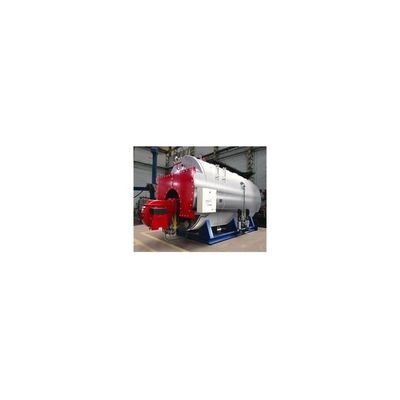
PCA - Boiler Water Treatment System
In various industries different types of boiler systems are used. Depending on the system all boiler water needs a particular treatment. The primary reasons therefor are: saving on consumption of boiler water and protection against corrosion, deposits (to preserve the heat-transfer - avoid an increase of energy costs) and biological growth. PCA has developed a wide range of chemicals and instrumentation in order to optimally treat your boiler water.
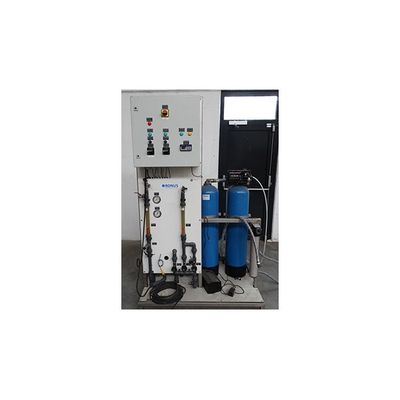
PCA - Reverse Osmosis Water Treatment System
Reverse osmosis installations are used for the production of demineralised water. This is done by letting water flow over a membrane at high speed, where the demineralised water (the permeate) is pushed through the membrane while the salts remain. These salts are concentrated and discarded in a concentrate stream.