


Pricella Biotchnology Co., Ltd. products
Cell Culture Media - Classical Basal Media - Liquid Basal Medium
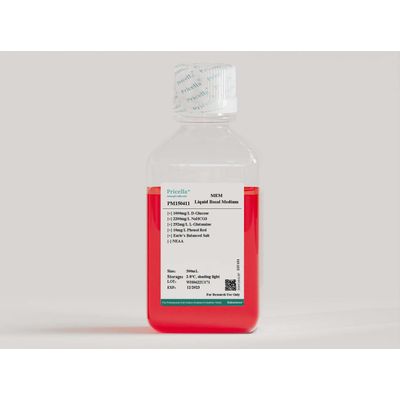
Pri-Cella - Model MEM - Minimum Essential Medium Media
MEM medium (Minimum Essential Medium) was developed on the basis of Eagle basic medium. It is one of the most basic and widely used culture medium, and one of the most commonly used culture medium in animal cell culture. MEM medium contains 12 kinds of essential amino acids, glutamine and 8 vitamins, which is simple, mainly used in the culture of adherent cells. MEM (contain NEAA) medium is added L-alanine, L-glutamic acid, L-asparagine, L-aspartic acid, L-proline, L-serine and glycine on the basis of MEM medium. These 7 kinds of NEAA, can reduce the side effects of producing non-essential amino acids during cell culture and promote cell proliferation and metabolism. This product contains many kinds of amino acids, vitamins, inorganic salts and other ingredients for cell culture, but does not contain protein, lipids or any growth factors. Therefore, the product should be used with serum or serum-free additives.
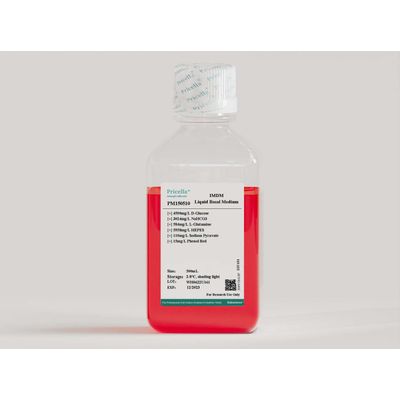
Pri-Cella - Model IMDM - Iscoves Modified Dulbecco Medium Media
IMDM(Iscove’s Modified Dulbecco Medium)is an improved DMEM medium, which is used for the culture of erythrocyte progenitor cells and macrophages. The IMDM medium was supplemented with selenium, HEPES, sodium pyruvate and additional amino acids and vitamins on the basis of the DMEM medium, and potassium nitrate instead of iron nitrate, which is suitable for the rapid proliferation, high-density cell culture. IMDM medium can not only culture cells with special nutritional requirements (such as mouse B lymphocytes, stimulated B cells stimulated by LPS, bone marrow hematopoietic cells, T lymphocytes and various hybridoma cells), It can also be used as a base solution for some unique serum-free medium. This product contains many kinds of amino acids, vitamins, inorganic salts and other ingredients for cell culture, but does not contain protein, lipids or any growth factors. Therefore, the product should be used with serum or serum-free additives.

Pri-Cella - Model MEMa - Liquid Basal Medium Media
MEM α was developed on the basis of MEM medium. Compared with MEM medium, NEAA, sodium pyruvate, zinc sulfate, VB12, biotin and ascorbic acid were added. It is widely used in suspension and adherent cell culture of various mammals. Mem α medium without nucleoside and deoxynucleoside is often used as medium for DG44 and other DHFR- cells. This product contains many kinds of amino acids, vitamins, inorganic salts and other ingredients for cell culture, but does not contain protein, lipids or any growth factors. Therefore, the product should be used with serum or serum-free additives.
Cell Culture Media - Classical Basal Media - Removal Medium
Pri-Cella - Model RPMI-1640 - PM150110-MR - Nanobacteria Removal Medium Media
Mycoplasma is the smallest and simplest prokaryote found so far, with a diameter of 0.1-0.3 μm. It can easily pass through the filter membrane and enter the cell culture system. It has various forms such as sphere, rod, filamentous and branching. Usually attached to the surface of the cell membrane, there is no cell wall, so ordinary antibiotics have no effect on it. Mycoplasma contamination is widespread and often underestimated in cell cultures. Mycoplasma contamination can cause many problems, such as changes in cell growth rate, cell morphology, chromosome aberrations, cell membrane antigenicity changes, cell metabolism changes, reduced survival rate after cell resuscitation, and so on, which ultimately leads to inaccurate or incorrect experimental results. Therefore, it is of great significance to clean up mycoplasma contamination in cell culture.
Pri-Cella - Model RPMI-1640 - PM150110-HR - Nanobacteria Removal Medium Media
Nanobacteria and their decomposition complexes are the common contaminant in cell cultures that co-exists with cells. Antibiotics are usually ineffective. Nanobacteria grows competitively with cells, which is unfavorable to cell growth, and in severe cases causes cell death.
Cell Culture Reagents - Supplements
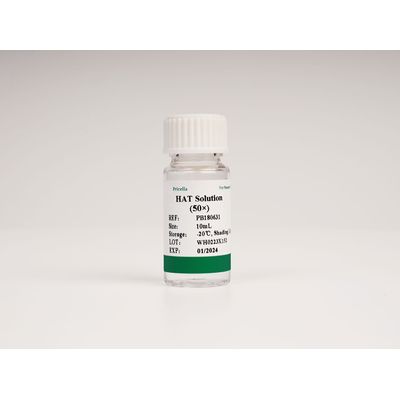
Pri-Cella - Model HAT - PB180631 - Mixture Of Hypoxanthine, Aminopterin and Thymidine
HAT solution is a mixture of hypoxanthine, aminopterin and thymidine. It is often used for the screening and culture of hybridoma cells.
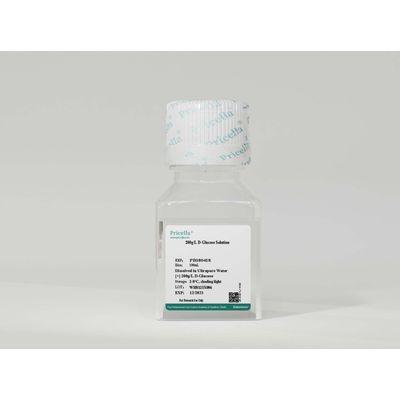
Pri-cella - Model PB180418 - 200g/L D-Glucose
D-glucose is one of the most widely distributed and important monosaccharides in nature. It is not only the main source of energy for cells, but also an important substance for cell biosynthesis, such as the synthesis of glycoprotein and glycosylates. When culturing animal cells in vitro, glucose is used as an essential energy substance in almost all medium. However, the metabolic characteristics of different cells are different, and the glucose concentration required for culture is also different. For example, the energy metabolism of nerve cells is mainly glucose, which requires a relatively high concentration of glucose.
Cell Culture Reagents - Cell Dissociation Reagents
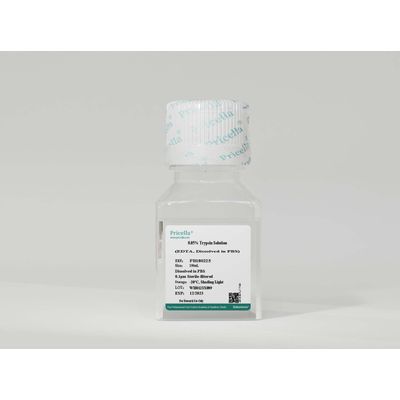
Pri-cella - Model PB180225 - 0.25% Trypsin
Trypsin is a serine hydrolase that can cut the base-side segment of the lysine and arginine residue in the polypeptide chain, hydrolyze the protein between the cells, and destroy the connection between the cells, so that the tissue or the adherent cells are dispersed into a single cell.
Cell Culture Reagents - Antibiotics
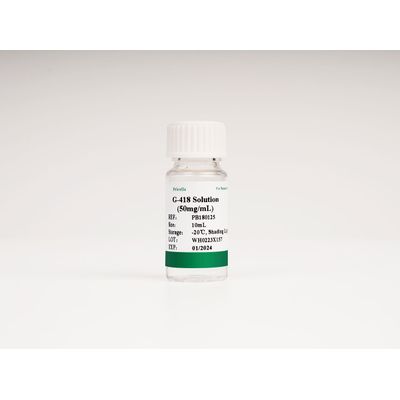
Pri-Cella - Model G-418 -PB180125 - 50mg/mL Aminoglycoside Antibiotic
G418, an aminoglycoside antibiotic, is the most commonly used resistance screening reagent for stable transfection in molecular genetic experiments.G418 can interfere with the function of 80S ribosomes and affect protein synthesis in eukaryotic cells. It is mainly used in mammalian, plant or yeast cell selection.
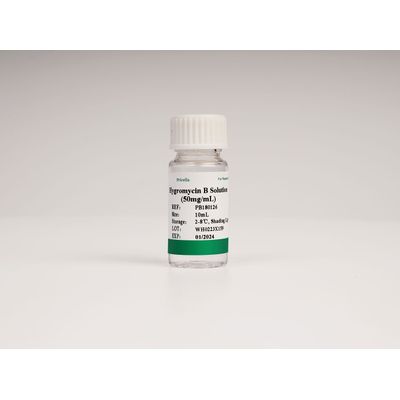
Pri-Cella - Model PB180126 - 50mg/mL Hygromycin B Aminoglycoside Antibiotic
Hygromycin B, an aminoglycoside antibiotic, is a commonly used resistance screening reagent, which can inhibit protein synthesis by interfering with 70S ribosome translocation and inducing misreading of mRNA templates, thereby killing Bacteria, fungi and higher eukaryotic cells. The hygromycin B phosphotransferase encoded by the hygromycin resistance gene (hyg or hph) from Escherichia coli can convert hygromycin B into a non-biologically active phosphorylated product, thereby detoxifying. Hygromycin B is often used to screen and culture prokaryotic or eukaryotic cells successfully transfected with hygromycin resistance gene. Due to the difference in mode of action, Hygromycin B (Hygromycin B) is often used in combination with G418, Zeocin or Blasticidin S to screen double-resistant positive cell lines. In addition, hygromycin B can also be used as an antiviral agent, or mixed into animal feed for deworming function.