


- Home
- Companies
- ProFlow USA
- Products
ProFlow USA products
Flow Meters - Coriolis and Mass Flow
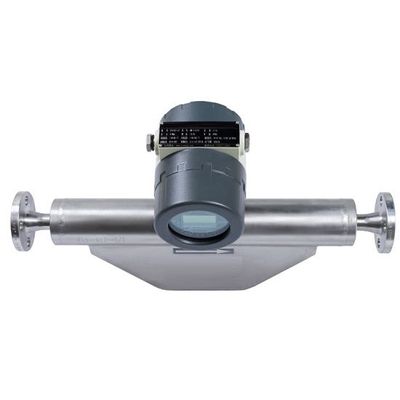
ProFlow - Model 41001 - Coriolis Flow Meter
In a Coriolis mass flow meter, the “swinging” is generated by vibrating the tube(s) in which the fluid flows. The amount of twist is proportional to the mass flow rate of fluid passing through the tube(s). Sensors and a Coriolis mass flow meter transmitter are used to measure the twist and generate a linear flow signal.
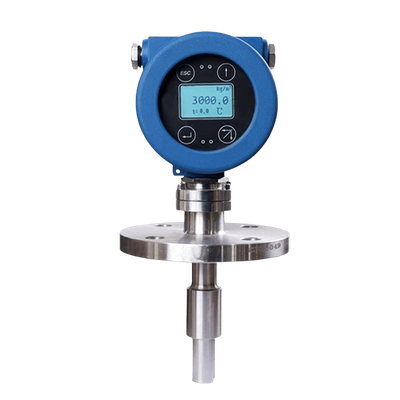
ProFlow - Model 49000 - Density Flow Meter for Accurate Fluid Measurement
A density flow meter is an advanced instrument designed to accurately measure the density of fluids in various process lines. It finds extensive application in industries such as oil and gas, chemical processing, food and beverage, and pharmaceuticals. These flow meters are integral to ensuring product quality, process stability, and compliance with industry standards by offering real-time density data. They employ various technologies like vibrating elements, Coriolis effect, gamma radiation, and changes in electrical capacitance to provide accurate density measurements. Key advantages include precise monitoring of fluid properties, detection of composition variations, and enhancements to production efficiency. Density flow meters also help determine additional fluid characteristics, such as concentration and specific gravity. However, challenges like the need for temperature compensation and sensitivity to fluid composition changes must be managed. The choice of a specific density flow meter should be based on the fluid's characteristics and the necessary accuracy.
Other Products
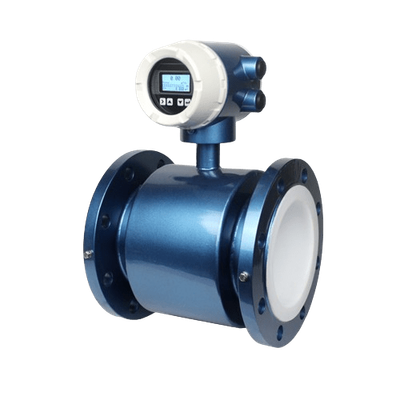
ProFlow - Electromagnetic Flow Meter for Conductive Fluids
An electromagnetic flow meter, also known as a mag meter, utilizes Faraday's law of electromagnetic induction to measure the flow rate of electrically conductive liquids, such as water and certain chemicals. The device operates by inducing a voltage across the fluid as it flows through a magnetic field, with the voltage being proportional to the fluid's velocity. Key components include a flow tube made of non-magnetic material, an excitation coil, and two sensing electrodes. These meters are ideal for applications that require high accuracy and can handle corrosive and abrasive fluids. Common industries using these meters include water and wastewater treatment, chemical processing, and food and beverage production. They are known for their robustness, with no moving parts, reducing maintenance efforts. However, they demand conductive liquids for accurate measurements and may require calibration and careful installation to mitigate issues like air bubbles and flow disturbances. Modern advancements have enhanced their functionality with features like digital signal processing and self-diagnostic capabilities, further expanding their application scope.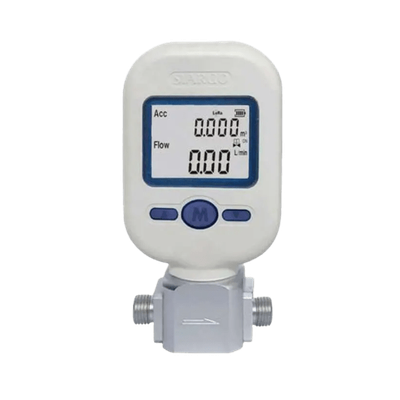
ProFlow - Model 41500 - Micro Mass Flow Meters for Precision Fluid and Gas Measurement
Micro mass flow meters are specialized instruments used to measure extremely low flow rates of fluids or gases, typically in the range of microliters per minute or less. These devices are crucial in applications requiring precise control of small fluid volumes, such as in research settings and the development of microfluidic devices. Various sensing technologies, including thermal, pressure-based, and Coriolis-based sensors, are employed to achieve accurate measurements. They are compact and designed to minimize flow disturbances, making them ideal for the pharmaceutical, biotech, and semiconductor industries. These devices, known for their sensitivity and precision, often require careful calibration and maintenance. They are typically integrated into comprehensive microfluidic systems alongside micro pumps and micro valves. Leveraging microelectromechanical system (MEMS) flow sensor technology and computer adaptive technology, these meters offer high sensitivity, precision, and a broad measurement range. They are equipped with electromagnetic compatibility designs and multiple signal outputs, enabling network functionalities. Widely used in industries such as petroleum, gas, chemical, and energy, these meters excel in performance, installation, and maintenance.
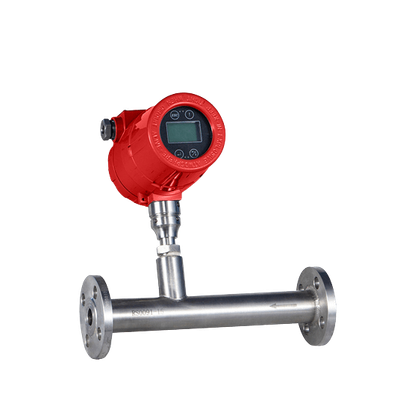
ProFlow - Thermal Mass Flow Meter
ProFlow's Thermal Mass Flow Meter is a widely used device for measuring the flow rate of gases or liquids in various industries such as oil and gas, chemical processing, and HVAC systems. These meters operate based on the principles of thermal conductivity and heat transfer. A sensor within the meter measures the heat dissipation or cooling effect caused by the fluid passing through it, with the rate of heat transfer being directly proportional to the mass flow rate. Thermal Mass Flow Meters use Constant Temperature (CT) or Constant Heat (CH) methods to measure this rate accurately. They offer advantages like direct mass flow measurement, low pressure drop, high accuracy, and low maintenance due to their lack of moving parts. However, their performance can be influenced by fluid properties, such as specific heat and thermal conductivity. Calibration may be required to maintain accuracy when fluid compositions change. Overall, thermal mass flow meters provide an efficient and reliable solution for process control and monitoring in various sectors.