Pulsar Measurement
38 Applications found

Pulsar Measurement applications

Flow measurement of both the influent and effluent flows is used to determine the processes and operations within treatment works, to adequately treat the influent, and meet compliance of discharge. Accurate measurement also allows for the monitoring of the load to the works, effective storm overspill monitoring, and the measurement and future expansion to the works if necessary. Successful measurement of influent and effluent flow enables water companies across the globe to ensure that their works are running efficiently and to capacity. It also allows for the works to be monitored and for accurate prediction of future expansion and maintenance to the site.
Non-contacting sludge blanket monitoring ensures that operators do not have to come into contact with the sludge. When used on primary settlement tanks the Sludge Finder 2 controls the de-sludging process to ensure a higher sludge density is recovered. When used on final settlement tanks it can be used to reduce the chances of a pollution event. The unique Sludge Finder 2 control system can also provide significant cost savings from less runtime on pumping systems and less energy spent on dewatering. By allowing the sludge to be monitored and turning on the pumping system once the ideal density has been reached, the Sludge Finder 2 also helps operators with their green credentials. This sludge is then burned and used to generate electricity for the site.

Combined Sewer Overflow (CSO) monitoring often referred to as Event Duration Monitoring (EDM), is the monitoring of the sewer network giving operators an early prediction of potential blockage. CSO Level and Velocity monitoring also give operators the opportunity to monitor stormflow, allowing them to report on when spillages occurred and how much was spilled. Monitoring these CSO events aids water utilities with compliance with regulatory obligations, allowing for data to be logged and viewed in real-time.

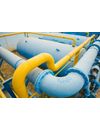
Level and flow monitoring of lift and pump stations allow operators to program pump start and stop levels, allowing the process to be used to its full capacity and prevents damage done to pumps and other assets from running dry. Thanks to state-of-the-art pump control technology, pumps are able to be auto-reset and it allows for the best use of most efficient pumps. The non-contacting nature of some of our products creates reduced maintenance for plant operators and allows them to plan maintenance schedules quickly and effectively. Pulsar products also aid local and remote optimization of networked pumping stations and the monitoring, logging, and reporting of non-permitted overspills.
Monitoring pipe flow in both clean and dirty applications helps to identify any bursts or blockages on rising mains. A sudden drop in flow rate means that there is something wrong within the network and you may have a blockage within your application, whereas an increase in pipe flow may be due to a burst main meaning your network requires urgent maintenance.

Tank level monitoring comes in all shapes and sizes. Pulsar offers a wide range of transducers that range from 0-40 m (0 - 131.2 ft), as well as accompanying controllers that all have a range of pre-programmed tank shapes and the possibility to create your own. Non-contacting tank level monitoring can offer some serious advantages, especially when looking at Ferric dosing tanks, for many health and safety reasons. This means staff doesn`t have to put themselves at risk by climbing to the top of a tank for an indication of level. Pulsar has a range of technologies that are suitable for this application. Using Pulsar radar technology it is possible to view the level from outside a plastic tank, preventing spillage and giving accurate indications for re-filling and stock levels. Ultrasonic works in the same way, however, the transducer face is usually mounted inside the tank and is able to zone in on the true level, ignoring all other competing echoes.
Differential monitoring and control usually means the monitoring of two separate channels. For example, non-contacting level measurement technology can give an indication of the upstream and downstream levels, enabling pumps to be activated when the desired level is reached. It can also give users an indication of screen blockages for automated control.
Sewer Network Monitoring involves monitoring level and flow within the sewer network to ensure that everything is running as it should be. Area-Velocity monitoring in these applications is particularly important as this helps give operators early warnings of potential blockages within the system. For example, a rising level without the corresponding rise in velocity indicates that something isn't right. Our non-contacting technology means there is no need to interrupt the network when it comes to installation, and our low-power options mean that those remote applications with limited access to power are covered. The accurate and repeatable results from the Pulsar range of products mean they are a low-cost alternative to costly Primary Measuring Devices (PMD's).

Chamber and digester monitoring often refers to the part of the wastewater process where the solids are removed from the treated water and pumped to a chamber and/or digester ready for further processing. The range of technology at Pulsar means that the monitoring of this process becomes a lot easier and more efficient. An indication of tank level and flow rate can be given, providing operators full visibility of the process and an idea as to whether there is a blockage forming. Due to the nature of this measurement substance, radar technology would be applicable here because of its resilience against fumes and changing atmospheric conditions.

Reservoir level monitoring has lots of different advantages and provides utility operators across the globe with an indication as to the level of available water, enabling early warning indications of water shortages/droughts thanks to low level alarms. It gives utility operators the ability to move water around the region more effectively and increase capacity and efficiency on water treatment works. The non-contacting technology availabe in the Pulsar product portfolio has a huge advantage here, as it does not contact or contaminate the water supply, therefore treated water stays clean and sanitary for customers around the globe.