
PureAire Monitoring Systems, Inc articles
Metal 3D printing, also known as additive manufacturing, provides for the creation of complex metal parts by layering metal powders and, depending on the application, selectively sintering, fusing, or melting the powders using a high-powered laser or electron beam. This process offers numerous advantages over traditional manufacturing methods, including reduced waste, increased design freedom to create complex components, and faster production times. The industry applications of metal 3D prin
PureAire Monitoring Systems is excited to announce the launch of our latest offering—the PureAire CloudConnect module, provides for internet connectivity (with Cloud storage capabilities) for our full line of Oxygen and Carbon Dioxide Monitors, as well as our Toxic and LEL Combustible Gas Detectors. Our new CloudConnect module will send continuous gas concentration data to a secure Cloud storage space, and w
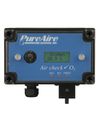
To create that perfect glass of wine, refreshing sip of water, or other non-carbonated drinks of choice, beverage producers often turn to liquid nitrogen (LN2).Liquid nitrogen fills an important role in the bottling and canning of non-carbonated beverages.
What is Liquid Nitrogen?
Liquid nitrogen is a cryogenic, liquefied form of nitrogen (N). Nitrogen is an oxygen-depleting gas that is a liquid at temperatures below −195.8° Celsius(−320.4° F

PureAire Monitoring Systems is excited to add its 0-10 parts per million(ppm) Trace Oxygen Analyzer to our full line of Oxygen Deficiency Monitors, Carbon Dioxide Monitors, Toxic Gas Detectors, and LEL Gas Monitors. The new Analyzer measures trace levels of oxygen across a wide variety of applications where precise, ultra-low gas concentration monitoring is critical to ensure safety and product quality.
<
PureAire Monitoring Systems is excited to add its 0-100 parts per million(ppm) Trace Oxygen Analyzer to our full line of Oxygen Deficiency Monitors, Carbon Dioxide Monitors, and Combustible/Toxic Gas Detectors. The new Analyzer measures trace levels of oxygen across a wide variety of applications that require real-time, ultra-low gas concentration monitoring to ensure safety and product quality.
PureA
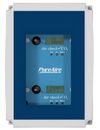
PureAire Monitoring Systems is excited to introduce its new Dual Oxygen/Carbon Dioxide Monitor, an important addition to our full line of Oxygen Deficiency Monitors, Carbon Dioxide Monitors, and Combustible/Toxic Gas Detectors. Our new Monitor is designed for continuous monitoring of oxygen and carbon dioxide levels across a wide variety of applications, including cryogenic facilities, breweries, food processing plants, cannabis grow rooms, pharmaceutical manufacturing operations,
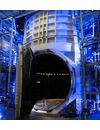
On October 4, 1957, the Soviet Union launched the first artificial satellite into space, thus ushering in the Space Age. Since then, over 8,000 satellites have been launchedfrom more than 50 countries. According to Jonathan McDowell, an astronomer at the Harvard-Smithsonian Center for Astrophysics, at the end of 2021 there were around 5,000 active satellites in orbit.
In addition to all of those satellites, space is currently home to a number of other pieces of equipment, including two
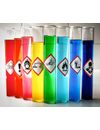
On January 31, 2022, a fire at a North Carolina fertilizer manufacturing facility caused officials to urge residents living nearby to stay away from their homes due to an increased risk of a possible explosion at the facility. People with respiratory issues were likewise advised to take precautions to minimize their potential exposure to toxic gasses.
According to Winston-Salem fire chief William Mayo, there were nearly 600 tons of ammonium nitrate and 5,000 tons of finished fertilize
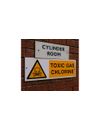
What is chlorine?
Chlorine gas (Cl2) is a dense, yellow-green gas that has a distinctive, irritating odor that is similar to bleach and is almost instantly noticeable even at very low concentrations. While Cl2 is not flammable, it may react explosively when exposed to other gases, including acetylene, ether, ammonia, natural gas, and hydrogen, among others. Due to its reactivity, chlorine is rarely used in its pure form but instead is typically c

What is Oxygen Deficiency?
The air we breathe is made up of 78% nitrogen, 21% oxygen, and trace amounts of other gases such as carbon dioxide, neon, and hydrogen. The Occupational Safety and Health Administration (OSHA) defines an environment in which oxygen levels fall below 19.5% as an oxygen-deficient atmosphere, which should be treated as immediately dangerous to health or life.
How is Oxygen Deficiency Dangerous?
Oxygen deficiency