


- RTO - Regenerative Thermal Oxidizers
- AirScience Biogas and Landfill Gas Flares
- Purifications - AirScience Desulfurization System
- Purifications - AirScience Dehumidification System
- Purifications - AirScience Siloxanes & VOC Removal System
- AirScience Biogas Upgrading Technologies
- AirScience Technologies - Air Pollution Control
- Technologies
Pyro Green-Gas (formerly known as AirScience Technologies Inc.) products
RTO - Regenerative Thermal Oxidizers
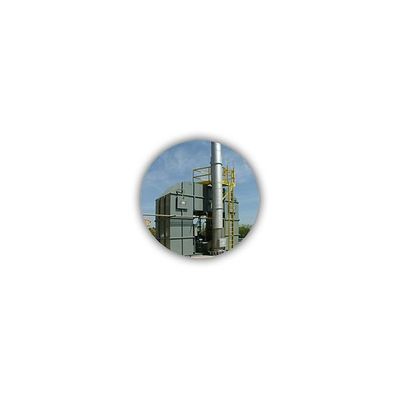
AirScience - Model RTO - Regenerative Thermal Oxidizers
AirScience supplied its first RTO in 1993 on a paper coating operation, in those days a typical RTO had three heat recovery canisters and was using poppet type valves, 25 years later, the technology has evolved, the norm is a two heat recovery canisters and the unit use a single four way valve for cycling from the lead canister to lag role. The destruction efficiency of organics, the pressure drop and the thermal recovery efficiency of these last generation two tower RTOs is in each way comparable to the performance of previous generation three tower RTOs.
AirScience Biogas and Landfill Gas Flares
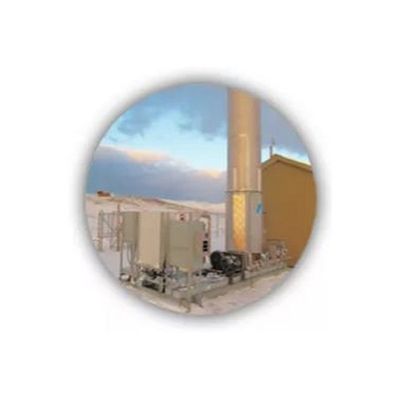
AirScience - Landfill Gas Flares
Landfill Gas Application: For landfill gas applications enclosed flame flare have been required for years for the destruction of landfill gas emissions. As more and more landfill gas is valorized through the production of electricity or the production of renewable natural gas (RNG), enclosed flame flares are used for emergency conditions and for excess gas situation.
Purifications - AirScience Desulfurization System
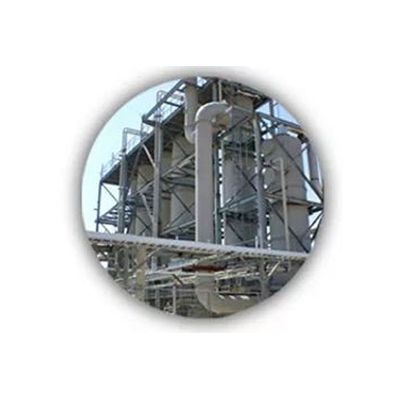
AirScience Ferrachel - Model II - Iron Chelate Process System
The process is recommended for reduction of high hydrogen sulfide concentrations (>1000ppmv) to concentrations of less than 100ppmv. To achieve hydrogen sulfide concentrations in the less than 4ppmv, a second stage consisting of a dry scrubbing catalyst will be required.
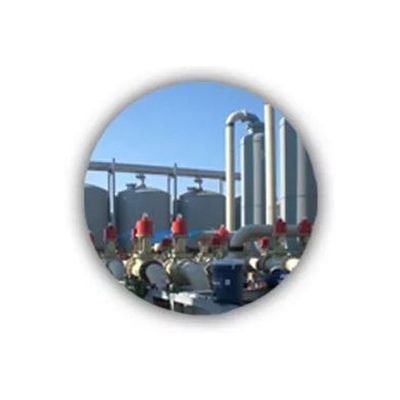
AirScience - Model DSC - Dry Scrubbing Catalyst Process System
The DSC process is based on the property of iron sponge to convert to iron pyrite in the presence of hydrogen sulfide. To enhance the reactivity of the active product as well as the activity of the whole pellets and not only the external surface, the active media is enhanced by certain additives defined as catalysts.
Purifications - AirScience Dehumidification System

AirScience - Subcooling and Reheating Process System
The process consist in cooling the biogas to a temperature lower, by a few degrees, than the desired dew point temperature, to condense the humidity along with desolved compounds such as hydrogen sulfide and siloxanes as well as low boiler hydrocarbons. The gas is then re-heated to the desired temperature through a compression stage compression.
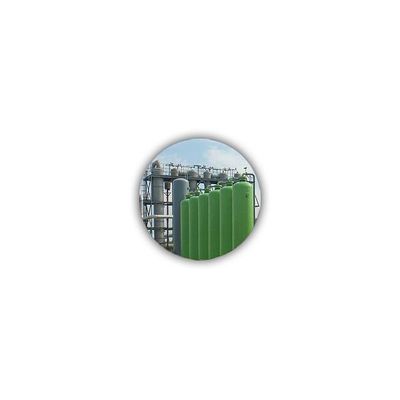
AirScience - Model PSA - Pressure Swing Adsorption Process System
This process is used at high pressure for the drying of gas from the discharge of carbon dioxide removal system, to very low dew point prior to the liquefaction of natural gas. The duty of the PSA in this application is to remove all humidity from a gas saturated with humidity as it exits the amine scrubbing system (CO2 removal system).
Purifications - AirScience Siloxanes & VOC Removal System
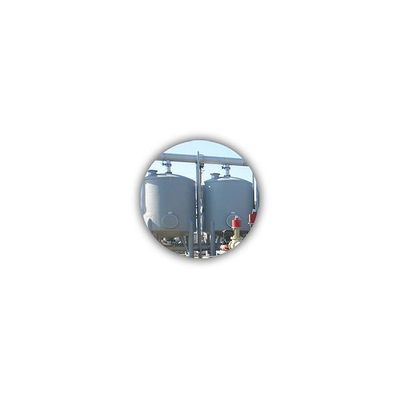
AirScience - Activated Carbon Process System
The system consists of a minimum of two towers, each having a bed of activated carbon. The gas travels through the carbon bed from bottom to top. Pressure drop through the bed and outlet concentrations are monitored to alert to a change in performance signaling the need to replace the carbon. To replace the carbon, the tower must be put off-stream, the full flow passing through the remaining tower(s) during the emptying and refilling operation. Once one tower has been refilled the other tower(s) must also have their carbon bed replaced, so that all towers have carbon with the approximate same loading.
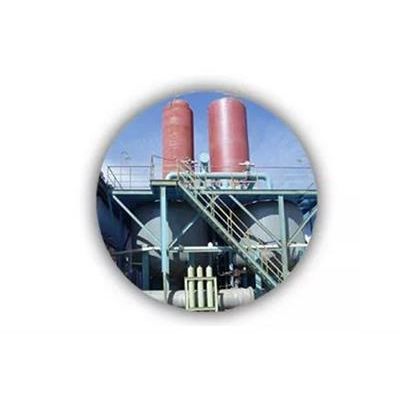
AirScience - Model VSA - Vacuum Swing Adsorption Process System
From the outside a VSA unit is very similar to an activated carbon system (several towers in parallel with an inlet manifold and an outlet manifold, each with motorized isolation valves. The difference resides in the type of adsorbent media (activated carbon for one, molecular sieve for the other) and the fact that a VSA system has a vacuum system connection at each tower.
AirScience Biogas Upgrading Technologies

AirScience - Amine Scrubbing Process System
Amine scrubbing or amine gas treating, also known as gas sweetening or acid gas removal, refers to a group of processes that use aqueous solutions of various alkylamines to remove hydrogen sulfide (H2S) and carbon dioxide (CO2) from gases. AirScience amine scrubbing process includes absorber and regenerator towers as well as accessory equipment such as pumps, heat exchangers, reboiler, etc.
AirScience Technologies - Air Pollution Control

AirScience - VOC Biofilters
In biofiltration, VOC laden air is humidified, then passed through a proprietary AirScience filter bed composed of a variety of materials such as: organic matter, bulking agent, acid buffer, holding agent and nutrients. There, naturally occurring microorganisms break down the offending compounds, releasing clean air to the atmosphere along with harmless and odor free carbon dioxide and water.