
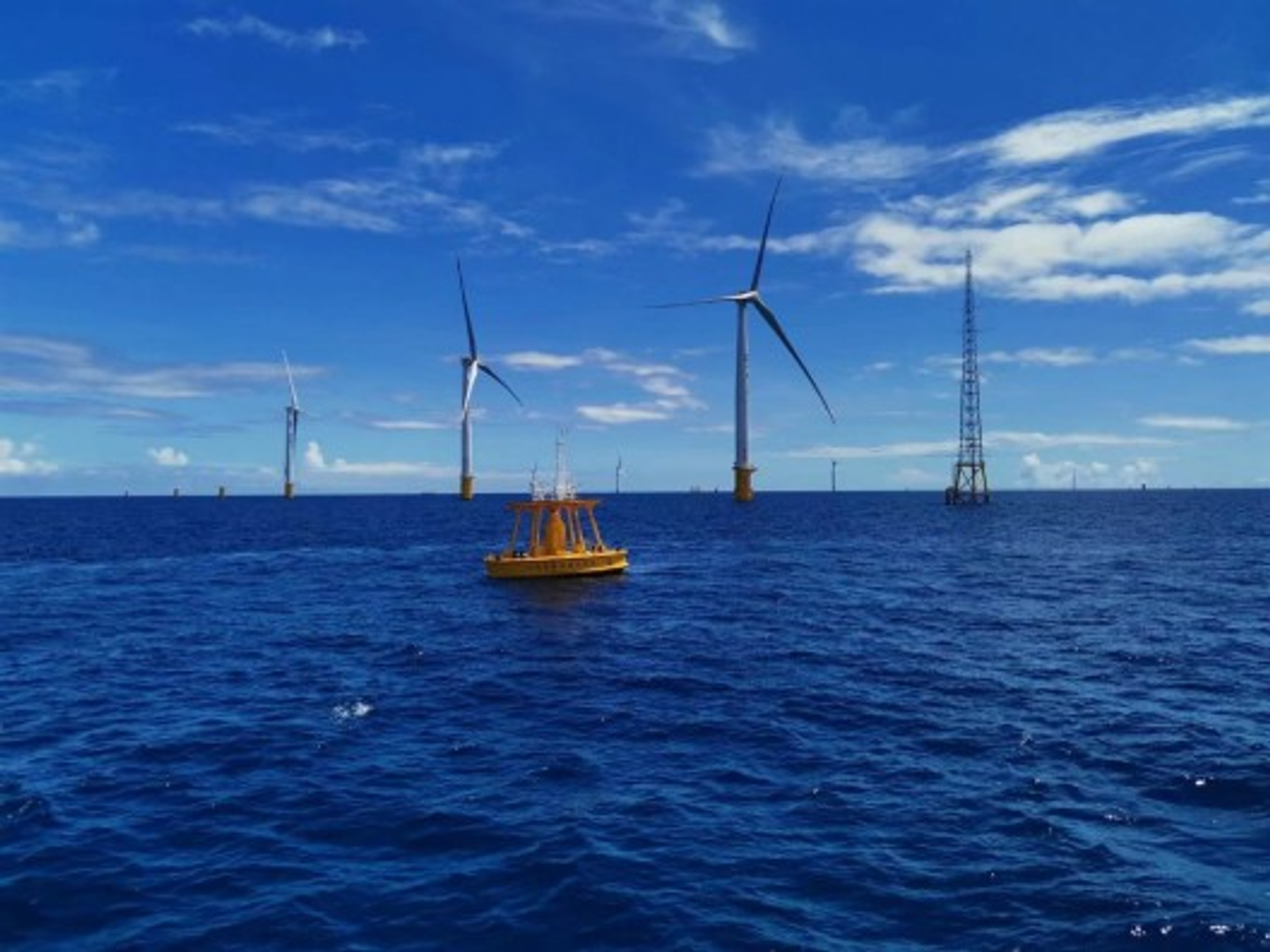

Qingdao Leice Transient Technology Co., Ltd. applications

In response to the growing demand for high-precision, high spatiotemporal resolution observation technologies in modern meteorological services, particularly the need for detailed observations of the five atmospheric profiles—wind, temperature, humidity, water vapor, and aerosols—within the troposphere, LiDAR has become an essential component of meteorological observation systems. LiDAR addresses the limitations of conventional observation methods in vertical resolution and real-time monitoring, providing strong support for the precise acquisition of meteorological profile parameters and enhancing extreme weather warning capabilities.

The Meteorological Comprehensive Observation and Service Platform is an innovative comprehensive meteorological solution that is based on the networking technology of multiple lidars. It deeply integrates diversified observation technologies such as wind profile lidar, sounding instruments, satellites, and ground meteorological stations, and constructs a widely covered, richly layered, and highly accurate meteorological observation network.

Conventional wind profile monitoring is mainly based on multi-beam inversion calculations, with the assumption that the horizontal wind field is uniform. However, in complex terrains such as mountainous areas or cities, the horizontal wind field is often non-uniform, especially near the surface layer. Therefore, when detecting complex surfaces, complex algorithms are often required to eliminate turbulent data. The "Virtual Tower (VT)" technology, based on the collaborative observation of three LiDAR wind measurement systems, does not require the assumption of a uniform horizontal wind field. It can detect high-altitude wind fields in complex underlying surfaces.

Accurate characterization of the wind field in the region where buildings and bridges are located is essential for structural wind design and safety and security during the construction phase. Field measurement is one of the main methods for structural wind engineering research. The wind measurement lidar has the advantages of high spatial and temporal resolution, portable and mobile observation, and adaptable to complex terrain, etc. With the special 3D scanning, virtual wind tower, multi-lidar cooperation and other detection modes, it can realize fully automatic unattended observation of wind field in complex terrain, and can effectively serve for the observation of structural wind engineering of buildings and bridges in cities and the guarantee of construction.

Utilizing 3D scanning wind measurement LIDAR, vehicle-mounted wind measurement LIDAR and airborne wind measurement LIDAR, the company provides efficient and accurate wind field and combustion particle characteristics monitoring services for forest fires, urban fires and other emergency rescue scenarios. Through rapid deployment and real-time data collection and analysis, combined with mature meteorological models, it realizes high-precision, high temporal and spatial resolution monitoring and short-term accurate forecasting of the wind field and combustion particle characteristics at the fire scene and the surrounding environment, which provides a scientific basis for the rescue decision-making, and effectively safeguards the safety of people and property.

In key areas of forest fire prevention, early warning and quick response to fires is the key to guarantee the safety of the ecological environment and maintain the safety of human lives and properties. By integration of Three-dimensional scanning wind LiDAR system and GIS (Geographic Information System) technology, the system can instantly monitor the fire, smoke and wind field dynamics, quickly locate the fire point. It builds a set of efficient and accurate early fire warning system, achieves “find it in early stage, control it when it`s small, put it out before it spreads”, effectively reduces the loss caused by fire, and solidly guards the life and property safety of the people.

In response to the complexity of the causes of air pollution, the combination of wind lidar, Raman and Mie scattering aerosol lidar, particulate flux lidar, ozone lidar and other equipment can not only monitor the distribution characteristics of particulate matter, spatial changes in ozone concentration, and dynamic evolution of the wind field in real time, but also deeply analyze the complete process of various pollutants, including sand and dust, from the source to the transmission path, until the final impact.

This program aims to achieve precise traceability of atmospheric particulate matter pollution sources through the comprehensive use of laser pulse technology, navigation monitoring system, and data analysis platform.
Through domestically developed 3D remote sensing detection technology for greenhouse gases, the concentration, spatial distribution, and transmission of gases like carbon dioxide are observed and inverted, providing timely reflection of dynamic changes in greenhouse gases. This technology supplements existing greenhouse gas emission accounting methods, offering objective and accurate information and support for China’s participation in international greenhouse gas reduction negotiations, carbon trading, and other related discussions. It also provides reliable data to support the achievement of the country`s "carbon peak and carbon neutrality" goals.
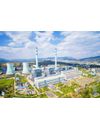
To address the synergistic pollution of ozone (O3), volatile organic compounds (VOCs) and fine particulate matter (PM2.5) in key regions of China. By assembling a team of experts from top institutions such as Ocean University of China (OUC), Anguang Institute of Chinese Academy of Sciences (AIAS), and Xi`an University of Technology (XUT), the team will analyze in depth the causes of air pollution, including local emission sources, regional transmission contributions, and meteorological conditions, and will provide a set of scientific, precise, and actionable strategies for the government and environmental protection authorities to improve and control air quality. The goal is to significantly alleviate the pollution situation in the short term, and to achieve fundamental improvement in air quality and sustained compliance in the long term.