


Resensys, LLC applications

For many people in the United States, driving over one or more of the nation’s 602,000 highway bridges is part of their daily commute, and recent statistics from the Federal Highway Administration indicate that more than 145,500 of these bridges are either structurally deficient or functionally obsolete. Assessing the structural stability of fracture critical or scour critical bridges, conducting load rating activities and making informed asset management decisions is very important because it allows structural issues to be pinpointed and necessary maintenance and repairs to be planned.

Fracture Critical Monitoring With Resensys Wireless Strain SenSpot Sensors Measurements. Fracture Critical Member (FCB) is defined as component intension whose failure is expected to result in the collapse of the bridge/structure or the inability of the bridge/ structure to perform its function. A fracture-critical bridge or other structure has a structural component of which failure could lead to bridge distress and possibly collapse. The failure of a single major tension member or member element is likely to cause a significant portion or the entire bridge to collapse due to a lack of redundancy. Fracture critical designs can leave bridges vulnerable to possible collisions with ships or large trucks. A bridge/ structure can become fracture critical if deterioration over time leads to degradation of materials compared to their original design strengths, or if loading use increases such that designed redundancy is reduced.
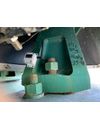
Purpose: this application note explains how Resensys wireless instrumentation can be used in different types of bearings and expansion joints to detect their functionality and responsiveness. Bearing malfunction can lead to excessive strain in bridge load bearing members, and it can cause damage to bridge piers and abutments. Resensys offers two types of wireless devices for long term remote monitoring of bridge bearings and expansion joints:

Wireless Monitoring Instances of Overweight Loads on Load Posted Bridges. Motivation: Overweight vehicles can cause harm for the structural health of bridges, so more attention should be paid to these types of live loads, which produce comparably high strain values. Resensys’s Unique Solution:Resensys offers combination of two devices to monitor and detect instances of overweight loads (e.g., heavy truck, dump truck, etc.) on bridges.
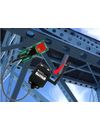
Bridge Load Rating with SenSpot as test tool (using truck tests) - Obtaining Strain Responses with Resensys Wireless Strain SenSpot Sensors. Having accurate and up to date Inventory and Operating Ratings is vital for meeting inspection and reporting requirements and ensuring that the correct bridge postings are achieved. They also allow infrastructure owners to make informed asset management decisions with regard to overall traffic pattern management, asset rehabilitation / reinforcement to meet current or changing demands over time, and ensure that bridges can be safely operated and utilized.
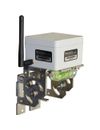
Scour Critical Bridges Monitoring with Resensys High Precision Wireless Inclinometer SenSpot Sensors, Wireless Solar Cameras, and Wireless Water Level SenSpot Sensors. According to the Federal Highway Administration (FHWA) scour is the leading bridge failure cause in the United States. According to the National Bridge Failure Database, 58% of bridge failures in the US are due to hydraulic conditions.

Remote Monitoring for Water Level of Bridges and Flood Zones with Resensys Wireless Water Level SenSpot (Ultrasonic Level Meter SenSpot) Sensors and Wireless Solar Cameras. Water level of rivers can rise in heavy rainfall and cause flooding and damage to bridge structures. As a result, monitoring water level under a bridge is one of the significant aspects of a bridge’s health monitoring. This kind of monitoring can also help to evaluate flood zones. The ability to monitor the water level of bridges, especially at an early stage, before it becomes a major issue or a flood event which may lead to the compromise or a bridge, a bridge road closure, and/or expensive repairs can be important to bridge authorities and owners.
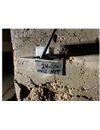
Man-made Seismic Effect Quantification/Vibration Monitoring with Resensys Wireless Vibration/ Acceleration SenSpot Sensors Measurements. Man-made seismic effect or human induced seismicityis defined as typical slight earthquakes and tremors that are caused by human activity that change the stresses and strains on the Earth`s crust. Most induced seismicity is of a small amount magnitude.
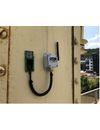
Routine/ Contract Bridge Load Rating Validation with SenSpot as test tool - Obtaining Strain Responses with Resensys Wireless Strain SenSpot. Load Ratingis the safe live load that carries capacity of a highway bridge structure. Rating Factor (RF) is defined for concept of load rating and in terms of tonnage for a particular vehicle. Load rating is significant because different kind of vehicles have been used in the past for the design of bridges (e.g., H-15, HS20-44, HL-93, etc.) and some bridges are old, depreciated or become structurally deficient during their lifetime. All bridges are rated using a standard set of vehicles to have a reliable and constant summary of the load carrying capacities and it is called Legal Loads. So, the load rating is performed to ensure the safety of general public and traffic using highway bridge structures. Bridges that have inadequate load capacity are considered and posted for restricted loads.
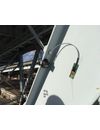
Structural Fatigue Analysis based on Rainflow-counting Methodology using Resensys Wireless Strain Gauge SenSpot. Fatigueis often a top concern for bridge and other structural owners and engineers. It has been estimated that 90% of the structure failure is due to fatigue.