Rockford Combustion
3 products found

Rockford Combustion products

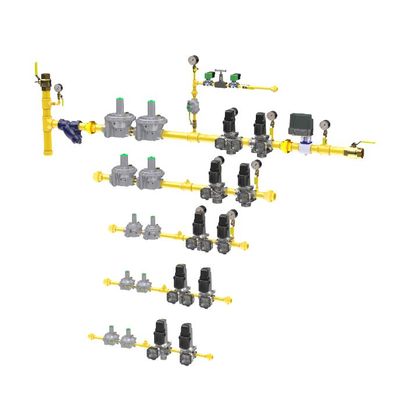
Standard Valve Trains
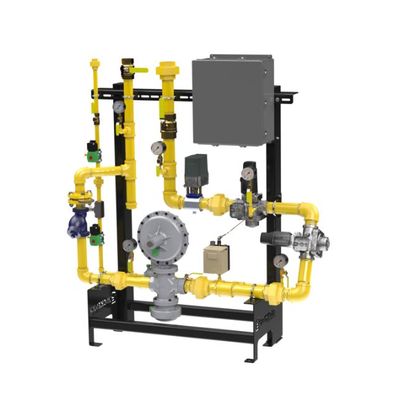
Let us help your organization improve safety with expert design and manufacture of over 60,000 standard valve trains. It isn’t necessary for a safety professional to know every engineered component of a valve safety train, but you should be aware of what it does and why it demands your organization’s attention. Essentially, a valve safety train controls the flow of fuel into thermal processing equipment. By controlling the desired ratio of fuel and air, the connected burner then properly oxidizes the mixture, safely releasing the energy needed to heat your furnaces, boilers, HVAC heaters, thermal oxidizers and other equipment. In turn, the thermal process equipment performs critical production tasks such as drying gypsum boards, roasting and baking foods, heat-treating metals, fluid heating, and pollution control.

Ventless Valve Trains

Unless valve safety train components are listed as “ventless,” vent lines are necessary. Simply installing vent piping is often insufficient. Vent lines must be correctly engineered, installed, and routed to appropriate and approved locations to be effective. Even when vent lines are properly installed, building pressures can vary sufficiently that may prevent optimal burner performance. Vent pipes have also been known to fill with spiders, bees and other nesting insects. Once plugged, the pipes will impede the escape of gasses, leading to a potentially combustible gas build-up inside the facility. Vent lines must be correctly engineered, installed, and routed to appropriate locations. In addition, building penetrations must be sealed, pipes must be supported, and the vent terminations must be protected from the elements and insects.
Stallion Quick Ship Program

Eliminate production bottlenecks with fastest fulfillment in the industry.  Your organization will have the equipment it needs in a matter of days. 
Are extended lead times causing costly production delays? Valve trains are often the last element engineered and ordered, yet among the first needed for production, creating a production bottleneck. If your supplier is late, your equipment delivery further suffers.