


- Home
- Companies
- RunDry Evaporators
- Articles
RunDry Evaporators articles
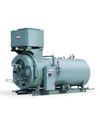
Boiler blowdown is the removal of water from a boiler for the purpose of controlling the levels of total suspended solids, TSS, and total dissolved solids, TDS, in the steam system. These can be caused by poor feed water quality, boiler chemicals, or by exceeding the solubility limits of salts in the water. This is sometimes done manually by the boiler operator, but most often it is done automatically with based on a conductivity sensor or simply by timer controls. Boiler blowdown is typicall

Many companies are turning to greenhouse farming for increased production, disease and pest prevention, year-around growing, stability of environment and increased profits. Several of these benefits are driven by advances in fertigation and irrigation.
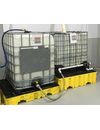
Industrial wastewater varies dependent on the factory in question and what the water is being used to clean or lubricate during the manufacturing process. Some facilities wash machine parts to remove oil, resulting in an oily wastewater. Other manufacturers commingle water of various uses. For example, dirt and oil from mop water, metal fines and dissolved metals from tumbler wastewater, and etch
David N Lyman
Oily wastewater is a very common type of wastewater generated by industrial facilities. The metal working, wire drawing, machine building, ink manufacturing, some food processing operations and others generate oily wastewater streams. Before considering techniques for evaporation, it is important to understand the nature of oil in water. Oil can take two forms in water—either free or emulsified. Free oil consists of droplets larger than 30 microns and will readily float given some time.
David N Lyman
Maybe you are a business owner, plant manager, or facility engineer and it is your responsibility to deal with the wastewater or spent machine coolant that is generated by your manufacturing process. Maybe you are considering purchasing a wastewater evaporator, but you have heard a story or two about these units catching fire. Perhaps you own one of these units, and it just caught fire, and you are trying to determine where to go from here. Are these fires preventable? Are some evaporator des
Some industrial wastewater has surfactants that cause foam build up when the water is agitated. Common sources for such wastewater are pressure washers or parts washers. A simple first step for foam control is to monitor the amount of soap used while cleaning by gradually stepping down the dosing rate until there is just enough surfactant to effectively clean.
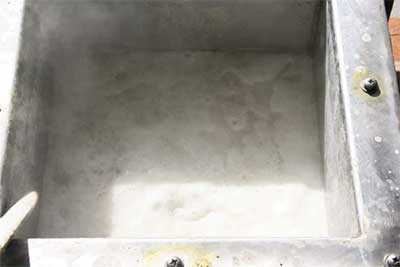
The design o
David N Lyman
This user is a premier independent service center for European cars in the DC Metro area. They have 39 years of experience and a reputation for having the finest staff that produces quality results in their 15,000 sq.ft. facility.
Most industrial facilities generate numerous streams of wastewater. Generally, they are all co-mingled in trenches, sumps, or equalization tanks.
Often, several of the wastewater sources are very mildly contaminated. They may be so mild that they could discharge into the sewer either untreated or with a simple treatment like running through an oil/water separator or a bag filter. H
Maybe you are a business owner, plant manager, or facility engineer and it is your responsibility to deal with the wastewater or spent machine coolant that is generated by your manufacturing process. You think to yourself, “I am just going to have someone haul it away and be done with it!” Think again!
The EPA’s Resource Conserva
David N Lyman