


RWO GmbH Marine Water Technology products
Sewage
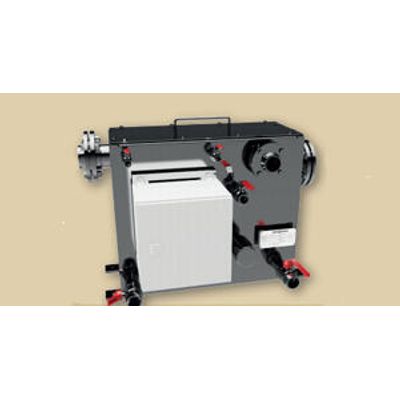
RWO - Grease Interceptor
Waters originating from ship galleys contain grease, fats, oils and food waste. RWO’s Grease Interceptor treats galley water efficiently utilizing the principle of gravity; Substances heavier than the water settle down while lighter substances, such as grease and oil, rise. The pre treated water that remains in the middle of the tank can then be fed into RWO’s wastewater treatment systems for further and final treatment. The Grease Interceptor thus helps l prolong the lifetime of costly sewage treatment plants.
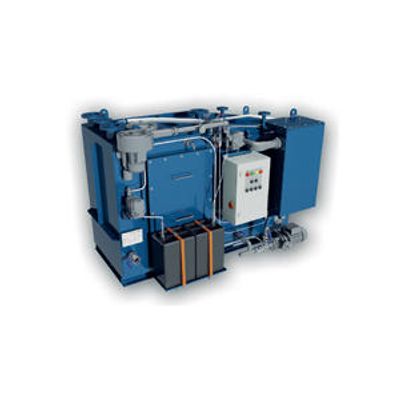
Model CS-BIO - Cleansewage Bio: Biological Sewage Treatment
CleanSewage Bio is designed to minimize the attention with sewage treatment to the lowest level possible. The accessibility from one side allows ship designers to plan space in the engine room on a whole new level. The system is part of RWO’s leading Total Water Management offer. Operators and crew are pleased with a hygienic no-touch-cleaning system, an intuitive status control allows checking at a glance, whether the system is running or intervention is necessary. Thereby CleanSewage Bio works with a proven biological treatment technology compartmentalized in 3 process steps that ensures the highest water quality according to MEPC.227(64).
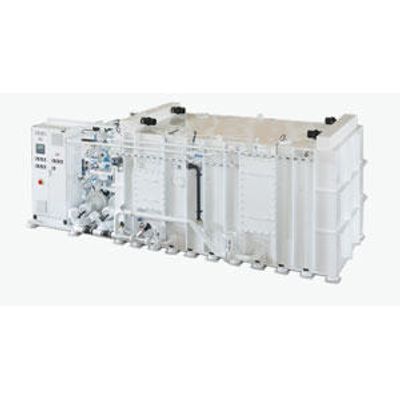
Model CS-MBR - Advanced Water Purification and Advanced Wastewater Treatment
With the CleanSewage – Membrane Bioreactor (CS-MBR) RWO has developed an advanced wastewater treatment (AWT) system fit for the requirements of sustainable passenger shipping as well as other high-standard applications. The CS-MBR is type approved according to the regulation IMO MEPC.227(64) including chapter 4.2 for nitrogen and phosphorus removal within special areas.
Bilge Water
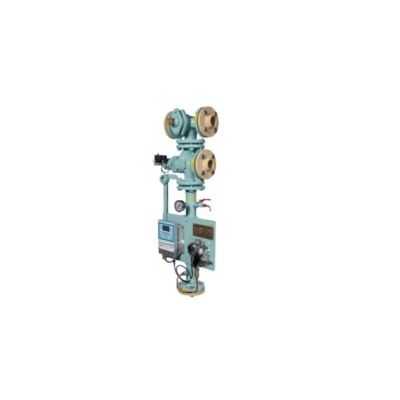
RWO - Bilge Economizer System
On board every ship, so called ‘clean drains’ are treated in oil-water separation systems, resulting in strained machines and resources. These clean drains usually contain leakage and condensation from equipment used for seawater, fresh water, steam, air conditioning, etc., which are usually not contaminated by oil. Based on the IMO guidelines for »Integrated bilge water treatment systems« (IMO MEPC.1/Circ.642), RWO has developed the Bilge-Economiser. The Bilge-Economiser allows ship operators to discharge so called »clean drains« overboard without any further treatment. As a consequence the bilge water volume handled by the oily water separator is much smaller, which reduces operating costs significantly.
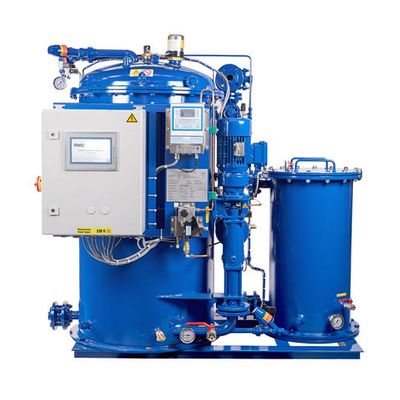
Model OWS-COM - Oily Water Treatment Systems
The most commonly used oily water treatment systems use gravity to separate water from oil and solids. They are based on the principle of coalescence. Coalescers bind smaller and minuscule droplets of oil into oil droplets, which then rise faster in accordance with Stokes‘ law. Coalescing elements, on the surface of which the finest oil droplets settle, promote the coalescence of smaller droplets and ensure that the oil-water emulsion separates into coherent phases more quickly and completely. As a result, the lighter oil collects on the surface, while the cleaned water remains in the lower part of the oil separator tank, where it can be drained off and pumped through a second oil separator stage for fine filtration. In this second filter stage, emulsions are separated by activated carbon filters and hydrocarbons still present in the water are bound. Through this process, concentrations well below 5 ppm can be achieved. The particles adhere to the filter cartridges.
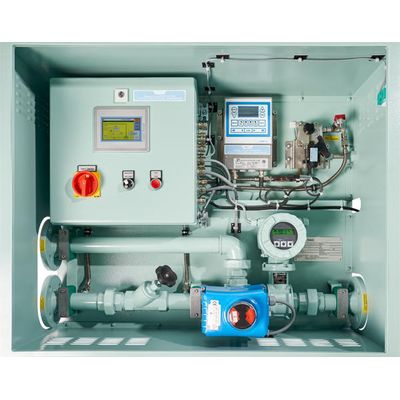
Model CBM+ - Bilge Water Compliance Monitoring System
The Clean Bilge Monitoring system CBM+ is designed to monitor and control liquid discharges overboard your vessel in respect of its oil content. The system prevents the discharge of non-compliant oily water mixtures by automatically recirculating the liquid to the bilge water tank if the oil content is above a predetermined limit. This compact system can be installed as a last monitoring and control device in the outlet pipe prior to the overboard discharge valve for safety purposes. Although designed with bilge water in mind other discharges like clean drain e.g. condensate from air conditioners can be monitored as well. The system independently monitors whether the maximum oil content is reached depending on the selected set-point of 5 or 15ppm. Lower set-points can also be chosen on site.
Fresh & Process water treatment
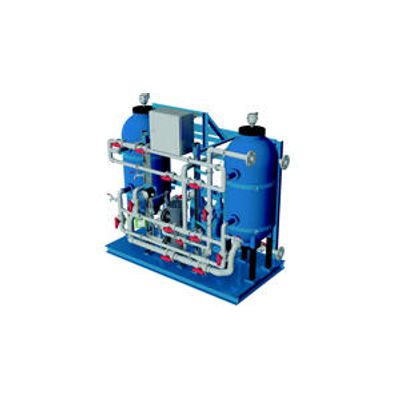
Model AccuRem - Copper Removal and Condensate Reuse Unit
Cruise ships that sail the warmer regions of the earth continuously produce a lot of condensate water. The air is cooled down inside the heat exchangers of the air-conditioning units to a temperature below the dew point of the outside atmosphere. This causes a large fraction of the air humidity to fall out as condensate, which accumulates at the bottom of the air conditioning (AC) units. Commonly, the AC condensate of heat exchangers is collected inside a central condensate tank from where it is used for secondary purposes or pumped overboard. What makes the AC condensate interesting is the fact that it is water almost free from salts and minerals. Desalination of water on board a passenger vessel is a costly process and the by-product AC-condensate is available practically for free. The flow of condensate may vary between none at all to up to 20 m3/hr on board very large cruise ships. The condensate can be used for ship’s laundry and other applications.
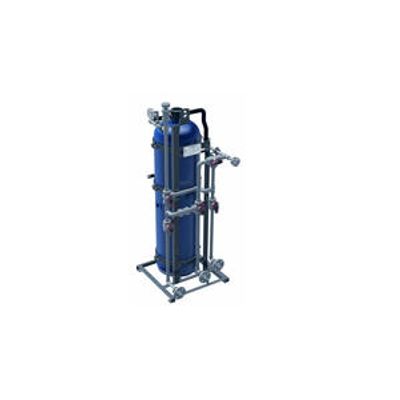
Model MIA-COM - Mineralization and De-Acidification for Healthy, Potable Water
A post-treatment of desalinated water from evaporators or reverse osmosis units such as the SRO-COM is necessary to get healthy, potable water. The mineralisation and de-acidification process inside the MIA-COM unit help to prevent corrosion and improves health protection due to higher quality drinking water. The application of the mineralising unit has advantages for crew and passengers, as well as for the equipment material for distribution, storage and consumers such as air-conditions, ice makers, heating systems etc.
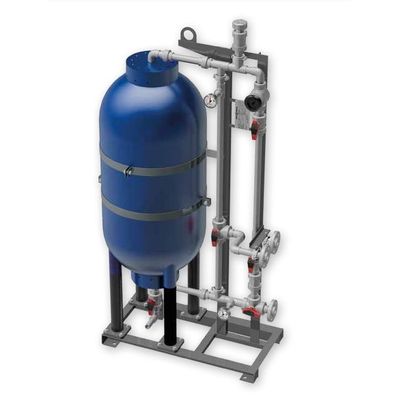
Model SAF-COM - Highly Efficient Pre-Filtration
The Sand Filter SAF-COM is widely used as a pre-filtration step for fresh and process water treatment. The SAF-COM removes suspended particles such as bacteria and other microorganisms. The system ensures high process efficiency through further filtration steps for fresh and process water treatment (such as our Seawater Reverse Osmosis plant SRO-COM).
Fresh Water Treatment
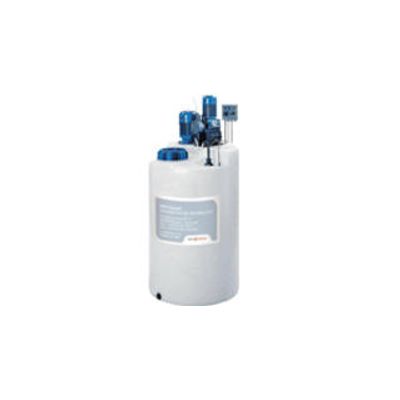
RWO - Chemical Dosing Units
Fresh water and service water on board of ships is necessarily taken from various sources. To compensate the varying water quality, the water has to be treated with chemicals. With RWO dosing units you can easily and reliably condition the water to serve the intended use and to meet the technical requirements. RWO dosing units feature solenoid driven diaphragm metering pumps. The combination of solenoid drive and diaphragm guarantees durability and dosing accuracy. All parts in contact with media are chosen for their resistance against the standard chemicals used for water treatment. The control of the pump allows a continuous adjustment of injection volume and frequency. This guarantees an adaptation to the dosing characteristics of the dosing agents.