


Seed NanoTech International Inc products
Seed Sensors
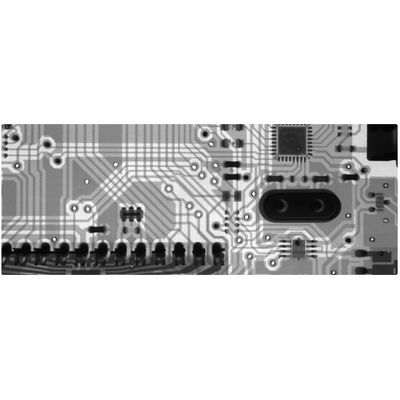
Seed NanoTech - Humidity Sensors
Conventional humidity sensors are primarily electronic devices. They can be designed to detect the amount of humidity present in the surrounding environment. These sensors measure the amount of humidity present in the environment by converting it to electrical signals, which is easily measurable. By comparing the live humidity with the maximum humidity at a given temperature at air, relative humidity is determined. The size and functionality of these sensors vary greatly ranging from some handheld device to larger embedded systems.
Seed NanoTech - Electronic Biosensors
Biosensors are nowadays used in biomedical diagnosis as well as in a wide range of other areas such as point-of-care monitoring of treatment and disease progression, environmental monitoring, food control, drug discovery, forensics and biomedical research. A wide range of techniques can be used for the development of biosensors. Their coupling with high-affinity biomolecules allows the sensitive and selective detection of a range of analytes. One type of such sensor is electronic biosensor which uses “Bioreceptor, Transducer and Display” to electronically transmit signals.
Seed NanoTech - Gas Sensors
Gas sensors are devices used to detect the presence of gases in an area. Such sensors can be used to detect a gas leak or other emissions and can help shut down the process automatically by interfering with a control system. This is done in many different ways, one way is by sounding an alarm, which warns the operator in the area and indicates the location of the gas leak. What makes gas sensors so significant, is that they can detect gases that are harmful to organic life, animals, and humans.
Seed Sensors - Gas Sensors
Seed NanoTech - Electrochemical Gas Sensor
Electrochemical gas sensors allow the gases to diffuse through a porous membrane to an electrode where it is either reduced or chemically oxidized. The determination of the amount of current produced is measured by the amount of gas that is oxidized at the electrode which indicates the concentration of the gas. Some customization in electrochemical gas detectors has been done by manufacturers, by changing the porous barrier to allow the detection of the concentration range for a certain gas. Moreover, since the diffusion barrier is a mechanical/ physical barrier, the detector tends to be more reliable and stable over the durability of the sensor and hence require less maintenance than any other early detector technology.
Seed NanoTech - Catalytic Bead Sensor
These sensors are commonly used to measure combustible gases that present an explosion hazard when concentration levels are in between the upper explosion limit (UEL) and the lower explosion level (EL). The reference and active beads containing platinum wire coils are located on opposite arms of a Wheatstone bridge circuit and heated electrically, up to a few hundred-degrees Celsius.
Seed NanoTech - Photoionization Sensors
These detectors use a high-photon-energy UV lamp to ionize chemicals in the sample gas. If the ionization energy of the compound is below that of the lamp photons, an electron will be ejected, and the resulting current is proportional to the concentration of the compound. The broad range of compounds can be detected at levels that range from a few ppb to several thousand ppm. Some detectable compound classes in order of decreasing sensitivity include olefins, alkyl iodides and aromatics, amines, sulphur compounds, ketones, alkyl bromides, organic esters, aldehydes and alkanes, and organic acids. Photoionization detectors are beneficial because of their simplicity and excellent sensitivity. The major limitation with these detectors is that their measurements are not compound-specific. Photoionization detectors are widely used for industrial hygiene and environmental monitoring. They are usually bench-type, miniature, hand-held clothing clipped PIDs.
Seed NanoTech - Infrared Point Sensors
These sensors use radiation which passes through the volume of gas. In these sensors, energy from the sensor beam is absorbed in certain wavelengths, depending on the properties of a specific gas. For example, carbon monoxide absorbs wavelengths of about 4.4-4.5 micrometers. The energy of this wavelength is compared to a wavelength outside of the absorption range.
Seed NanoTech - Infrared Image Sensors
These sensors include both active and passive systems. For active sensing, infrared imaging sensors usually scan a laser view of an entire scene and track for the backscattered light at the absorption line of the wavelength of a specific target gas. Passive imaging sensors, on the other hand, measure spectral changes in every pixel of an image and explore individual spectral signatures that indicate the presence of target gases. The compound types that can be imaged are similar to the ones that can be detected with infrared point detectors, but the images can help identify the source of gas.
Seed NanoTech - Ultrasonic Non-Gas Detectors
These are not gas detectors; they detect the aural emission created when a pressurized gas expands in a low-pressure area through a small outlet (point of leakage). These devices use aural sensors to detect the changes in the background noise of their environment. As high-pressure gas leaks generate sound in the ultrasonic range of 25 kHz to 10 MHz, the sensors can easily differentiate the frequencies from the background aural noise (which is 20 Hz – 20 kHz). The ultrasonic gas leak detectors cannot measure the concentration of gas, but they can determine the leak rate of gas escaping. This is because the ultrasonic sound level depends on both the pressure and size of the gas leak.
Seed NanoTech - Ultrasonic Gas Detectors
Ultrasonic gas detectors are mostly used for remote sensing in the outdoors where weather conditions can easily disintegrate evading gas even before it reaches the leak detectors that require interaction with the gas to detect it and sound an alarm. Ultrasonic detectors are commonly found on offshore and onshore oil/gas platforms, gas turbine power plants, gas compressors, metering stations, and other facilities that have outdoor pipelines.