


Seeq software
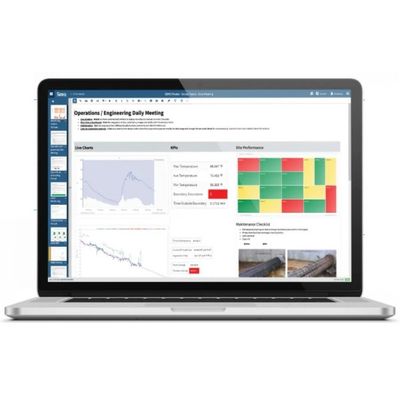
Seeq Organizer - Application for Engineers and Managers
Organizer is Seeq’s application for engineers and managers to assemble and distribute Seeq analyses as reports, dashboards, and web pages.
Organizer “Topics” may include text, images, scorecard items, and analyses generated in Seeq Workbench such as trending displays, scatter plots, bar charts, etc. Employees across the organization can leverage insights created in Seeq with a “read only” view of the information and when Organizer documents are viewed in a web page (as a URL) viewers may annotate or comment on the document to share feedback with other viewers.
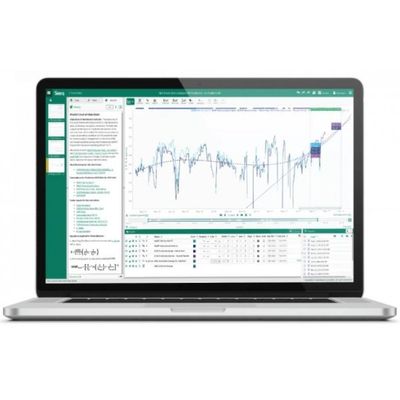
Seeq Workbench - Application for Engineers Engaged
Workbench is Seeq’s application for engineers engaged in diagnostic, descriptive, and predictive analytics with process manufacturing data.
It includes features to expedite the full arc of the analytics process, from connecting to historians to data cleansing, visualization, modeling, and calculations. Workbench also enables organizations to leverage the work of engineers with features for real-time collaboration, knowledge capture of analytics processes for easy reuse, and the sharing of Seeq workbooks and queries among teams.
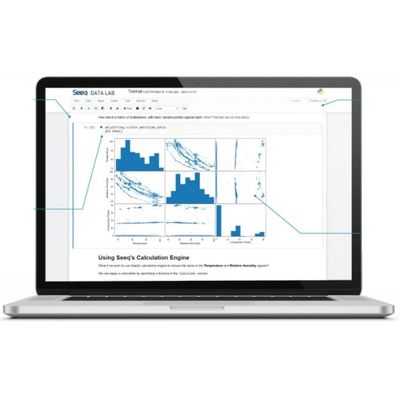
Seeq DataLab - Application for Data Scientists and Process Engineers
Seeq Data Lab is an application for data scientists and process engineers to access Python libraries to expand their analytics. Using Data Lab process engineers can expand their Seeq analytics efforts to the rich ecosystem of Python libraries, and data scientists can participate directly in industrial analytics by leveraging Seeq for data access, cleansing, modeling, and other features. Data Lab is built on Jupyter Notebooks and a Seeq Python library, called SPy, to access Seeq functionality and managed by the same administration features as other Seeq applications.
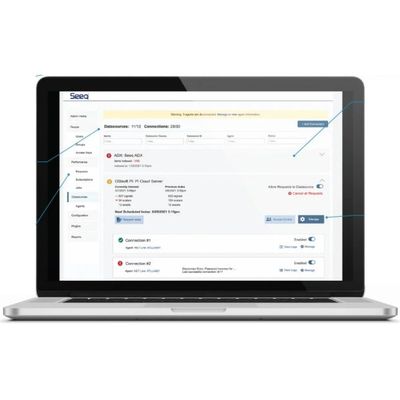
Seeq Cortex - SaaS (Software as a Service) Application
Workbench, Organizer and Data Lab are powered by Cortex, which enables Seeq calculations at scale, data connectivity, and administration features. Cortex runs best as a SaaS (Software as a Service) application on Amazon Web Services (AWS) or Microsoft Azure. Connected data sources may be on premises, in the cloud, or a hybrid and of any type: time series, contextual (SQL) and ad hoc (CSV). Data governance, security settings, user administration, audit trail support and other features are defined by administrators using an easy to use Cortex application.