


- Home
- Companies
- SewerVision BV
- Products
SewerVision BV products
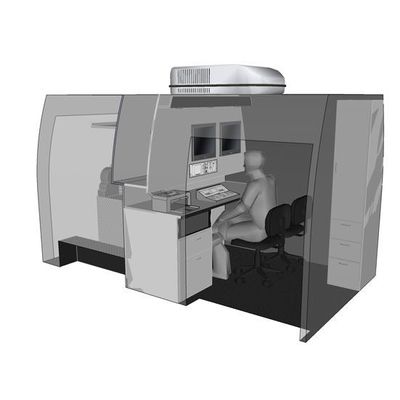
CCTV Inspection Vehicles
Complete CCTV Vans: SewerVision BV also supplies complete state-of-the-art CCTV inspection vans suitable for motorized inspections for pipe sizes varying in diameter from 100mm up to 2000mm up to a length of 500 meters. On special request an inspection length up to 2.500 meters is possible. Made to withstand the most severe conditions, ergonomically designed for comfort and efficiency, SewerVision truck mounted systems include TV inspection for sewers or storm pipes, laterals, potable water lines, water well/bore hole systems etc. In fact we supply CCTV inspecion vans for any application.
Inspection
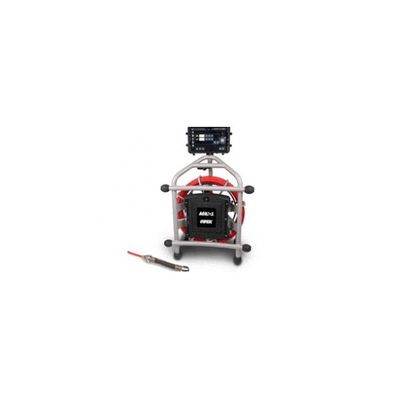
SewerVision - Model Agilios - Push Camera System
The latest push camera system generation has been developed with the goal to perform “Inspections in all situations“. The ultra-light design of the coiler with maximum stability as well as a battery pack, allowing inspections of up to 6 hours without the need to be recharged or connected to power supply, serve as the basis for the new AGILIOS. Thus, you can master inspection places which are difficult to access on your construction site.
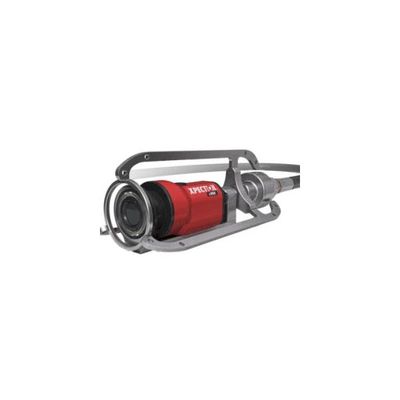
Xpection - Model Lite - Self-Leveling Nozzle Ø 200 mm - 400 mm
XPECTION LITE is the quick and easy way to see what you are cleaning. This wireless HD video nozzle is affordable enough to install on every cleaning truck, yet has the power to rapidly capture valuable footage of pipe condition to review it seconds later on a tablet.
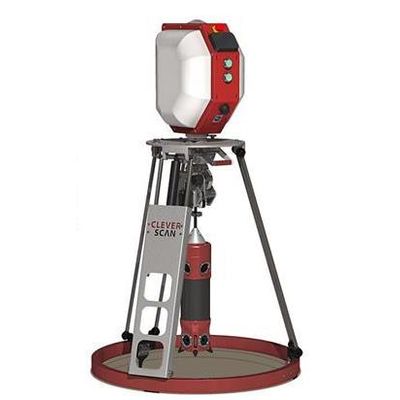
Cleverscan - Intelligent Manhole Scanning System
Intelligent means, that the camera head hosts a processor with a fully loaded operating system that can analyse and preprocess a massive volume of high quality image and sensor data. CleverScan is the result of several years of joint research & development of two companies: The company KEPSO developed the hardware and electronics, the company CD Lab AG (Software WinCan) is responsible for the software of CleverScan.
Inspection - Rovion
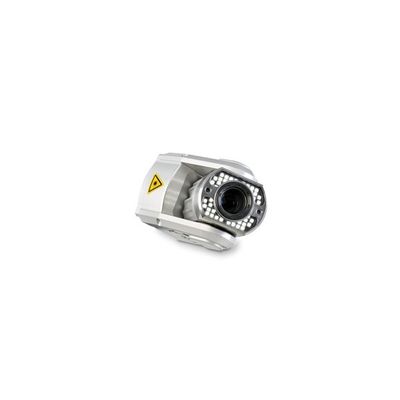
SewerVision Rovion - Model RCX90 - P&T Zoom Camera Ø 146 mm - 2000 mm
The pan & tilt head camera RCX90 has a 10 x optical zoom and additionally a 12 x digital zoom camera module. The camera has a pan range of ±135° and an endless rotation range.
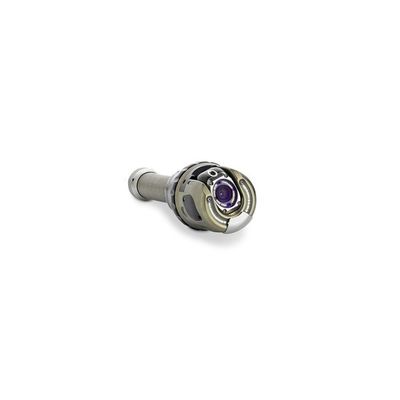
SewerVision Rovion - Model PTP70II - Pan & Tilt Head Camera
The pan & tilt head camera PTP70II features endless rotation and a panning range of -20° up to +110°. The pan & tilt camera PTP70II is connected to a crawler with the crawler adapter RCC70 or to the AGILIOS pan & tilt push camera system by means of the spring connection SP70.
Inspection - Rovion-Sat
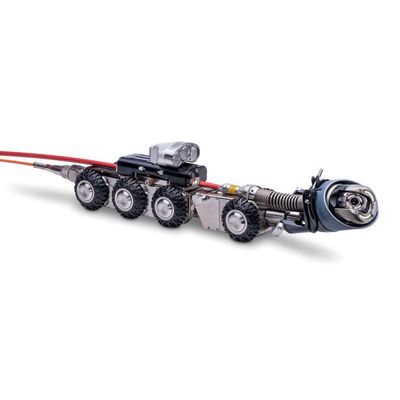
Rovion-Sat - Model RX140SAT - Satellite Pipe Inspection Crawler
The RX140SAT is a satellite crawler with feed unit for a push rod designed for the inspection of pipe branches. Powerful six-wheel drive (steerable). Powerful feed unit for the push rod. Snap-in system for easy mounting of the push rod. Integrated rear view camera. Optional auxiliary light. Compatible with the SAT cable reel RXSAT150 and the cable reels RAX500 and RAX300.
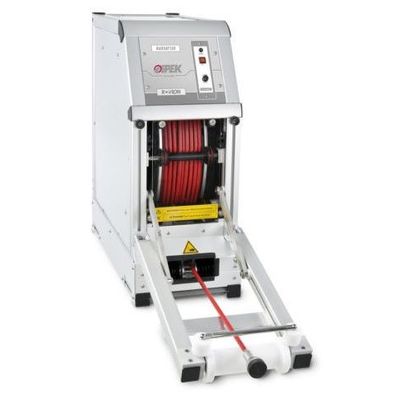
Rovion-Sat - Model RAXSAT150 - Cable Reel
Sat Cable Reel Up to Ø 150 MM – 600 MM. The ROVION pipeline inspection system is equipped with an automatic cable reel, with an extremely robust camera cable of 150 m length and a 30 m anti-kink push rod. In combination with the satellite crawler RX140SAT this cable reel enables the inspection of pipe branches.
Inspection - Rovion-Sat II
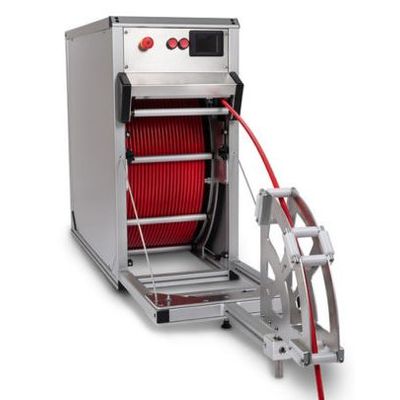
Rovion-Sat II - Model RAXSAT300 - Cable Drum
To efficiently drive long distances up to 300m in main sewers and inspect further 45 m, a perfect interplay of the SAT reel (RAXSAT300) and the cable reel (e.g.: RAX300) is required. Our automatic winding concept (SLC) provides for a synchronous winding behavior without any loops.
Inspection - QuickView
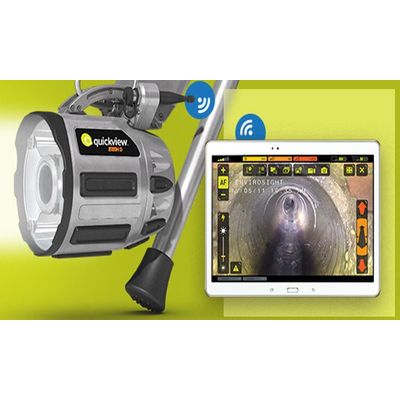
QuickView - Zoom Inspection Camera System
The Quickview zoom inspection camera system enables a quick look into pipelines, manholes or tanks. A zoom camera mounted to a carbon fiber telescope provides shadow-free illumination and sharp pictures with its revolutionary Haloptic technology. A vest-mounted control box including rechargeable battery suitable for single-user operation leaves one hand free to position the telescope. The inspection process is displayed on the viewer/recorder which is attached to the telescope.