
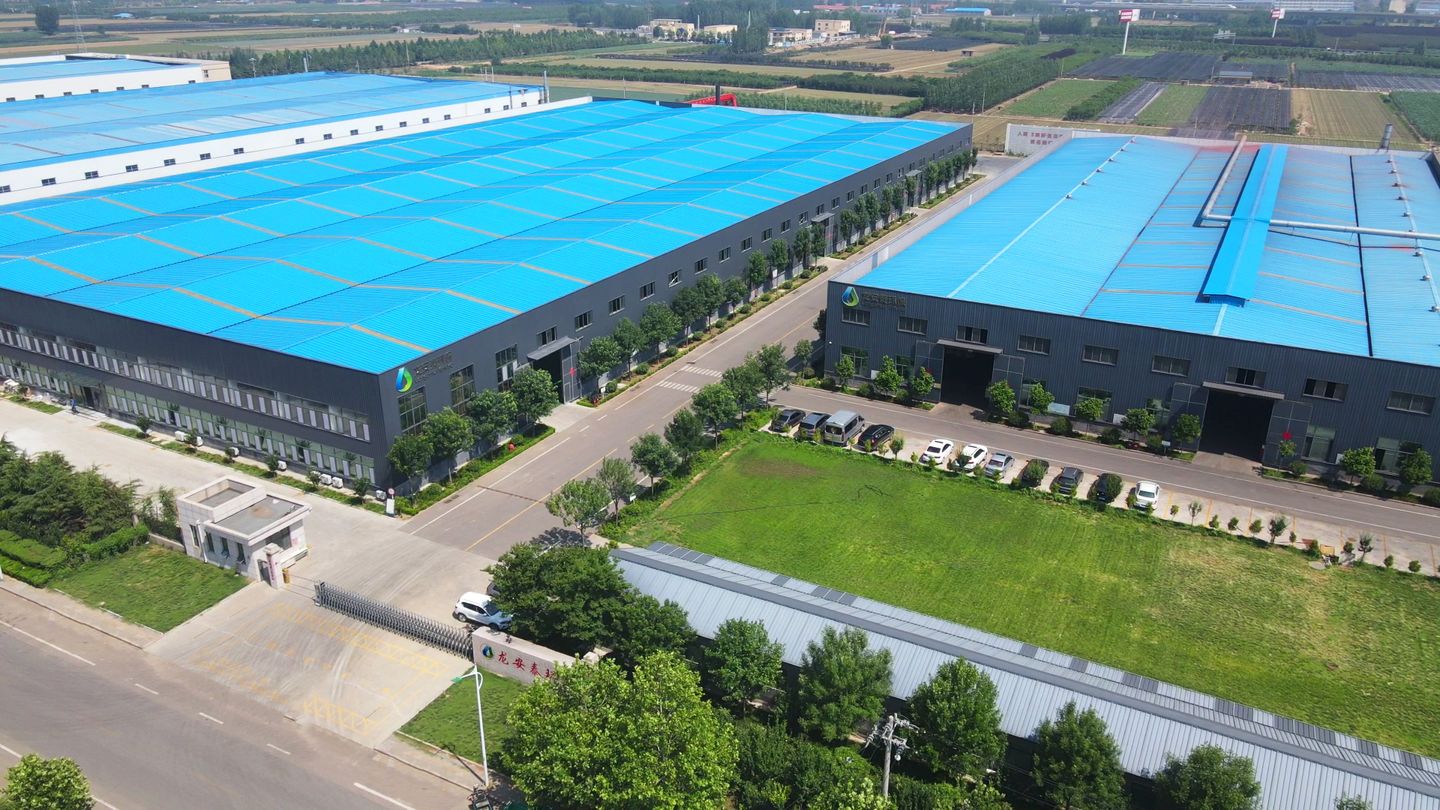
Shandong Long Antai Environmental Protection Technology Co., Ltd. products
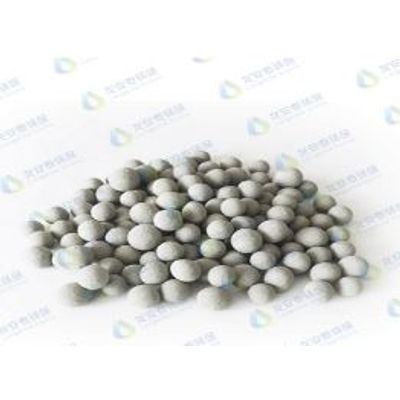
Longantai - Model LSF - Active Autotrophic Biological Nitrogen Removal Technology
The core of LSF active autotrophic biological nitrogen removal technology is Fe-S coupled biological carrier independently developed by Longantei. The biological carrier is composed of Fe-S nano-micronucleus and alkalinity load, which has large specific surface area and high efficiency. The principle of its action is that in anoxic environment, denitrifying bacteria take Fe-S nanonuclei as electron donors, nitro pollutants such as NO3- and NO2- as electron acceptors, and inorganic carbon (CO2, HCO3-, CO32-) as metabolic carbon sources to convert NO3- and NO2- and other pollutants in wastewater into N2. The alkalinity load was distributed evenly in the porous cage of the coupled biological carrier, which could form a synergic mechanism with Fe-S nanopores to effectively balance pH during nitrogen removal and realize self-maintenance of alkalinity activity in water environment.
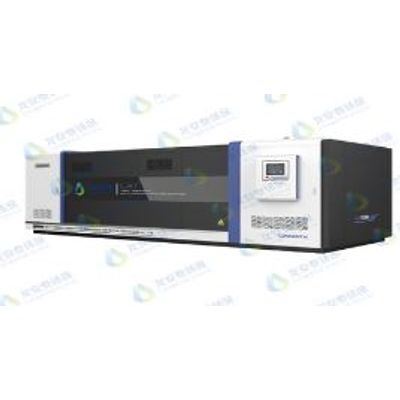
Longantai - Intelligent Integrated Device for Microchannel Multiple Catalytic Oxidation
Based on the principle of advanced oxidation treatment technology, free radicals, strong oxidizing particles and oxidizing free radicals (·OH, ·O2, SO4.-, H2O2, O3, OCl-, etc.) are generated in the process of micro-channel catalytic oxidation, which can react with organic pollutants in wastewater in a rapid chain reaction without any choice for oxidative degradation and improve the B/C ratio. The macromolecular organic matter that is difficult to be biodegradable is completely decomposed into simple inorganic molecules such as CO2 and H2O to degrade COD. In the process of treatment, the electron transfer is only carried out between the electrode and the waste water components, and the oxidation reaction relies on the hydroxyl radical generated by the system. It does not need additional oxidation reducing agent, does not produce sludge, and has no secondary pollution. It is a clean treatment method and environmentally friendly technology.
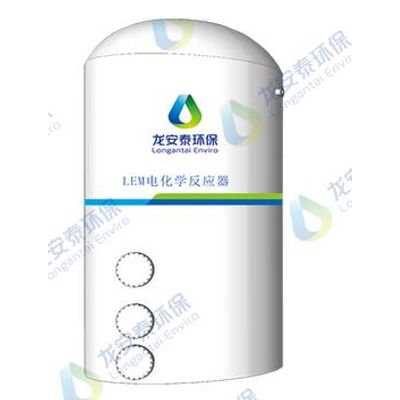
Longantai - Model LEM - Micro-Electrolysis Catalytic Oxidation Technology
The micro-electrolysis technology is an ideal process for high-concentration refractory organic wastewater treatment. This process is mainly used for high-salt, refractory and high-chroma wastewater treatment. The technology can not only reduce COD and chroma drasticallywith low cost, but also greatly improve the biodegradability of wastewater. The process has the advantages of wide application range, good treatment results, low cost, short treatment time, convenient operation and maintenance, as well as low power consumption etc. The technology can be widely applied to pretreatment and advanced treatment of various industrial wastewater.
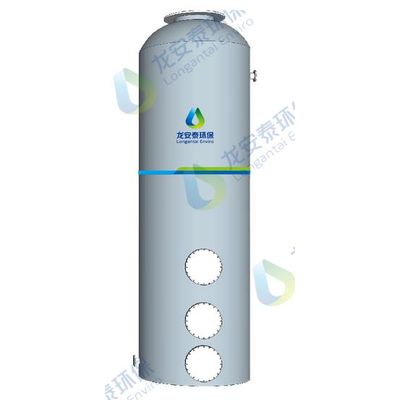
Longantai - Model LCO - Ozone Efficient Catalytic Oxidation Technology
Ozone catalytic oxidation technology is an efficient advanced treatment technology for sewage and wastewater, and become a hot application point in the field of wastewater treatment in recent years. Compared with ozone as a separate oxidant, the [, O H ] formed by ozone catalyst has a higher reaction rate and stronger oxidation capacity for organic matters, and even can oxidize almost all organic matters. The catalyst can catalyze ozone to oxidize simple organic matters in water to CO2 and H2O directly., or oxidize and decompose macromolecular organic matters into small molecules., which can be biodegraded easily.
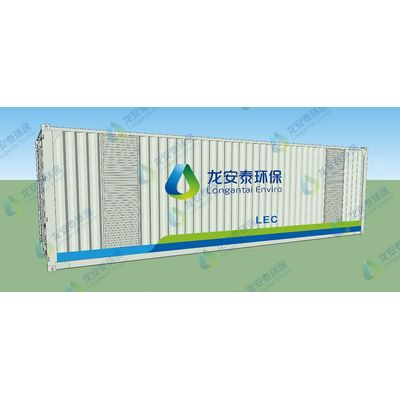
Longantai - Model LEC - Electrochemical Catalytic Oxidation Technology
Electro-catalytic oxidation technology directly degrades organic pollutants through electrode reaction imposed by an applied electric field.Combined with catalytic activity of the electrodes, the technology can generate a large number of free radicals with strong oxidation capacity to degrade organic pollutants. Due to its outstanding oxidation ability, low requirements on reaction conditions and hard to cause secondary pollution, the electro-catalytic oxidation technology is considered to be the most promising method.
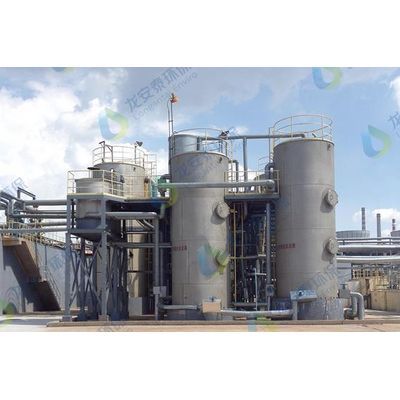
Longantai - Model LFD - Heterogeneous Fenton Catalytic Oxidation Technology
Organic matter and hydrogen peroxide diffuse from the main body of the solution to the vicinity of the active site on the surface of the catalyst for adsorption. Then, under the catalysis of the catalyst components, the hydrogen peroxide decomposes to generate OH, thus triggering a free radical chain reaction to oxidize and degrade the organic matter. Finally, the degraded products release from the catalyst surface and diffuse into the solution. However, no matter how the catalyst acts, the catalyst surface of the heterogeneous system is mostly subjected to a complex iron circulation process, thus maintaining the whole smooth catalytic oxidation reaction, in which the active species that cause oxidation are generated.
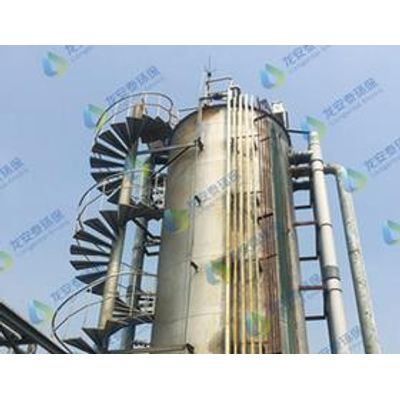
Longantai - Model LNX - Mudless Catalytic Fluidized Bed Oxidation Technology
Mud-free heterogeneous catalytic fluidized bed oxidation technology recycles red mud generated by Fenton or heterogeneous catalytic oxidation process , therefore no solidwaste is generated in the heterogeneous catalytic oxidation, thus realizing the recycling of iron and carbon and having higher economic and environmental benefits.
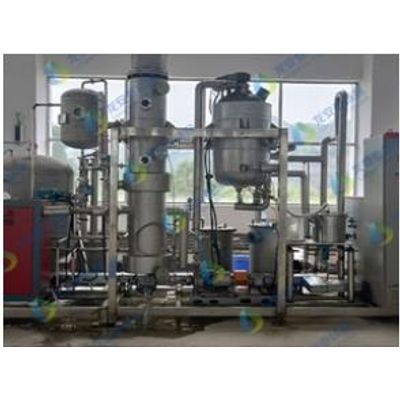
Longantai - Model LDT - Low Temperature Desalination Technology
According to the principle that the solubility curve of salts with temperature is different, excess solute, i.e. insoluble solute, will separate out from solution. For example, the alkali is separated out in winter (using changes in temperature). If the two soluble substances are separated or purified after mixing, whoever is more likely to reach saturation, the technology will use its crystallization process. For example, if sodium chloride contains a small amount of sodium carbonate impurities, the crystallization process of sodium chloride, i.e. evaporation crystallization, will be used; vice versa, the cooling crystallization will be used. "which is more likely to reach saturation" means that at the same temperature, the smaller difference the solubility of the soluble substance, the easier to reach saturation. Therefore, it is easy to separate out, and its crystallization method will be adopted.
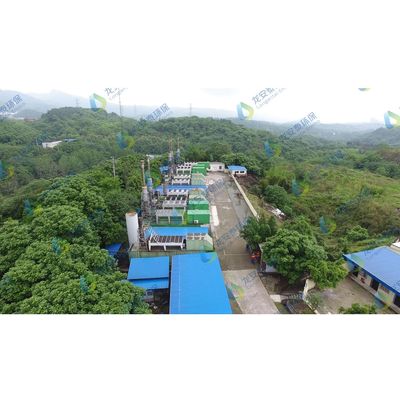
Longantai - Model LAC - Landfill Leachate Full Volume Direct Discharge Technology
LAC-I multi-media catalytic oxidation system adopts the reaction system composed of LAC-I catalyst produced by our company and supporting facilities to treat wastewater. The system can effectively degrade refractory compounds, such as large organic molecules with rings, phenyl, chelating groups, etc into small molecules through the catalytic oxidation, thus greatly reducing COD and organic nitrogen, and finally greatly reducing organic matters and organic nitrogen in effluent after flocculation and precipitation. The effluent of LAC-I system flows into LAC-II catalytic oxidation system for advanced oxidation,in which reduces ammonia nitrogen/total nitrogen in wastewater simultaneously. The final effluent of LAC-II can be qualified discharge directly.
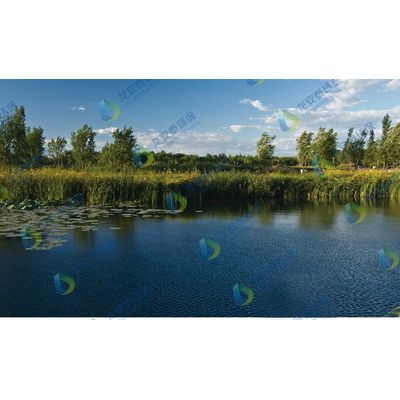
Longantai - Model LEPT - Water Body Maintenance Technology
LEPT water maintenance technology is mainly used for treatment and maintenance of reclaimed water, circulating water, landscape water and other kinds of water. It mainly includes water quality improvement unit, water conservancy improvement unit and biological control unit. The water quality improvement unit includes constructed wetland, coagulation sedimentation, filtration, air floatation, etc. The water conservancy improvement unit includes aeration and oxygenation, water circulation, mechanical agitation, etc. The biological control unit includes microorganisms, aquatic plants, and advanced animals such as fish and clams etc.