


- Home
- Companies
- Shuttleworth, LLC
- Products
Shuttleworth, LLC products
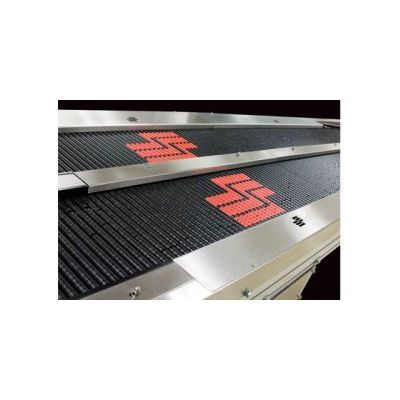
Slip-Torque
Slip-Torque® conveyor technology was pioneered by Shuttleworth in 1972 and has evolved through decades of practical application in numerous industries. It is based on polished stainless steel shafts individually powered by flexible belts on a line shaft or by a continuous chain. These stainless steel shafts are covered with segmented, loose-fit rollers, which become the conveyor surface. It is the weight of the product being conveyed combined with the coefficient of friction between the shafts and the inside diameter of the rollers that provides the driving force. As the weight of the product increases, there is a corresponding increase in the driving force supplied. As products stop, the segmented rollers beneath them also stop, creating very low backpressure accumulation and reducing product damage.
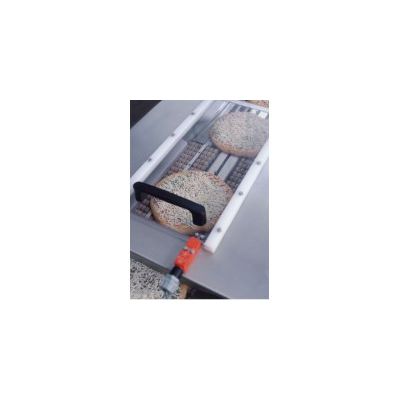
SmartFeed Conveyors
Shuttleworth offers a complete line of automated infeed conveyors for packaging machinery. Our unique Slip-Torque® design, with our low back-pressure roller surface, allows for gentle accumulation and minimizes potential product damage while allowing the wrapper to properly space the products.
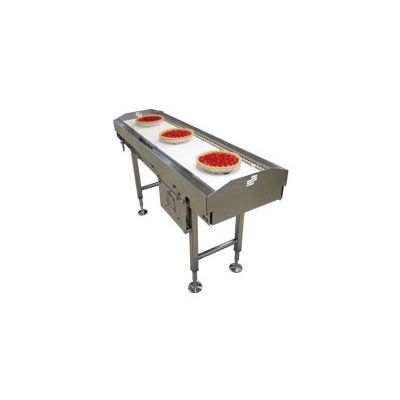
Easy Clean Conveyor
The Shuttleworth "Easy Clean" Slip-Torque conveyor has minimal horizontal frame surfaces where contaminants can collect. This conveyor product has both USDA and BISSC (Bakery Industry Sanitation Standards Committee) criteria incorporated in the design and construction. The stainless steel bolt-together frame has innovative 45 degree steel strength bends or "hems." The elimination of 90 degree steel bends allows contaminants to fall through the conveyor. Solid faced roller surfaces and loose roller spacing reduce possibilities for particle collections. These features simplify and expedite the cleaning process. The entire system including the motor assembly is designed for thorough food process cleaning. The roller spacing allows for easy access with either hot water or air pressure. Solid faced roller surfaces reduce possibilities for particle collection.