Steinmüller Babcock Environment GmbH
Refine by
Families
5 products found

Steinmüller Babcock Environment GmbH products

Digestion Reactor without Moving Components

The SBEng digester stands out due to its specific process dynamics: To ensure a plug flow characteristic in the digester the digestate moves horizontally around an internal partition wall. This wall effectively prevents short circuiting of the flow. In the vertical, the digestate is thoroughly mixed in a loop flow („airlift pump effect“) in the respectively actuated sectors of the digestion reactor, thereby ensuring efficient renewal of the digestate’s contact surface. This process characteristic is extremely effectively superposed by an effect that serves to enhance the performance with pulsed reactors: The ongoing process of the digestate rising and subsequently dropping again during the gas injection transfers a powerful mixing pulse, which leads to the early removal of the smallest gas bubbles from the digestate. The biochemical concentration gradient attained in this way encourages the direct resumption of the methanogenic metabolic process.

Biological Waste Treatment Plant with Anaerobic Digestion

The anaerobic degradation of the organic fraction, so-called „methanization“, represents an increasing portion of sustainable waste treatment. These typically moist fractions with a low calorific value in mixed household waste are barely suitable for thermal waste treatment, although they are ideal for biological conversion into biogas. The digestion can take place under mesophilic (35° - 40° C) or thermophilic (55° - 60° C) conditions, specifically tailored to the specific requirements of the feed material, the post-treatment and the quality requirements of the end products (e.g. TASi-compliant landfilling). The resulting digestate can be mechanically separated
into a solid fraction with approx. 50 % dry substance (DS) and a liquid fraction. This is partially recycled as dilution water for adjusting the DS concentration in the feed to the digestion process.

Flue Gas Cleaning

Fabric Filters

Our fabric filter technology has proven its worth in many different areas of application and industries. Even in difficult applications, separation rates of over 99.9% are achieved. The spectrum ranges from small and medium filters, for example in industrial applications or waste incineration plants, to large filters with up to 10,000 filter bags in large coal-fired power stations. The solid and effective structure means they can be used in extreme conditions, with low maintenance and at the same time large availability. As well as for pure dust separation, fabric filters can also be used in combination with activated carbon as an entrained flow absorber to remove gaseous pollutants such as mercury or dioxins.
Wet Electrostatic Precipitators

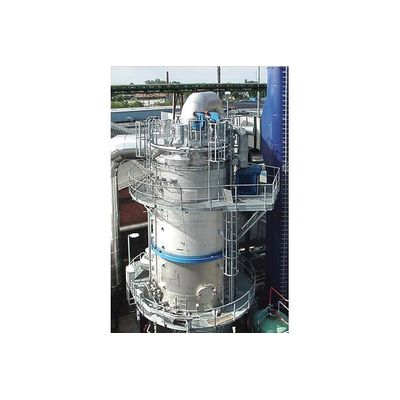
The function of dust separation in electrostatic precipitators is based on an electric field that is built up between the high-voltage discharge electrodes and the earthed collecting plates. When the flue gas flows through the electrostatic filter, the dust particles become electrically charged and are separated at the electrodes through the effect of the electric field forces.
Electrostatic Precipitator

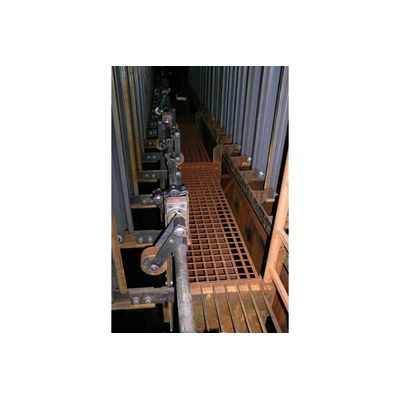
The function of dust separation in electrostatic precipitators is based on an electric field that is built up between the high-voltage discharging electrodes and the earthed collecting plates. When flue gas flows through the electrostatic precipitator, the dust particles become electrically charged and are collected at the plates through the effect of the electric field. Fine dust can be removed very successfully from the gas in this manner.