
Suzhou Jono Environmental Technology Co., Ltd applications
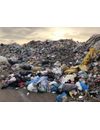
Mixed MSW is a general term for recyclable waste, organic waste, hazardous waste, combustible waste, etc.
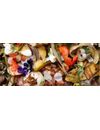
Organic waste mainly includes kitchen waste?food waste and garden waste.

Recyclables is defined as recycled waste, such as paper, cardboard, plastic,metal,synthetic materials, etc.
Zorba Aluminium Scraps is a form of nonferrous scrap metal consisting mainly of aluminum, especially that which is left behind after an automobile is shredded and the iron and steel is removed. It is made up of a combination of the nonferrous metals: aluminum, copper, lead, magnesium, stainless steel, nickel, tin, and zinc, in elemental or alloyed (solid) form.
AI visible light sorting for plastic recycling machines.
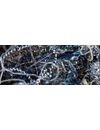
Industrial waste refers to solid waste discharged by machinery, light industry and other industries during the production process. It is mainly divided into five categories: food waste, general waste, construction waste, cleaning waste and hazardous waste. JONO uses the mature automatic sorting production line for industrial waste to manufacture raw materials for construction materials such as cement, concrete aggregate, brick and tile. Extract iron, aluminum, copper, zinc, nickel and other metal resources and manufacturing fertilizers and soil conditioners.
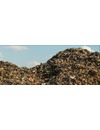
Landfill waste comes MSW. With natural biodegradation of organic matter, landfill waste in anaerobic environment will produce toxic flammable gas such as hydrogen sulfide, and methane. Illegal landfill that without seepage prevention also has risk of contaminating soil and polluting groundwater problems.
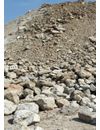
Waste generated during mine rectifying or construction and demolition, in which there is a high proportion of concrete and bricks, 0~5% of muck and 0~3% of combustibles.
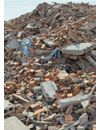
Construction or demolition waste, in which the slag content is more than 5%, the combustible content is 3-8% with no large strip of combustibles.
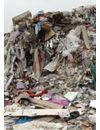
Decoration waste or waste generated in exhibitions, where the content of slag exceeds 5% and the content of combustibles exceeds 8%.