

Tallgrass Restoration, LLC services
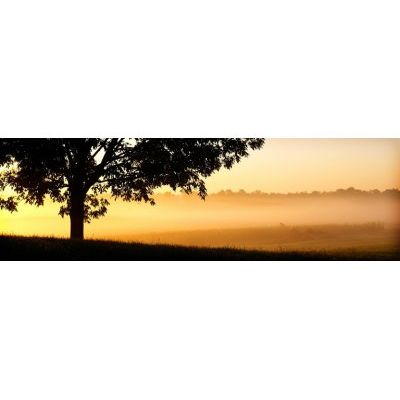
Controlling Invasive Species Through Ongoing Stewardship
Your native oaks may be barely visible behind a wall of buckthorn, your wetlands thick with purple loosestrife, or your once-diverse prairie now a weedy tangle, invaded by teasel and thistle. Keeping invasive plants under control is an on-going task, since native landscapes are surrounded by non-native plants whose seeds can travel by wind, animals, or people. We begin by clearing the current non-native invaders through a program specifically tailored to your site. The tools our licensed professionals use include a combination of controlled burning, conservative application of herbicides, ecological mowing, and tree removal. Next, we re-establish the native plant community through planting and seeding. Ongoing stewardship is essential to discourage repeat invaders.
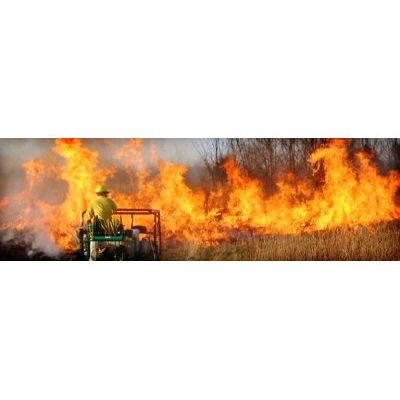
Prescribed Burns
Until recent times, fire was a natural part of life for our native woodlands, wetlands, and prairies. Ecosystems native to the Midwest depend upon periodic fire events to rejuvenate growth and ensure long-term survival. Modern tendencies to suppress fire allow invasive plants (weeds) to out-compete our native grasses and forbs, therefore reducing plant and animal diversity. Fire is one of the best management tools for continued invasive plant control. For over a decade, our trained ecologists have been applying prescribed fire in the Chicago region and beyond. After inspecting the site and acquiring state and local permits, we prepare and implement a detailed, fiscally responsive burn plan. We safely execute burns on any scale, from backyards of a half-acre to prairies hundreds of acres in size.

Invasive Species Control and Management
Invasive non-native plants are a serious threat to native species, communities, and ecosystems in many areas in the Midwest. They can compete with and displace native plants and animals, alter ecosystems functions, structures, and cycles, and promote other invaders. The good news is that many plant invasions can be halted. Even badly infested areas can be restored to healthy systems dominated by native species. This requires taking action to regulate and manage the invasive plants.
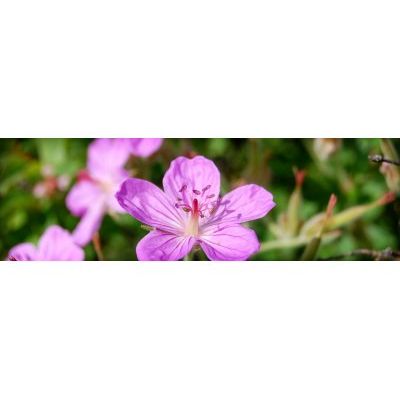
Land Planning
In order to optimize the restoration work on your property you need to understand your natural assets. Our professional ecologists have the training and experience to identify the flora and fauna on your property that allows us to develop a complete picture of the natural community. We can evaluate the quality of your property, characterize the habitat types, note any species of particular interest, track the performance of management and suggest innovative restoration techniques.
Wetland Delineations
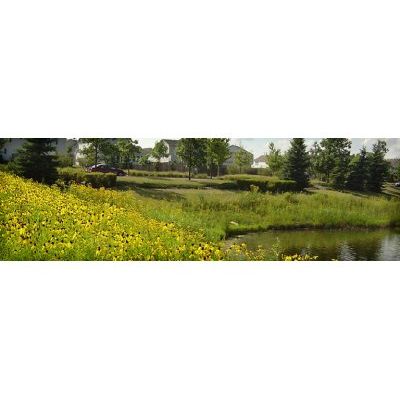
Wetland delineations are often a critical part of any landowner`s decision on land use. Wetlands play a critical role in our ecosystem and provide valuable services such as cleaning up polluted water before it reaches lakes, streams or ground water, storing floodwater, providing habitat, protecting shorelines, providing open space and sometimes recharging ground water.
Erosion Control
Ravine Erosion Control
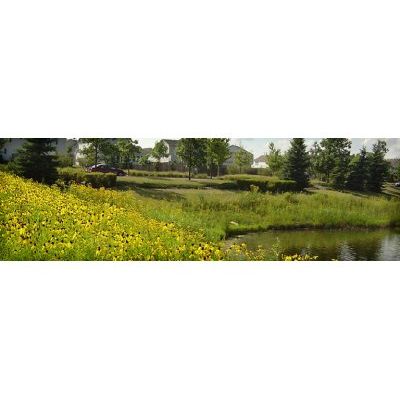
Ravines, bluffs, and hillsides can provide some of our region’s most exquisite landscapes, but these sloping habitats are subject to soil erosion when buildings, roads, or the dense shade of crowded trees disturbs the native plant community and alters the natural water flow. Whether gradual or sudden, soil erosion can be a distressing – if not dangerous – problem.
Shoreline Stabilization Products
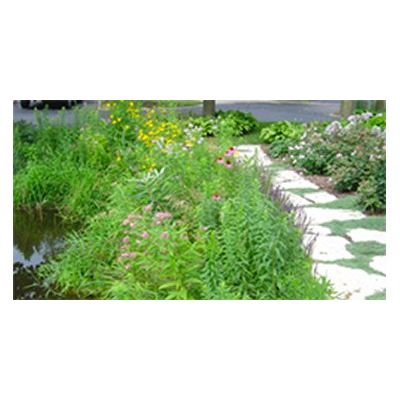
Even gentle waves lapping at the banks of your pond or stream can erode the shoreline soil, silt up the water, and carry away your land. Rip-rap stone or turf grass products might seem like stabilization solutions, but water will undercut these ineffective barriers. Stone and non-native grasses also can’t prevent chemical run-off from polluting the water and causing unsightly algal blooms.