


TCI International, Inc. products
Spectrum Battlespace - HF COMINT Solutions

TCI - Model 802C HF - Wideband Direction Finding System
The TCI Model 802C provides field-proven DF and signal acquisition in an integrated solution for COMINT applications. The 802C is based on an open and flexible client/server architecture that combines fast wideband signal search and direction finding with a complete set of signal analysis tools, including classification, decoding, demodulation and recording. It simultaneously supports automatic and manual signal intercept missions.
Spectrum Monitoring - Fixed Spectrum Monitoring Systems (SMS)
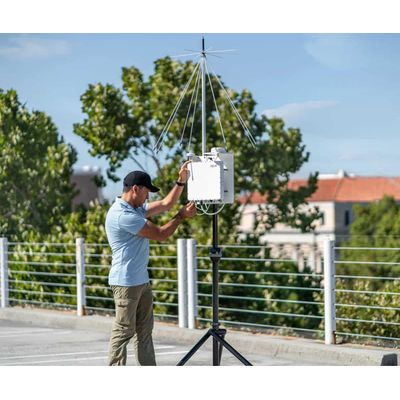
TCI - Model 709 and 753 - Compact Spectrum Monitoring Systems
TCI’s Model 709 is the next generation Compact Spectrum Monitoring System (CSMS) to detect and locate modern signals of interest for spectrum optimization, interference mitigation, public safety, and national security missions. The 709 leverages TCI’s 50+ year legacy of designing, deploying and maintaining the foundation for modular and scalable monitoring networks. The 709 provides high system sensitivity, low phase noise and high dynamic range to maximize system coverage and ITU measurement capabilities. The result: fewer systems required for monitoring and geolocation across large areas.
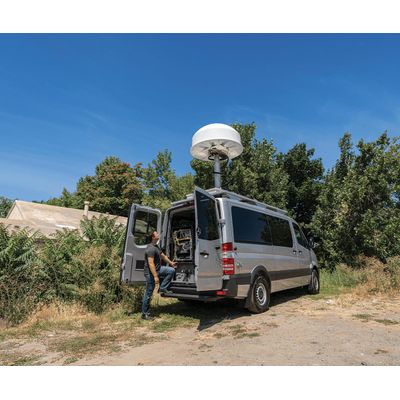
TCI - Model 739 - Compact Spectrum Monitoring System
The demand for spectrum bandwidth continues to rise as the number of wireless devices increases. Advances in wireless technology provide broader, more complex signals which compels Regulators to license broader bandwidths to alleviate crowding of traditional frequencies.
Spectrum Monitoring - Mobile Spectrum Monitoring Systems (SMS)

TCI - Model ITU Type 1 SUV - Mobile Monitoring Stations (MMS)
Communication regulators throughout the world use mobile monitoring stations (MMS) extensively to perform spectrum monitoring and geolocation missions. Modern communication technologies employ broadband signals with low transmitter power resulting in dense transmitter networks. It is often not viable to build up a fixed monitoring site network to cover all low power signal areas. That is why MMS are becoming more and more critical when managing spectrum for modern communications. TCI has previously sent kits of such mobile systems to customers for local installations. This is a simple and cost effective way to own an MMS for a variety of monitoring and interference geolocation missions.
Secure Tactical Data Links

TCI - Model Evenlode Series - Upgradable Lightweight Air Platform System
Evenlode is a series of equipment providing capability for a range of Information Exchange Requirements; equipment may be deployed for air, ground and maritime applications. Evenlode is offered at three levels of complexity with a defined upgrade path. Upgrading from Evenlode I to Evenlode II to Evenlode III uses the previously installed hardware.
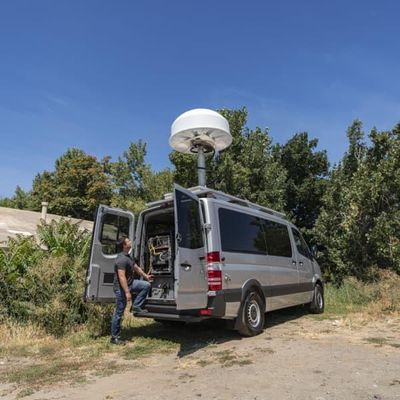
TCI - Model ITU Type 3 - Commercial Van Platforms System
TCI has developed two standard layouts for van-based MMS for up to 3.5 tons GVWR. These layouts are similar and only differ in the operator seating and desk arrangement. Layout L has one operator desk installed on the partition wall and one desk on the sidewall. Layout I have both operator desks installed on the partition wall, which makes more storage space available. The type of layout chosen will depend on customer preference and the anticipated mission types. Having both operator positions facing forward may be more convenient for on-the-move operations, while the L shaped layout provides more operator space during standing monitoring operations.
Products - Antennas
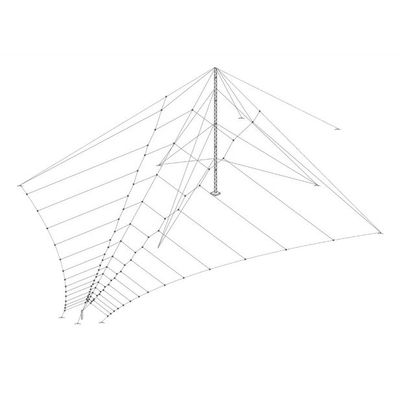
TCI - Model 501 - Short-Ranged Directional Antennas
Most communicators are well aware of the problems associated with “close-in” HF communications. Frequently it is easier to raise a station 2,000 km away than one’s base of operations 100 miles distant. To a large extent, the problems of short-range communications are related to inadequate antenna performance.
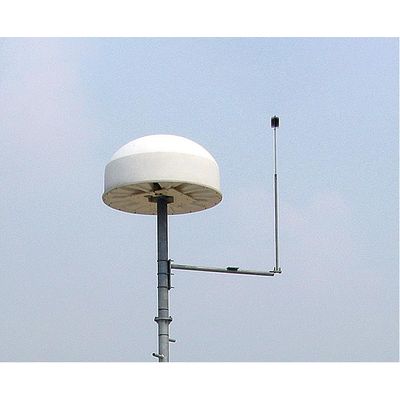
TCI - Model 503 - Vertical Curtain Directional Antennas
The 503 provides directional coverage over a 120° azimuthal sector. At the higher frequencies, most frequently used on long paths, the phase center of the structure is elevated, giving increased gain and lower take-off angles. This results in increased signal strength on long paths.