


- Home
- Companies
- Teledyne Gas and Flame Detection
- Applications
Teledyne Gas and Flame Detection applications

When employees are sent into a potentially dangerous confined space, you want to ensure their safety and your company’s compliance. Defined by the HSE as a place which is substantially enclosed (though not always entirely), and where serious injury can occur from hazardous substances or conditions within the space or nearby (e.g. lack of oxygen), confined spaces can be life-threatening if you don’t know what you’re dealing with.

Data Management enables businesses to utilize real internal data to shape business and process decisions without estimation and guesswork. Using technology to harness the power of everyday field data improves business performance and lets organizations focus on their core business, leaving the management of Gas detectors to Teledyne Gas & Flame Detection.
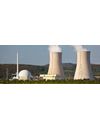
Gas detection requirements for power generation can vary widely based on the fuel source, which includes coal, oil, natural gas and nuclear. Regardless of the type of power facility, gas, fire and other hazards pose significant risk to employee safety and also can disrupt the supply of energy to commercial and residential customers. At Teledyne Gas and Flame Detection, our wide range of gas detection products meets the needs of all forms of power generation. Our century of experience, combined with advanced system design and multiple communication protocols, further positions us as your preferred partner.

In order to adequately face the challenges that a firefighter faces on a daily basis one should understand the importance of detecting the harmful gases present, in order to be alerted to danger and to ensure the correct precautions are taken to prevent exposure. Understanding the different types of gases and the dangers that they can pose to people is the first step in choosing the correct form of gas detection. Even the most common gases, such as oxygen and nitrogen, can have devastating effects if present at certain levels.
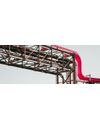
Industrial gases include all companies which manufacture atmospheric Gases, specific gases, semi-conductor gases and supply them to end users in different ways: on-site, cylinders, tanks to be used in lot of industrial manufacturing processes.
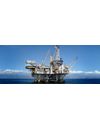
Oil and natural gas are part of everyday life. Together, these fossil fuels represent 86 % of global energy demand. Products produced from oil and gas are used throughout the world as fuel (such as gasoline and diesel fuel), or as building blocks for the petrochemical and chemical industries. The process to extract, transport and refine oil and gas is complex and wrought with danger to workers and to assets. One of the most dangerous is the risk of fire or explosion due to the presence of flammable gases and liquids. Toxic gases and chemicals encountered throughout the processes add the risk of asphyxiation, burns, cancer and system corrosion.

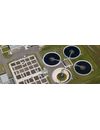
Wastewater and potable water treatment facilities produce and use various toxic and explosive gases such as methane, hydrogen sulfide, ammonia, carbon dioxide, carbon monoxide, chlorine, ozone, etc. In addition, in confined spaces, the increased formation of toxic gases and the decreased concentration of oxygen make these areas particularly dangerous for workers. The risk can be evaluated by measuring worker exposure to various pollutants present in the air in work areas. The measured concentrations are then compared to the 8-hour time weighted averages for exposure (TWA) and to recommended exposure limits for shorter time periods (less than 15 minutes).