

The John Wood Company, LLC products
Plumbing & Heating Tanks
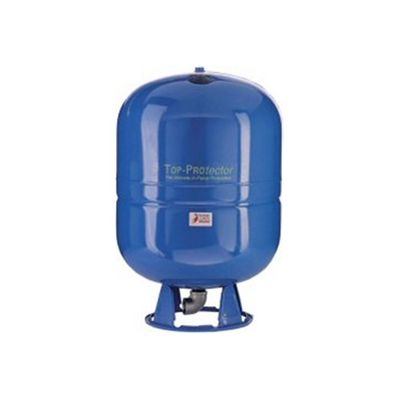
Model JNER Series - Non-Code Diaphragm Type Tanks
This style tank is divided in half by a butyl rubber diaphragm, one side being the water side, and the other being the air side. The water side is connected to the pipe work in the system, and the air side is maintained using a simple car-tire type valve, also known as a Schrader valve. As pressure descreases in the system, the diaphragm is pushed against the inlet, and as the water pressure increases, the diaphragm moves away from the inlet and compresses the air on the other side.
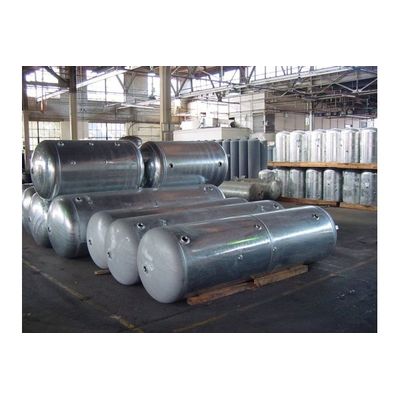
Model JVPG Series - Galvanized Hydro-Pneumatic Storage Tanks
Galvanized storage tanks are available for hot or cold applications. The hot-dipped galvanizing process provides a durable maintenance-free protective coating. During galvanizing, molten zinc reacts with the surface of the base material to form a series of zinc/iron alloys that provide an inner layer of protection against corrosion. This style tank is suitable for temperatures up to 140 F for potable water applications and 160 F for non-potable water applications. We offer non ASME designs.
ASME Tanks Accessories
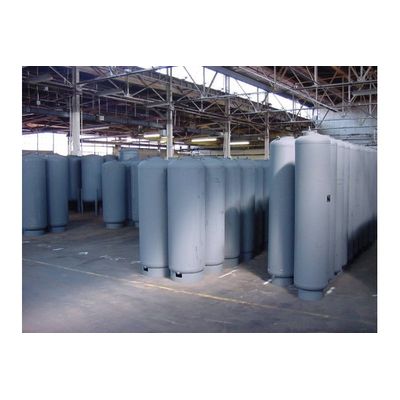
ASME Bladder Type Expansion Tanks
Expansion tanks are designed to absorb the expansion forces of a heating or cooling system to maintain the proper system pressurization. In contrast from diaphragm tanks, bladder tanks completely enclose the water inside a replaceable butyl rubber bladder (other bladder materials available upon request), eliminating problems such as water-logging and tank corrosion. Air precharge pressure is maintained using a car-tire type valve, also known as a Schrader valve. Similar to other items in a heating or cooling system, bladder tanks must be maintained to ensure proper operation. Precharge pressure must be field adjusted per the operating conditions of the system it is being installed in. See IOM for more details regarding proper maintenance procedures.
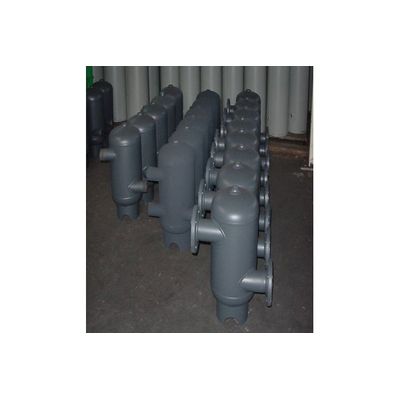
ASME Tangential Air Separators
Entrapped air can cause many problems in a piping system, including loss of efficiency, pipe corrosion, pump damage, increased energy consumption and irritating noises. Tangential air separators are designed to enhance the air separation efficiency. The vortex action allows the heavier air-free water to move to the vessel wall area while forcing the separated air into the center where it is vented out of the top of the separator. Water enters the vessel through the top connection, and exits through the bottom nozzle, free of air bubbles, which helps protect the system from entrapped air problems.