
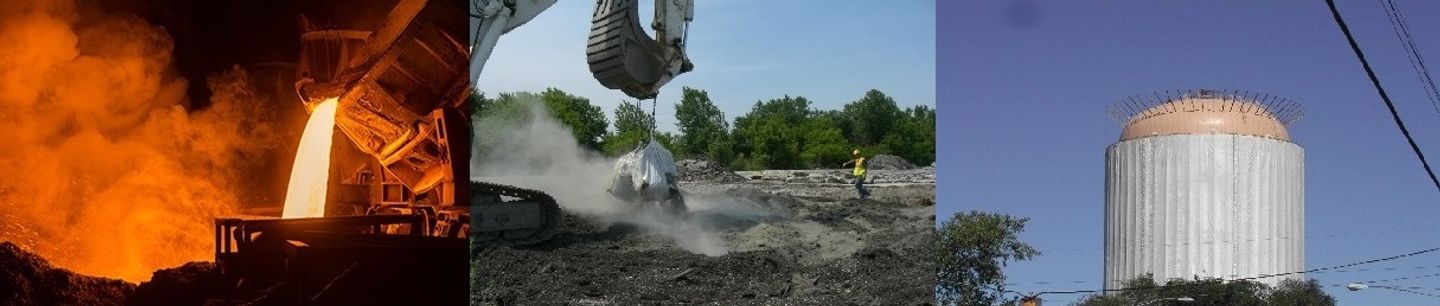

The TDJ Group, Inc articles
Disposing of metal-contaminated soil should be done with caution to prevent environmental harm. The specific method of disposal may vary depending on the severity of contamination, local regulations, and available resources. Below are some general steps you can take.
TDJ Group has the knowledge and expertise to aid in the treatment and disposal of metal contaminated soils. We offer a simple solution for tre
The effectiveness of Blastox® in landfill environments is being questioned by companies offering other
technologies. References have been made that Blastox® cannot pass certain leach tests. The following
information will clarify these issues and provide an easy-to-understand, fact-based response regarding the long
term stability of Blastox®.
Specifically, the ability of Blastox® to pass certain leach tests has been challenged. The truth is that the EPA
requires the admin
Various testing was performed using Blastox in a vapor blast system. A pre-test of the Blastox® material was performed by adding water with garnet into a bucket to see if it would harden. The material did NOT harden and seems to settle to the bottom.
Two (2), Five (5) gallon pails of blended abrasive was loaded into EcoQuip® skid system. Media was blasted using a #8 nozzle connected to a 50 ft. 1 1/4″ hose. Varying flow rates were tested. 10 cycles per minu
Carpenter Brothers, Inc. is distributor of TDJ Group’s Bantox® & Blastox® products, through their subsidiary J Carpenter Environmental. These products serve to stabilize various types of ferrous and non-ferrous foundry waste streams that have heavy metal contamination.
Carpenter Brothers invited James A. Lively, VP of Sales & Marketing to speak at the North East Wisconsin AFS chapter meeting on January 9, 2023 to provide on-going e
What are Lead Paint Disposal Methods?
The EPA has published a list of what it deems the Best Demonstrated Available Technologies (BDAT) for the stabilization of D008 and P+U Lead Wastes. Lead paint disposal and debris are included in this classification. BDAT stabilization technologies include “lime/fly ash mixtures, cement, concrete mixtures, or other proprietary or non-proprietary formulations”. Blastox® uses these chemistries.
Lead Contamination in Soil Expertise
For more than 30 years, TDJ has assisted in Lead Contamination in Soil, lead paint sandblasting, and metal casting (ferrous & nonferrous) industries in the stabilization of heavy metal contaminated wastes. Millions of tons of industrial waste have been safely stabilized using our chemistries, and more than 150,000,000 square feet of lead paint has been removed using TDJ chemical abrasive additives. TDJ chemistries are the industry model for saf
The Price Battery plant operated in the Borough of Hamburg, Berks County, Pa., from approximately 1940 to the mid-1990s. The site, about 1.2 square miles in size located in a mixed commercial/residential area in the former Price Battery facility. During operations, battery casings broke open and the lead plates are removed for smelting. The on-site battery plant lead smelter produced emissions from its stack that contaminated the residential areas around the facility.
Soil Remediation Case Studies: Metal Stabilization Product Blastox® 215
Product Chemistry
Blastox® 215 is a complex calcium silicate chemistry listed as US EPA Best Demonstrated Available Technologies (BDAT) for stabilizing heavy metal wastes, especially lead and cadmium. Custom chemistries are also available to stabilize chromium and other toxic metals. These soil remediation case studies will explain how Blastox works.
Product Chemistry
Blastox 215 is a complex calcium silicate chemistry listed as US EPA Best Demonstrated Available Technologies (BDAT) for stabilizing heavy metal wastes, especially lead and cadmium. Custom chemistries are also available to stabilize chromium and other toxic metals. These soil remediation case studies will explain how Blastox works.

The keys to a successful contaminated soil mixing method is (1) using the right reagent, (2) using the right dosage and (3) achieving good mixing of the reagent and the waste. If there has been extensive testing of the remedial site that shows both the lateral limits and depth of the contamination, then it is recommended that a grid be established over the area before mixing begins.
Typically, a grid of 25’ x 25’ or 50’ x 50’ is used when contaminati