

Toshiba Water Solutions Private Limited products
Aerobic Biological Treatment
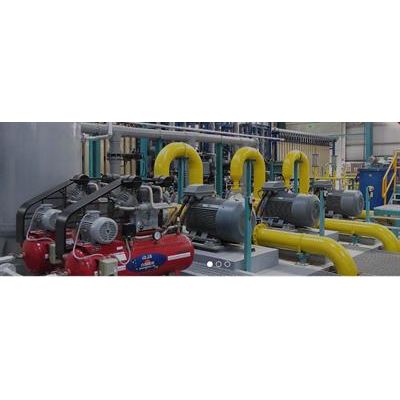
Toshiba - Conventional Activated Sludge System
The activated sludge process is a conventional biological process that is used for reduction of organic matter present in the wastewater. It basically involves the oxidation of carbonaceous biological matter, for reduction of the organic pollutants. The process takes advantage of aerobic micro-organisms that can digest organic matter in wastewater, and are then wasted as sludge, thereby removing the non-active microbes from the system. The supernatant from this process can be further clarified in a secondary clarifier, thus providing an effective reduction of pollutant parameters.
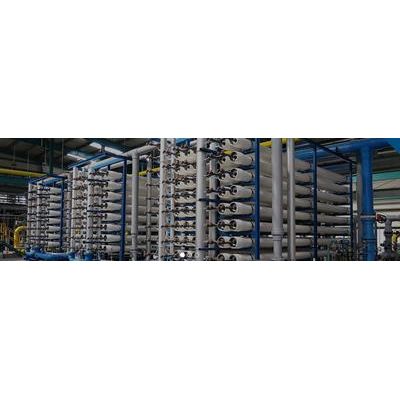
Toshiba - Membrane Bioreactors (MBR)
The membrane bioreactor (MBR) has emerged as an efficient technology for treating municipal and industrial wastewater. In principle, MBR is a combination of conventional biological treatment processes with membrane filtration to provide an advanced level of organic and suspended solids removal, and in some cases nutrient removal. In an MBR system, the membranes are submerged in a biological reactor, supplied with oxygen to maintain aerobic conditions. The membranes have porosities which can be considered between micro and ultrafiltration. By using MBR technology we can eliminate the requirement of secondary clarifier as well as any downstream filtration.
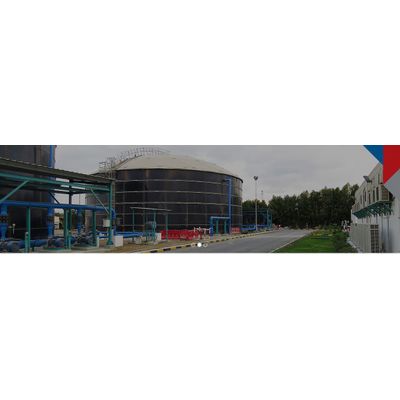
Toshiba - Moving Bed Bio Reactor (MBBR) Technology
Moving Bed Bio Reactor (MBBR) technology is an advancement over the conventional activated sludge technology and is a biological process of attached growth type. MBBR technology is an activated sludge treatment process where plastic media is used for the growth of bacteria. The plastic media is mixed in the tank by the aeration system which maintains effective contact between the organic matter in the wastewater and the microbial mass on the media. By using this media, large surface area is provided for the bacterial growth which reduces the foot print of the aeration system. The media is made of a material with a density close to the density of water.
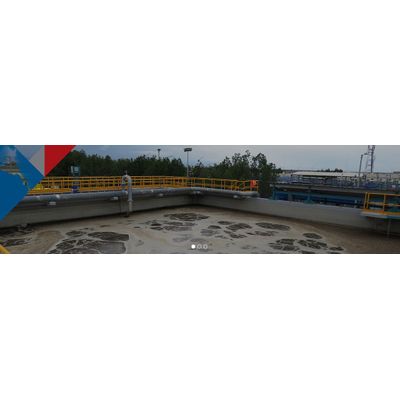
Toshiba - Sequential Batch Reactor (SBR)
Sequential Batch Reactor (SBR) is a type of activated sludge process which consists of a sequence of steps that are carried out in a single compartmentalized tank. In SBR, the complete biological treatment is divided into cycles with each cycle being of specific duration, during which all treatment steps take place. A basic cycle comprises of the phases such as wastewater filling, aeration, settling and decanting. Fine bubble diffusers are provided in SBR basins to maintain aerobic conditions. Secondary clarifier at the downstream of SBR is not required. Sludge recirculation forms an integral step and the surplus activated sludge is removed to by sludge wasting to sludge sump. After the decanting phase, sludge wasting shall take place. A programmable logic controller (PLC) is generally used to control the sequential nature of the complete process.
Wastewater Reclamation/Reuse
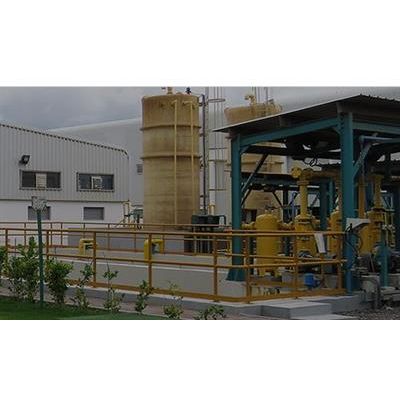
Toshiba - Microfiltration/Ultrafiltration System (MF/UF)
Microfiltration (MF) and Ultrafiltration (UF) are a type of high end physical filtration process where wastewater is passed through a special pore-sized membrane to separate microorganisms and suspended particles from water / wastewater. MF / UF are popularly used as effective pre-treatment where downstream reverse osmosis is used. In combination with reverse osmosis, MF / UF may provide effective degradation of undesired contaminants, rendering it suitable for intended use.
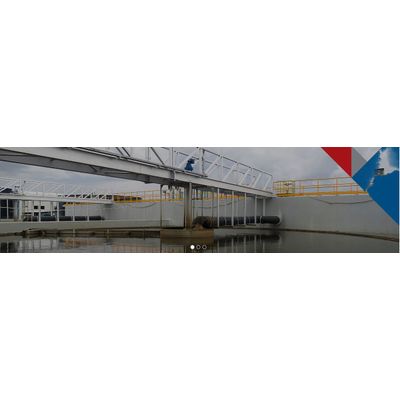
Toshiba - Reverse Osmosis System
Reverse Osmosis process is used to produce high – quality demineralized water, suitable for use as process water, cooling water make-up, and boiler feed water. Especially where the client looks to minimize the use of chemicals which are used as regenerants associated with the most conventional demineralised ion exchange process. Reverse osmosis is a simple process. The minimal use of chemicals makes it environmentally desirable with lower operational and maintenance costs.