


Trevi nv products
Water - Techniques - Removal of Organic Pollution
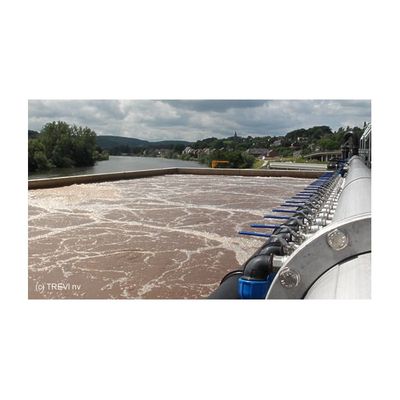
Biological Wastewater Treatment Plant
Biological wastewater treatment plants exist in several variations. The most important differences are found in the sludge/water separation process. In a continuous activated sludge system the flocks settle in a clarifier. In a sequencing batch reactor (SBR) the aeration and settling processes take place in the same reactor. In a membrane bioreactor (MBR) the separation is done by means of membrane filtration.
Sequential Batch Reactor (SBR) System
Biological wastewater treatment plants exist in several variations. The most important differences are found in the sludge/water separation process. In a continuous activated sludge system the flocks settle in a clarifier. In a sequencing batch reactor (SBR) the aeration and settling processes take place in the same reactor. In a membrane bioreactor (MBR) the separation is done by means of membrane filtration.
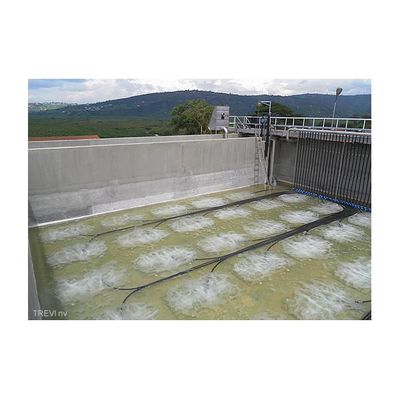
Biological Nitrogen Removal Plant
A biological wastewater treatment plant always removes a certain amount of nitrogen from the waste water thanks to the growth of the biomass. When the nitrogen-carbon ratio in a waste water is high, the incorporation of nitrogen in biomass is often not sufficient to respect the discharge limits. By expanding a biological wastewater treatment plant with a nitrification-denitrification process the excess nitrogen is removed biologically. During this process ammonium nitrogen in the waste water is converted to nitrogen gas in two steps. The first aerated step is the nitrification process. During this process nitrifying bacteria convert ammonia to nitrate. Nitrate is converted to nitrogen gas (N2) in a second non-aerated step. Nitrogen gas is a harmless gas that is abundant in the atmosphere. During this step organic matter is consumed.
Membrane Bioreactor (MBR) System
A membrane bioreactor (MBR) is a biological wastewater treatment system that uses microfiltration or ultrafiltration membranes to separate treated water and biomass. These membranes have a pore size of 0,1 µm or smaller and separate all the bacteria and suspended solids from the purified water. The membrane module can be submerged in the aeration basin or placed in a separate tank outside the aeration basin.