


TRS Group, Inc. products
Thermal Remediation
TRS - Thermal Remediation Technology
Remediating the subsurface environment can be a daunting challenge, as subsurface heterogeneity and groundwater flow dynamics make it extremely difficult to contact the contamination with remediation fluids. Further, simply digging it up and hauling it away can be prohibitively expensive. Heating the subsurface essentially eliminates these issues, as we know how to apply heating technologies in very complex environments, including all types of soil and rock. We routinely reduce contaminant concentrations by more than 99% and guarantee results. Target contaminants include chlorinated solvents, petroleum hydrocarbons, PAHs, pesticides, energetic compounds and PFAS. Thermal remediation is certain, safe and fast. In fact, we guarantee it.
PFAS Removal Technologies
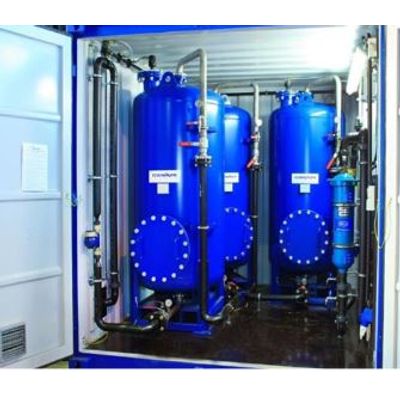
PerfluorAd - PFAS Water Remediation Technologies
Per- and polyfluoroalkyl substances (PFAS) are a family of more than 5,000 compounds that can persist in the environment for centuries. Further, they are quite soluble and have low vapor pressures, which means they do not volatilize readily. Cornelsen, a TRS Europe partner, has developed PerfluorAd, a patented PFAS-impacted water treatment technology that involves mixing the aqueous phase PFAS with a flocculent, dropping out up to 99% of the anionic PFAS. Simple filtration methods, such as sand packs, filter the precipitated floe for subsequent treatment.
PerfluorAd - Model AFFF - PFAS Cleaning Fire-Fighting System
The PerfluorAd system is ideal for cleaning out fire-fighting systems, such as trucks, storage vessels, hoses and piping, impacted by aqueous film forming foam (AFFF) that contains per- and polyfluoroalkyl substances (PFAS).
FlexHeater - PFAS Removal - Thermal Conduction Heating Technologies
Applying our FlexHeater thermal conduction heating technology, we can generate temperatures to volatilize per-and polyfluoroalkyl substances (PFAS) in situ from the vadose zone or ex situ from a TRS-designed treatment cell. PFAS impacts are prevalent in the vadose zone, as the deposition of these compounds resulted largely from the use of aqueous film forming foams.