

Ultrawaves Wasser & Umwelttechnologien GmbH services
Research & Development Service
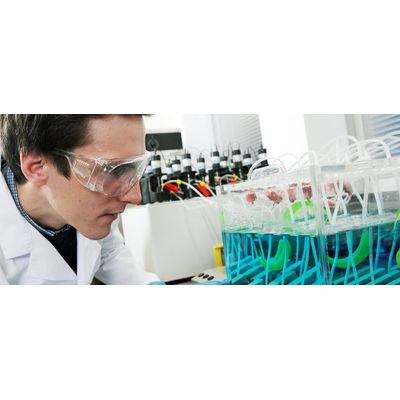
ULTRAWAVES pursues continuous practice-orientated research and development at our Hamburg laboratory in order to further improve our ultrasound technology and systems, and to find optimum solutions for our customers. In our laboratory in Hamburg we routinely perform physical, chemical and biological analyses of the effects of ultrasound. We research new application areas for use of our high-power ultrasound systems and continuously improve the existing processes. We also perform specific tests for our customers and accompany you until the ideal solution has been found.
Laboratory Tests Service
ULTRAWAVES has set up its own laboratory to satisfy specific requirements of its customers. As a result, we are able to provide you with reliable information on the effect of our high-power ultrasonic systems on aqueous suspensions (e.g. biomass, sludge) or other feasible applications in industry.
Sludge Treatment Service
Conventional anaerobic digestion of sewage sludge is limited by the hydrolysis step (technical digestion limit). Treating (waste activated) sludge with ultrasonic overcomes this limit. The anaerobic digestion process is intensified and further degradation is achieved. This reduces the quantity of digested residual sludge, while biogas production increases.
Wastewater Treatment with Ultrasonic
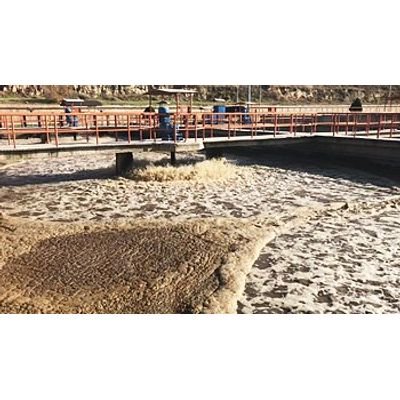
In biological nitrogen elimination, carbon must be provided for the denitrification stage. Normally, methanol or other chemicals have to be bought in for this purpose. Ultrasonic breaks down bacterial biomass from the excess sludge. This makes the cell contents available as carbon carriers, which can be added to the denitrification process. At the same time, nitrogen degradation increases.
Biological Nitrogen Degradation Service
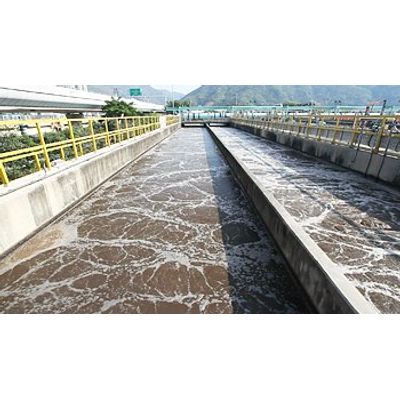
The biological nitrogen degradation takes place through nitrification and denitrification. A successful degradation process requires an additional carbon supply to be provided for the denitrification stage. Normally, methanol or another external carbon source is bought in and added to the process for this purpose. Sonication of the excess sludge with ultrasonic breaks down the biomass. This releases the cell contents – i.e. ideal carbon carriers –, which are then available as an internal source of carbon in the denitrification stage. Biological nitrogen degradation in the wastewater treatment plant can therefore be maintained or even intensified. If part of the sonicated sludge is returned to the biological phase, the quantity of sludge to be disposed of is automatically reduced. Use of ultrasonic for the degradation of nitrogen was successfully tested in practice and, for example,has been in operation in Bünde municipal wastewater treatment plant since 2006.
Environmentally Friendly Disinfection Services
Ultrasonic can also be used for the disinfection of turbid and highly concentrated media, e.g. process water and wastewater, where the standard chlorine and UV methods fail. Germs attach to suspended particles or flocks and therefore easily escape disinfection by UV. Ultrasonic can be used to break down these agglomerations, so that the germs exist in isolation and resuspended. This makes them accessible to the classic methods once again, and they can be successfully attacked. Whether ultrasonic is used alone or in combination with conventional variants – effective disinfection is ensured.