

UNIHA Wasser Technologie GmbH products
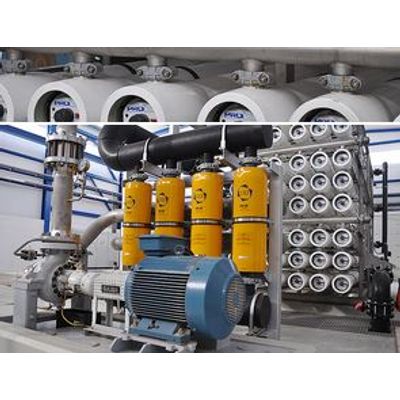
Uniha - Reverse Osmosis / Desalination System
Desalination using sea and brackish water reverse osmosis (SWRO and BWRO) membrane technology has become a viable option for the development of new regional water supplies. Reverse Osmosis (RO) is also a widely accepted technology for industrial water purification. Effective mineral and salt removal converts previously unusable waters into a high-purity resource for industrial process uses.
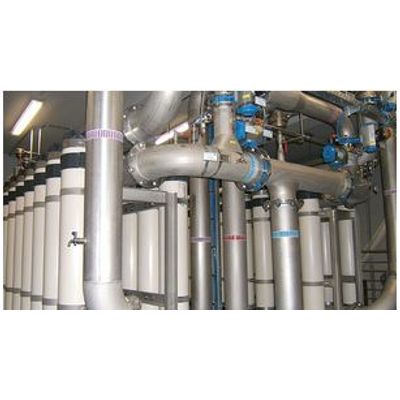
Uniha - Ultrafiltration System
Efficient and effective water treatment generally requires a combination of different methods and technologies. This combination depends on the raw water and the cleaned water needed. The deployment of ultra-filtration offers significant advantages over conventional water treatment methods. There are now numerous applications where ultra-filtration can replace or effectively supplement sand filtration.
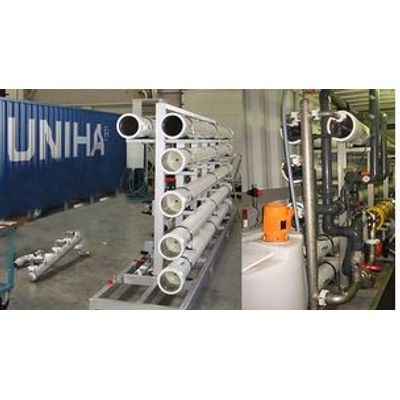
Uniha - Renewable Powered Desalination System
Remote locations suffering from water scarcity need special solutions for water treatment. Where there are no, or only small electric grids, new solutions are needed for power supply and flexible plant operation. We provide small scale stand-alone desalination units with renewable energy production (wind, sun, and biomass) and storage as well as waste energy use.
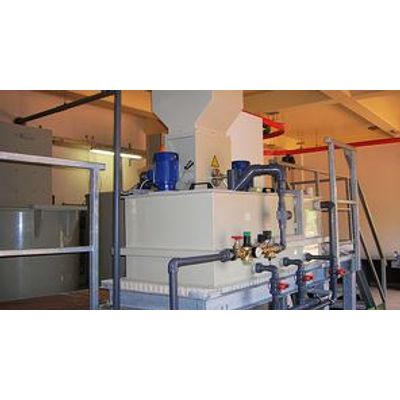
Uniha - As/Fe/Mn/CH4 Removal System
Many ground water sources contain excessive concentrations of arsenic, manganese and iron as well as ammonia and methane. These chemicals are potentially harmful, they impair the aesthetic quality of the water or cause operational problems in the water network. We provide tailor-made solutions to remove these compounds and to safeguard your drinking water quality.
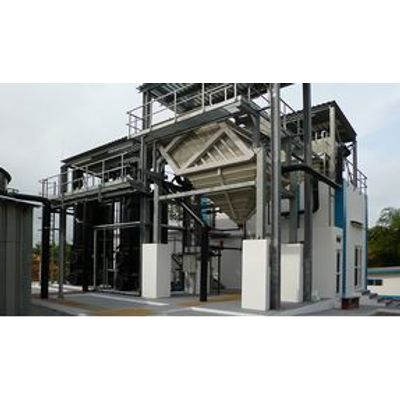
Uniha - Surface Water Treatment System for Villages
The UNIHA Compact WTP combines Automatic Backwash Gravity Filter technology with high efficiency treatment schemes designed to provide reliable and flexible performance for today’s stringent effluent needs. The system is a true-conventional treatment system and is specifically designed for turbidity, TSS and colour removal from surface water. All the necessary treatment steps occur within an optimized area, without the need for an additional facility. The gravity filters can function without control panels and automatic valves during backwash. The UNIHA Compact WTP system is designed to reduce electro-mechanical components so as to provide a convenient and reliable system for operational staff while minimizing plant maintenance.
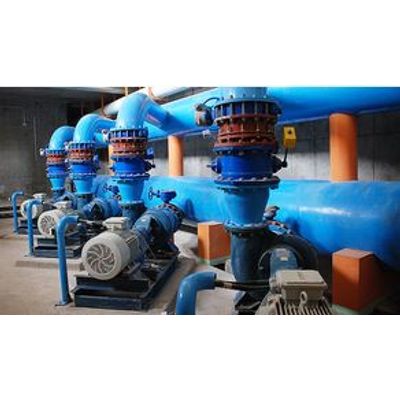
UNIHA - Surface Water Treatment System for Cities
UNIHA supplies everything necessary to achieve large and small scale upgrades and new projects for the municipal water treatment market. Our commitment is to ensure safe and economic drinking water in Europe, Africa, Asia, the Middle and Near East. UNIHA designs treatment systems that range from the traditional to the more sophisticated, such as membrane-based systems.
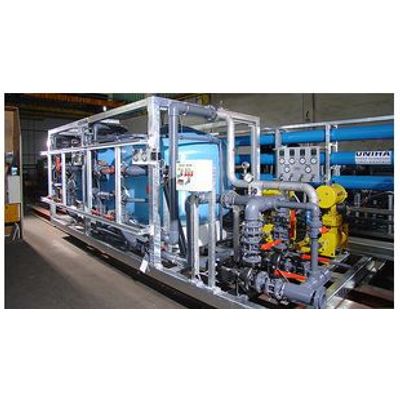
UNIHA - Industrial Water Treatment System
The return of investment and the saving of resources are crucial for every industrial water treatment project. We tailor the optimum treatment plant based on the specific life-cycle requirements. This includes the assessment of reuse and energy saving potential. UNIHA serves all industries such as food, oil & gas, petrochemical, steel, mining, cement, pulp & paper. UNIHA understands the importance of ensuring the quantity and the quality of water resources while at the same time controlling the environmental impact of industrial activities. In partnership with the client, UNIHA develops a business strategy to optimize water and wastewater treatment facilities.
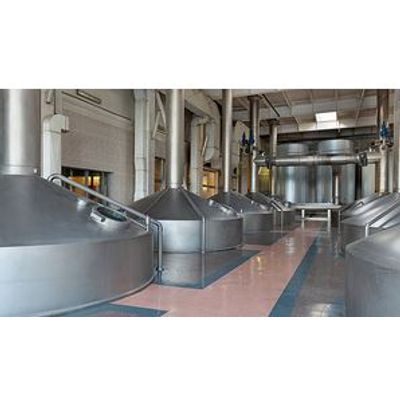
Uniha - Wastewater Treatment and Reuse System
Waste water treatment involves removal or recovery of waste water constituents harmful to any specific point of disposal and to the environment in general. Domestic, community and many sorts of industrial waste water are treated by biological purification processes, whereas many other industrial wastes need to be purified by physical/chemical treatment methods. For biological treatment processes, there are at least eight typical models, together with a number of conventional modifications for these models. However, because of the wide variety of parameters and specifications involved in each individual case, very careful investigations need to be conducted on any raw waste water. In addition, pilot studies are carried out to determine the necessary design parameters for plant engineering.