

- Home
- Companies
- Untha Shredding Technology Gmbh
- Applications
Untha Shredding Technology Gmbh applications
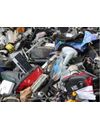
In today’s throwaway society, waste electrical and electronic equipment (WEEE) poses one of the world’s biggest recycling problems. Despite stringent regulations, more than 2 million tonnes of WEEE are produced and discarded every year, in the UK alone. But within every piece of ‘redundant’ equipment lie a number of high-value component parts that – in line with the waste hierarchy – should be liberated, segregated and recycled. It doesn’t just make environmental sense – this methodology can yield impressive business revenue too.
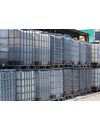
From blighting the world’s oceans, to their single-use unacceptability, plastics have become one of – if not the – most talked about ‘wastes’ on the planet. Addressing the problem at source is now a priority for both David Attenborough and Westminster MPs, as well as the general public. With product manufacturers being tasked with helping to address the issue, we should now finally see the much-needed step-change that is required to promote greater reuse and recycling of plastics. But where does shredding fit in?
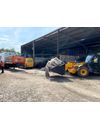
End-of-life mattresses are notoriously difficult to move, store and process, which means they’re widely considered a huge headache for the resource sector. Some operators would even go so far as to presume they’re economically unshreddable. Until now… As UNTHA’s innovation has continued, so too have the possibilities when it comes to mattress shredding. We want to put a stop to the 167,000 tonnes of mattresses – that’s 7.5 million units – sent to landfill in the UK, every year. And, through clever engineering, we can even help you achieve a 100% material recovery rate.
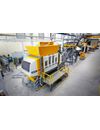
Once representing a costly disposal problem for UK businesses, commercial and industrial waste is now being increasingly harnessed for its resource potential. With operators the length and breadth of the country designing savvy lines to maximise material recovery rates for reuse and recycling, the residual ‘waste’ can now be processed, with ease, for alternative fuel production.
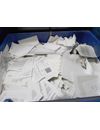
Sensitive waste must remain in safe hands. The 2018 introduction of the General Data Protection Regulations (GDPR) may have made data security a mainstream concern, but the secure handling of confidential waste and sensitive products has been one of UNTHA’s priorities for the last 40 years. Legislation governs the compliant processing of everything from private documents and electronic files/hard drives, through to bank notes, DVDs, counterfeit goods and even uniforms. Each of these material streams – and more – must be securely destroyed to prevent a breach, as the financial and reputational risks associated with non-compliance are huge.
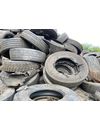
With a staggering 1.5 billion tyres reaching their end-of-life, globally, every year, these complex rubber products have long been a tricky problem for the waste industry to solve. However, tyre shredding innovation has continued at pace, which means everything from standard car/passenger tyres, through to more rugged truck and off the road (OTR) tyres, can now be efficiently processed for a variety of recycling and energy recovery applications with our tyre shredding machines.

Some materials are typically considered too complex to shred. A number of operators steer away from handling hazardous wastes such as batteries, contaminated drums and ABP-contaminated plastics for example, or clinical wastes including soiled dressings, surgical gowns and sanitary products, due to their corrosive nature. But this seemingly high risk waste does still have a resource value, and shredders exist that ARE up to the job. So, rather than sending these difficult-to-decompose materials to landfill – with 3 billion nappies disposed of per year alone, for instance – why not prioritise the recycling or energy recovery route instead?
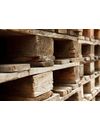
Wooden pallets are a staple part of most storage and distribution facilities, with warehouses, logistics firms, manufacturers and more, relying on these sturdy products to stack and move their goods. But in busy operational environments – particularly where space is at a premium – single-use pallets soon become difficult to house, and even renowned reusable wooden pallets such as the EPAL-marked Euro Pallet will reach its end of life over time. In the consumer market, comparatively small numbers of pallets are upcycled and remanufactured into furniture and consumables. In industrial settings, pallet shredding represents an environmentally responsible and efficient way of handling this popular material stream.
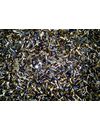
Smelting old scrap to produce new metal is one of the oldest ‘circular’ concepts there is, which goes some way to explaining why UK metals recycling is a £5.6bn industry. But ever-changing economic forces make this a volatile market for operators to trade in.
However, thanks to technological innovation, it is now possible to boost the efficiency, sophistication and potential revenue yield of metal recycling lines. The secret lies in boosting metal recyclate quality. But how..?
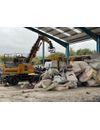
A variety of bulky waste streams may, at first glance, be considered economically unshreddable. But perhaps that’s because people haven’t yet encountered a shredder robust enough for the job. Large complex materials such as mattresses, carpets, textiles, pulper ropes, civic amenity waste and bulky domestic appliances of course need to be handled by heavy duty technology, but UNTHA’s high torque, slow speed shredders can handle such oversized applications with ease.