


UviTec, part of ABB (Formerly Real Tech Inc.) articles

These organic compounds can cause challenges for the water treatment plant by increasing coagulant demand, causing taste and odor issues and increasing demand for disinfectants. Even when the organics themselves are not a health hazard, when combined with chlorine they may lead to the formation of harmful disinfection byproducts (DBPs). Reducing the concentration of organics via various treatment processes, such as enhanced coagulation and activated carbon adsorption, is one of the most effec
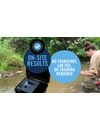
For watershed monitoring, samples are needed from multiple locations that are typically far from each other. As traveling to remote locations is itself very time consuming, the time spent on doing the water analysis, from sample collection to getting the results, becomes even more critical. In West Virginia, some of the types of water bodies in the watershed, like blackwater rivers, possess unique features. This highlights the importance of organics monitoring even further as organic contents
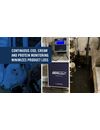
Reducing product loss and limiting COD discharge to the municipal sewer system were key goals for a dairy manufacturing plant. The facility looked to Real Tech to help achieve these goals, installing an industrial grade, real-time BOD/COD probe on the effluent of their production plant. The wastewater probe delivered reliable and continuous COD, cream and protein data, in addition to event notification. The water quality data from Real Tech’s probe proved invaluable, enabling the plant
OVERVIEW
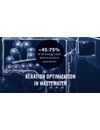
A significant portion of a wastewater treatment plant’s energy costs are due to aeration operations (~45-75% of the total energy). The required aeration rate of a biological treatment system is determined by three key parameters: incoming organic loading expressed in terms of COD or BOD, dissolved oxygen (DO) concentration maintained in the aeration tank, and the concentration of microorganisms maintained in the aeration tank expressed as MLSS. The benef
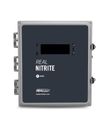
In closed low-pressure water heating and cooling systems, sodium nitrite is a commonly used inhibitor that prevents oxygen related corrosion. It inhibits corrosion by promoting formation of protective films on surfaces. When nitrite is used as a corrosion inhibitor, it becomes crucial to maintain its concentration above a certain level to prevent localized corrosion from happening.
Monitoring of nitrite is most commonly done by grab sample testing. The testing is typically done using ki
ABOUT UVT
UV transmittance, UV transmission or UVT is a measurement of the amount of ultraviolet light (commonly at 254 nm due to its germicidal effect) that passes through a water sample compared to the amount of light that passes through a pure water sample. To measure UVT, ultraviolet light at 254 nm is passed through a 10 mm quartz cell containing the sample water. The intensity of attenuated light is measured with a sensor and compared to that of a pure water samp

Real-time BOD monitoring is becoming increasingly popular, and it’s no surprise as the alternative is a 5 day wait for lab results. Continuous organics monitoring opens the door for many new treatment process control and optimization possibilities that can result in significant cost savings, improved water quality, and compliance peace of mind. Information can be utilized to more effectively dose coagulant chemicals to improve BOD and TSS removal efficiency at primary clarifiers or imp

The purpose of source water monitoring is to enable drinking water treatment facilities to identify changes in water quality, implement treatment strategies based on the characteristics of the water, optimize the treatment processes, and take preventative actions to protect the source water from intentional and accidental contamination. Unexpected changes in water quality or the presence of atypical contaminants can adversely impact the ability of a treatment facility to m
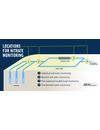
Nitrate in source water can be challenging to manage and lead to potential non-compliance issues. Continuous monitoring of nitrate enables you to keep a real-time pulse on nitrate concentrations from source water to finished water, offering many benefits:
- Compliance with drinking water standards for nitrate
- Optimized blending ratios to maximize water use
- Efficient nitrate treatment with ion exchange or reverse osmosis systems
- Secure water quality for pu

Control of dissolved organics has been one of the highest priority concerns for most water treatment plants for over 20 years. Organics monitoring is an even more critical issue today in the face of more stringent regulations and concerns around trace organics, emerging contaminants, and even counter-terrorism or water security. Despite the critical need, many plants still rely primarily on turbidity for monitoring and process control. Today, UV-based technologies are maki