


Weedoo Greenboat Inc. articles
Most people call them cattails, although you’ll come across those who refer them as “punks” or even as “corn dog grass.” If you happen to be British, you’re more likely to call them “bulrushes” or “reedmace.” They are members of the scientific family of Typhaceae, large marsh plants sporting the telltale brownish compact “flower” that some think looks like a hot dog or sausage. They are one of the
With this article, we get back to exploring invasive exotic species, and this time it’s the water chestnut or water caltrop (Trapa natans), not to be confused with the Chinese water chestnut (Eleocharis dulcis) that you can buy in cans in grocery stores and used in Western-style Chinese food. The water chestnut is a floating annual aquatic plant native to the warm temperate areas of Eurasia and Africa. The underwater stems of the water chestnut can reach as far as 12-1
In the ongoing battle against water weeds in the ponds, rivers, lakes and wetlands across the nation, there is always the temptation to turn to chemicals in order to get the upper hand. This is understandable, especially if you are facing a major infestation of any of the highly invasive water weeds we’ve written about in previous articles (Hydrilla, Eurasian Watermilfoil, Duckweed, Water Chestnut, Water Hyacinth, Phragmites, etc.). A big infestation can feel totally overwhelming. You l
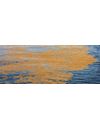
Nothing ruins a trip to the beach like having to navigate around or through piles of rotting seaweed to get to the water. This is why Sargassumhas earned a place on our list of the worst water weeds. This genus of macroalgae (seaweed), started making headlines back in 2015 when huge amounts of it started piling up and decaying on lovely Caribbean island beaches such as the Dominican Republic, Barbados, Antigua, and Tobago. Then it hit the Caribbean coast of Mexico, wreaking havoc esp
Duckweed makes our list of worst water weeds because it can be a huge nuisance to ponds and other still water bodies. There are many different species of this flowering floating aquatic plant, most of which are native, but at least one of which is exotic. What they all have in common, however, is that with the right conditions, they can become incredibly invasive and wreak havoc on other native species. And yes, it also makes the list of 79 different invasive and exotic aquatic plants maintai
On February 2 in the small town of Punxsutawney, Pennsylvania, crowds of people waited for the weather prognosticating groundhog named Phil to emerge and make his annual prediction about how much more winter there would be this year. If the large rodent sees his shadow, then there will be six more weeks of winter. If he doesn’t see his shadow, then there will be an early spring. If you live significantly further north than Pennsylvania, Phil’s prediction is less relevant because o
Water hyacinth (Eichhornia crassipes) is a floating plant that can grow in all types of fresh-water habitats. Its height above the water can vary from a few inches to as high as three feet. It has broad, glossy, leathery oval-shaped leaves and produces a deceptively pretty lavender or pinkish flower. The stalks are long, spongy and bulbous, and the feathery root masses underwater are purple-black in color. Part of what makes the water week so wily is how quickly it grows. In fact, it
This particular plant is widely known as the “common reed,” but the havoc it is causing on wetlands in various parts of the United States is anything but, which is why it definitely makes our list of the worst water weeds. In the world of scientific botany, the genus is known as Phragmites, with four main species found in different parts of the world. Only one of those four species, however, is the one causing major headaches around the country. It is also on the list of
Much of the country is deep into the freezing temperatures and snowfalls of winter, but it’s never too early to start thinking about how you’re going to get an edge when spring water weeds emerge in full force. It can take you by surprise – especially if you didn’t take some key winter water protection steps before the cold weather set in.
But have no fear, Weedoo is here!
With our
Commonly called Eurasian Watermilfoil or Spiked Watermilfoil, this invasive exotic water weed is becoming as widespread and as troublesome as Hydrilla. It’s on the list of 79 different invasive and exotic aquatic plants maintained by the Center for Invasive Species and Ecosystem Health. Although its feathery appearance is attractive, the Aquatic Nuisance Species Task Force, a joint effort of the US Fish & Wildlife Service and the National Oceanic and Atmospheric Administration, call