

Wigen Water Technologies - a subsidiary of the METAWATER Group products
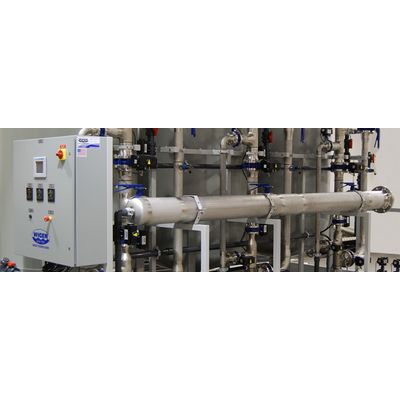
Wigen - Water Softening Systems
Wigen offers a complete line of custom-built water softeners and polishers. From small commercial units to large industrial configurations, we have a system to match any need. From a single unit to several alternating or progressive trains, we have manufactured systems ranging from as little as a few gallons per minute to in excess of 8 MGD. As with nearly all of our products, we offer an optional skid-mounting package (pre-piped, pre-wired and factory tested), which makes installation quick and easy. For large users of salt, we also offer turn-key bulk salt storage and brine recovery systems which eliminate the need for handling while significantly reducing salt costs.
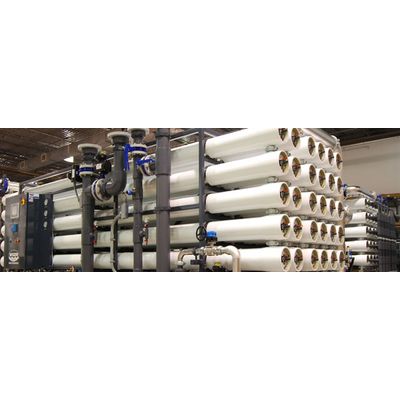
Wigen - Model RO & NF - Reverse Osmosis & Nanofiltration Systems
Wigen is a leading provider of industrial and municipal RO and NF systems with capabilities that include: engineering, manufacturing, site supervision, commissioning and operator training. We have been designing and building RO and NF systems since the early 1990`s and have hundreds of successful installations throughout the world. Like the rest of our products, all of our RO and NF systems are designed and built for the client`s specification application. Taking into account the influent water quality and temperature, as well as, permeate and concentrate requirements, Wigen is able to create custom solutions that are cheaper than other`s catalog offerings. Systems can range in size from a few gallons per minute to millions of gallons per day. Most of our designs include the required pretreatment systems (equipment and chemical) in order to reduce or eliminate fouling and scaling of the membranes.
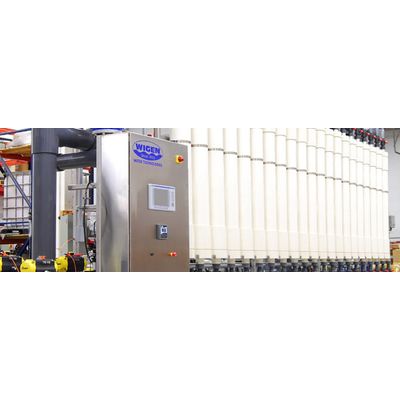
Wigen - Ultrafiltration (UF) Systems
Our UF systems are usually operated in a pressure range of 10 to 50 psig and they remove particulate via size exclusion down to as low as 0.02 µm. Typical flux (rate of finished water permeate per unit membrane surface area) for UF is 10-100 gallons per square foot per day (gfd).
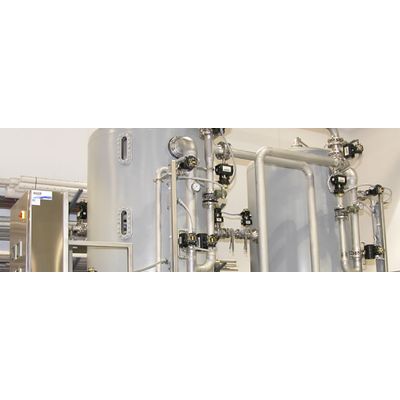
Wigen - Demineralization System
All naturally occurring water contains dissolved mineral salts. While in solution, these salts separate into positively charged cations and negatively charged anions. Through the process of ion exchange, demineralization can significantly reduce the levels of these ions, thereby lowering the conductivity.The process begins when raw water is passed through cation exchange resin. The cation resin is in the hydrogen form (H+) and exchanges all the positively charged ions for hydrogen, thus converting all the impurities in the water into acids.The acidic effluent water from the cation exchange is then passed through anion exchange resin. The anion resin is in the hydroxyl form (OH-) and exchanges all the negatively charged ions into the hydroxyl form, completing the conversion of all impurities into water (H+ + OH- --> H2O), thus providing pure demineralized water.
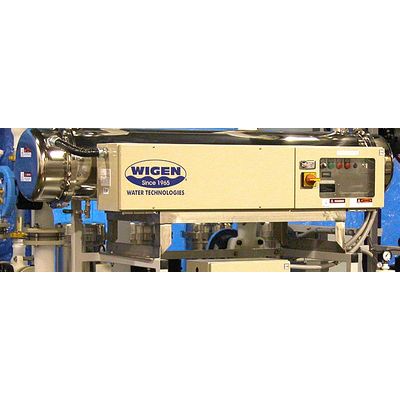
Wigen - Ultraviolet System
Light waves travel in the form of electromagnetic radiation, and ultraviolet (UV) energy is found in the electromagnetic spectrum between visible light and x-rays. In water treatment applications, 254 nanometers (nm) is required for disinfection and ozone destruction, while 185 nm is required for TOC reduction and breaking down chlorine.
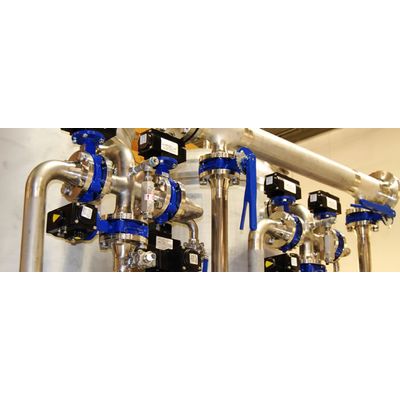
Wigen - Condensate Polishing Systems
Wigen is a recognized leader in the design and fabrication of condensate polishing systems for industrial, power and steam utility applications. These systems are used to maintain a high quality of water by removing impurities from condensate return streams. The condensate can be returned to a high purity state by simple polishing rather than using fresh make up process water.
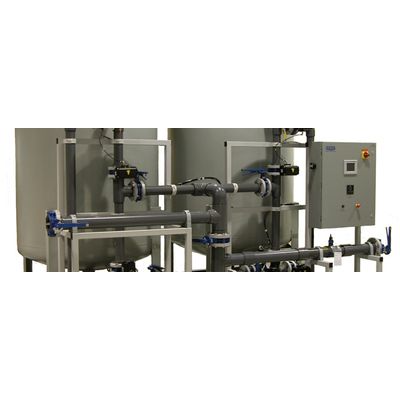
Wigen - Dealkalizers & Desilicizers System
Wigen is among a select few that still design and manufacture dealkalizers and desilicizers. In many instances, RO and NF technology provide a better return on investment than anion exchange systems for boiler feed water applications. However, there are still cases where dealkalizers and desilicizers make more sense than using membranes. Typically, this is when space is a premium, an existing water softener is in place and not large enough to handle the required membrane feed flow or silica concentrations are higher than antiscalant chemicals can handle. When operated in the chloride cycle with the addition of sodium hydroxide, dealkalizers and desilicizers are relatively efficient at removing alkalinity and silica. In fact, when properly applied, desilicizers can reduce SiO2 levels by up to 90%.
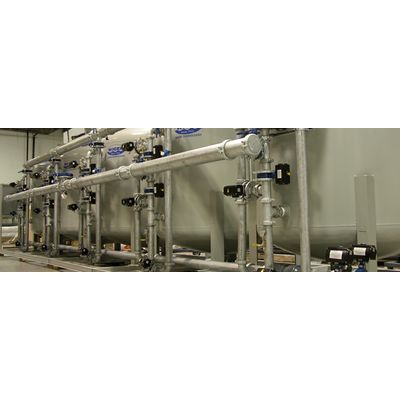
Wigen - Pressure Media Filters
Wigen is a leading producer of custom-built pressure filter systems for a wide variety of industrial and municipal applications. Pressure filters utilize a process in which, a pressurized fluid stream contacts granular media for physical and/or chemical removal of impurities. We design our pressure filter systems to ensure the right media products are used to meet the client`s desired effluent and waste stream requirements. Often we are able to incorporate our patented reclamation technologies to greatly reduce the amount of waste water produced from normal backwash operations.
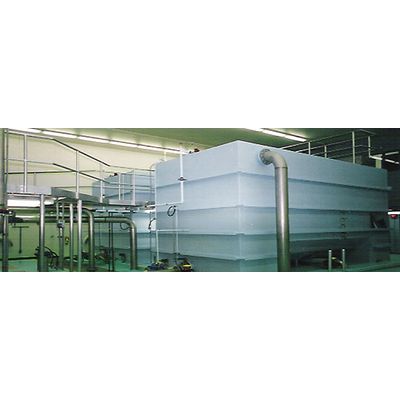
Wigen - Gravity Media Filters
Wigen designs and builds custom gravity media filters for a wide variety of industrial and municipal applications. As the name implies, gravity is used as the motive for a fluid stream to pass through a bed of granular media through which physical and/or chemical removal of impurities is achieved. Gravity filters are ideal for treating larger volumes than pressure filters can economically handle. Our systems are manufactured in-house, to ensure quality control, while keeping the capital cost down.
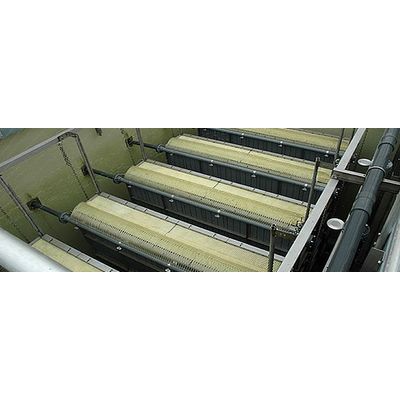
Wigen - Membrane Bioreactor Systems (MBR)
The unique combination of biological wastewater treatment and membrane filtration makes MBR technology a viable solution for many municipal and industrial applications. Biodegradable pollution is reduced using bacteria and microorganisms. Following biological treatment, the biological sludge is separated from the treated water by a hollow fiber ultrafiltration membrane.