


Williams Form Engineering Corporation products
Rock
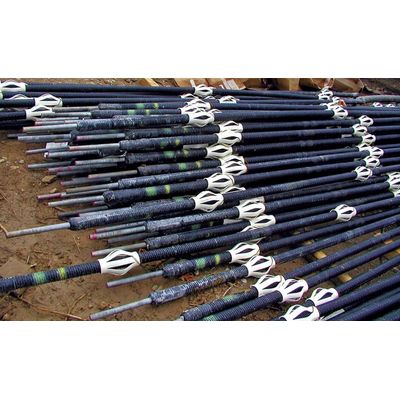
Williams - Grout Bonded Multiple Corrosion Protection Anchor
Williams standard grout bonded rock & soil anchors consist of a plain or epoxy coated bar, grouted in an oversized drill hole. Centralizers should be used to assure good grout cover (approximately 25 mm) around the bar. Where anchors will penetrate aggressive soils that are low in pH value (

Williams - Tieback & Tiedown Anchors
Williams Grade 150 KSI All-Thread Bars, Grade 75 & Grade 80 All-Thread Bars, Geo-Drill Injection Anchors and 270 KSI low relaxation strand have been successfully used as Prestressed Ground Anchors for a wide variety of Civil Engineering applications.
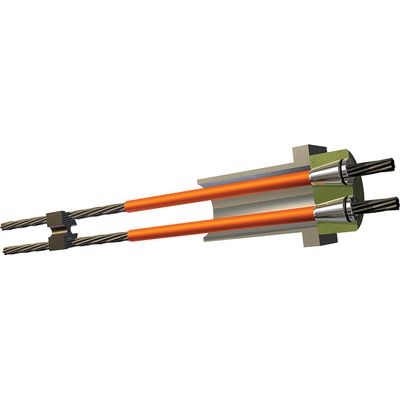
Williams - Strand Anchor System
Williams Strand Anchors utilize a high density extruded polyethylene sheath over corrosion inhibiting compound in the unbonded zone. Williams has the most technologically advanced extrusion equipment for the manufacture of permanent and temporary anchors. The state of the art equipment allows for precise extruded lengths in the unbonded zone and high quality manufacturing.
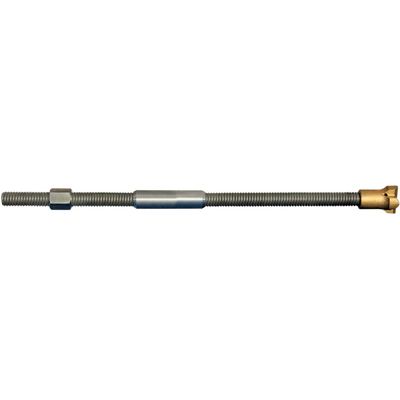
Williams - Geo-Drill Hollow Injection Bar
The Williams Geo-Drill Injection Anchor System is today’s solution for a fast and efficient anchoring system into virtually any type of soil. The system has historically been known as a “self-drilling anchoring” because the hollow fully-threaded bar serves as both the drill string and the grouted anchor, thus installation is performed in a single operation. The sacrificial drill bit is threaded onto the end of the Hollow Injection Bar and left in place following drilling. The drilling fluid (air, water, or grout) is introduced through the hollow bar and allows the spoils to flush from the borehole.
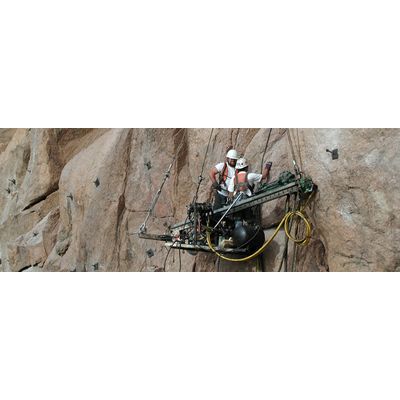
Williams - Spin-Lock Rock Anchors
Williams Spin-Lock anchors were first used in the 1950’s for rock/roof bolting in projects such as NORAD and Australia’s Snowy Mountain power facility. Since then many engineers, contractors and owners have seen the advantages of the Spin-Locks on dams, locks, water/waste treatment facilities and many other large scale civil projects. Williams Spin-Lock anchors provide the advantage of immediate anchorage for prestressing and require shorter embedments than traditional grout bond anchor systems.
Soil
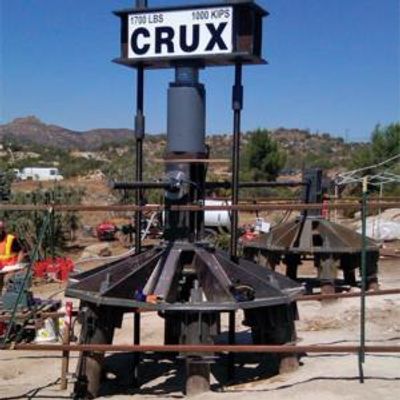
Williams - Micropiles
Micropiles are high capacity, small diameter (5” to 12”) drilled and grouted in-place piles designed with steel reinforcement to primarily resist structural loading. Micropiles have rapidly gained popularity for foundations in urbanized areas or in locations with low headroom and restricted access. They are an ideal choice for underpinning or emergency repairs because they can be installed in virtually any ground condition with minimal vibration and disturbance to existing structures. Williams larger diameters of All-Thread Rebar are popular choices for micropile reinforcement.
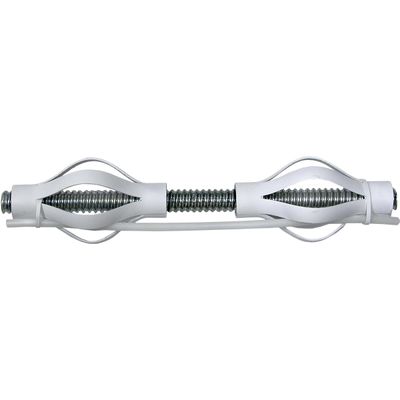
Williams - Soil Nail System
Williams Grade 75 & Grade 80 and 150 KSI All-Thread-Bar soil nail components create an in-situ reinforcement system for the stabilization of excavations and slopes during top-down construction. Oversized holes of 4” to 10” in diameter are drilled and the centralized soil nail component is placed. The drill hole is then tremie grouted with Williams Wil-X-Cement grout. After the drill hole grout has cured, the soil nails may be torque tensioned against the protective shotcrete face to a slight load if desired.
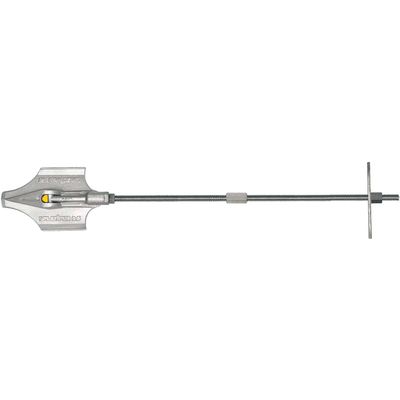
Williams Platipus - Soil Anchors
These anchors are intended for use in soil conditions for moderately loaded anchoring requirements. WFEC Soil Anchors use a tipping plate which is dependent upon the strength of the soil in order to react tensile loads. Anchors are driven into soil to a specified depth using special drive steel which is adaptable to percussion driving equipment, (i.e. jackhammer, concrete breaker or similar). The drive steel is removed and the anchor is tipped into place and proof tested with Williams’ Anchor Locking Kit by pulling on the anchor rod. This is called “load locking” and provides an immediate proof test of each anchor’s holding capacity. Interested customers should contact their local Williams technical representative in order to evaluate the appropriate anchor for each specific project.
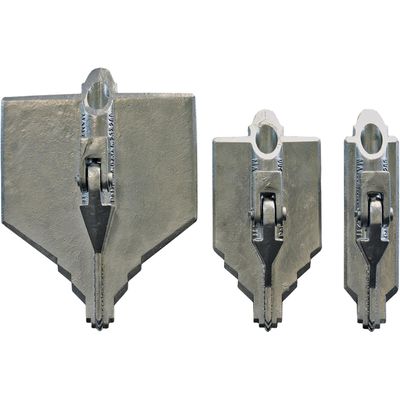
Williams Manta Ray - Soil Anchors
These anchors are intended for use in soil conditions for moderately loaded anchoring requirements. WFEC Soil Anchors use a tipping plate which is dependent upon the strength of the soil in order to react tensile loads. Anchors are driven into soil to a specified depth using special drive steel which is adaptable to percussion driving equipment, (i.e. jackhammer, concrete breaker or similar). The drive steel is removed and the anchor is tipped into place and proof tested with Williams’ Anchor Locking Kit by pulling on the anchor rod. This is called “load locking” and provides an immediate proof test of each anchor’s holding capacity. Interested customers should contact their local Williams technical representative in order to evaluate the appropriate anchor for each specific project.
Concrete
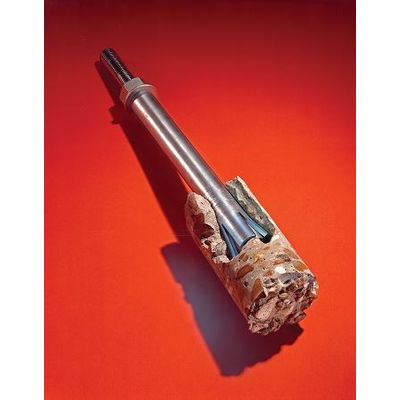
Williams - Model S-9 - Undercut Concrete Anchors
Williams S-9 Undercut Bearing Anchor was designed to eliminate the direct lateral stress found in the setting of conventional anchors and to bring its characteristics closer to those of cast-in-place anchors. Through the use of Williams undercutting tool, along with Williams undercut anchor, the conical shape of the anchor fits into the conical cut of the hole. This produces a positive expansion anchoring system that develops the tensile capacity of the bolt without slip or concrete failure. Because the anchor head is larger than the drill hole size, a properly embedded anchor will consistently develop 100% of the ASTM A193 Grade B7 bolting material.