

WTEC Plants Srl products
Wastewater Purification
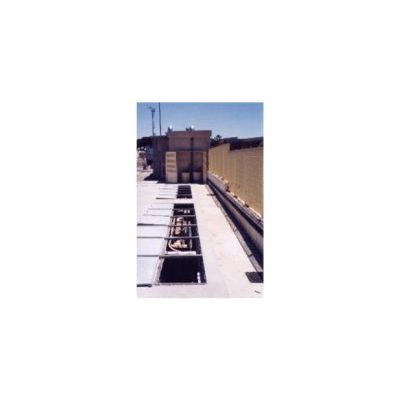
DEPURBIOX - Model 50-550 Plant - Biological Purification Plant
The `civil` waste is purified `biologically` because this is the most suitable system to obtain performance exceeding 90%.
WTEC plants work on decomposition of the BOD5 throught active sludge total oxidation processes, with mineralization of sludge in excess (extended aeration). The correct supply of oxygen contained in the air and the homogeneous distribution within the tank allows the formation and growth of active sludge, an indispensable factor for purification.
Water Treatment
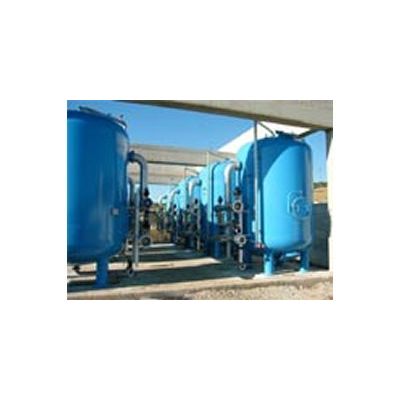
Model 8 FAS/R 250 - Filtration Plants
Filtration is undoubtedly, the most important basic treatment for water and mechanical treatment applied to water.
Filtration, often, is followed or preceded by many other chemical-physical or biological treatments that take part in the other characteristics of the water. The settleable substances, in virtue of their chemical-physical nature, of the specific weight and dimensions, tend to separate themselves from water spontaneously and to deposit themselves at the bottom in different times. On the other hand, suspended substances manage to separate themselves spontaneously just after a very long time or, don’t separate themselves at all. Suspended substances are, for example, colloidal substances, fine clay, organic substances generally, soaps, rubber particles, glues etc. The choice of filtration speed, of filter beds composition, of filtering mineral washing system, establish the efficiency of the filtration process for the different applications.
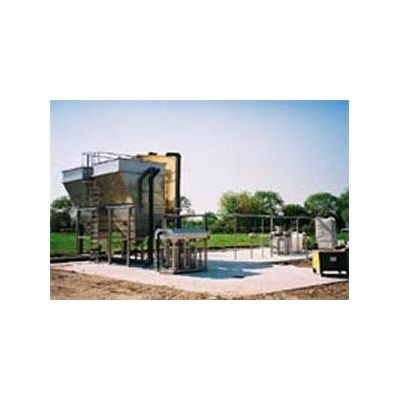
Clariflocculation Plants
The technology of clariflocculation is a necessary process required to treat water containing a high level of suspended solids and other contaminating substances. The technologies applied have been successfully tested for many years and lots of investments have been made into research of new chemical products to be dosed. Chemical products (coagulants and flocculants) are normally added to the water to be treated. They agglomerate the substances present, first of all in the micro-flakes and subsequently in real flakes of suitable dimensions that can be precipitated (the sedimentation process) or brought to the surface (the flotation process) of in order to create clarified effluent (if necessary it will be refined in subsequent filtration sections or other post-treatment sections). In most of cases the process is carried out by controlling and regulating the pH value.
Reverse Osmosis Treatment
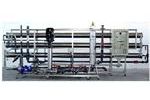
WTEC - Model BWD 3000 - 25000 - Reverse Osmosis Plant
The RO BWD Mod. reverse osmosis brackish water demineralizing units are used for demineralized water production for
industrial use (heating plants, food, pharmaceutics, electronics industry, etc.). The models from the BWD 3000 to the BWD 25000 have productive capacities that range from 3 m3/h to 25 m3/h of produced permeate. The demineralization units operate, efficiently, in a continuous way, therefore the necessary productive capacity is given from the daily need of permeate divided by the 24 hours that the unit is operating. It is advisable to have an accumulation tank of the produced permeate.
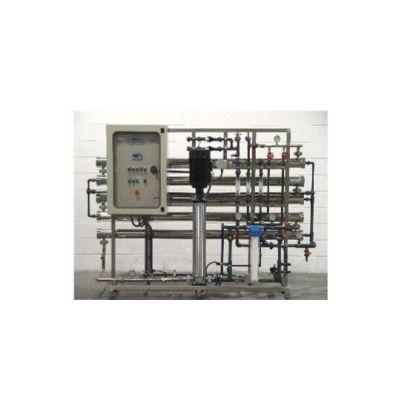
WTEC - Model TWD 200 - 2200 - Reverse Osmosis Plant
The RO TWD Mod. reverse osmosis tap water demineralizing units are used for demineralized water production for industrial use (heating plants, food, pharmaceutics, electronics industry, etc.). The models from the TWD 200 to the TWD 2200 have productive capacities that range from 200 l/h to 2200 l/h of produced permeate. The demineralization units operate, efficiently, in a continuous way, therefore the necessary productive capacity is given from the daily need of permeate divided by the 24 hours that the unit is operating. It is advisable to have an accumulation tank of the produced permeate.
Filtration
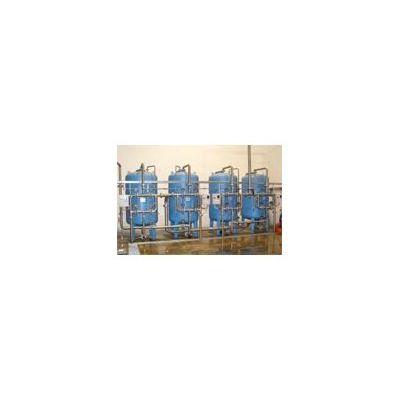
WTEC - Model FAS Series - Double Layer Filters
FAS multilayer filters can retain physical impurities, sand and mud, suspended substances in water, the iron in an oxidised form, which cause water turbidity. If turbidity is also caused by a modest quantity of fine colloidal substances (almost always present in surface watercourses) FAS filters offer excellent performance if used after an `in line` flocculation treatment, envisaging the direct dosage into the filter delivery lines of a specific product that aids the agglomeration of the dispersed substances into micro-flakes.
WTEC - Nano-Filtration Process System
Nano-filtration process is mainly used to remove the bivalent ions contained in water and to remove partially, any traces of nitrate and other mineral salts present. It is a Reverse Osmosis process that envisages the use of membranes less selective to the Salts. The advantage is that they require a much lower working pressure. At the same time it also plays a very important role in water sterilisation.
Ultra Filtration
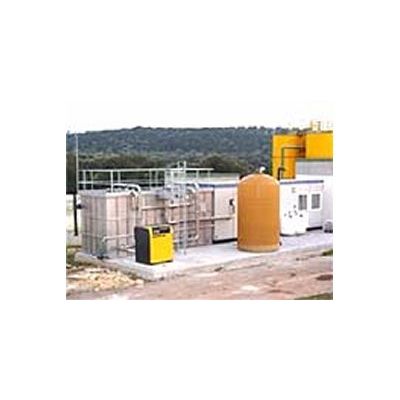
WTEC - Ultra Filtration Plants
Since several years ultra-filtration with membranes has been representing a convenient and reliable technology of membrane separation for superficial water treatment of conditioning- sterilization of and, of civil and industrial sewage, in the service sector.
Desalinization
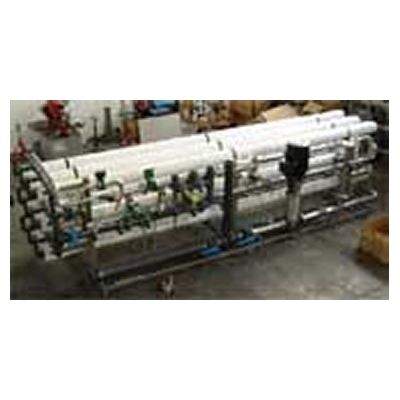
Model BWP 53000 - Brackish Water Desalination Units
Reverse osmosis represents, nowadays, the most convenient and the safest technique for desalinization of different kinds of water. This treatment is replacing other technologies for water desalinization, thanks to the excellent combination between quality results and low running costs. Reverse osmosis also guarantees low energy consumptions and reasonable expenditure of chemical products. Furthermore, the waste water parameters fall within the sewage limits, therefore resizing more and more the problem of disposal of eluates (for example, for softeners and ion exchange resin demineralization units). Reverse Osmosis is the process that occurs when a saline solution comes into contact with a membrane permeable to water (and not to dissolved salts) at a pressure exceeding the osmotic pressure of the solution itself. The passage from water, poor in salts (permeate), occurs through the membrane, wherereas outside of the membrane waste water rich in salts (concentrate) is obtained.
Deferrization
WTEC - Model FAD - Deferrization, Demanganization Filters
FAD deferrization, demanganization filters allow to remove from the water the iron and manganese in a non-oxidised form. FAD filters are usually used before a preliminary oxidation treatment, with air or more frequently, with sodium hypochlorite, or other oxidising agents (e.g. potassium permanganate). The initial oxidation stage allows, in presence of iron, the oxidation from Fe2+ to Fe3+ that precipitates as hydroxide. The removal of manganese is through a catalytic process following an in-line chlorination. The oxidation of the soluble manganese is through free chlorine by the catalytic action of the mineral granules in the filter bed. FAC active carbon filter is used for the removal of the exceeding remaining chlorine, at the bottom of the FAD filter.