

- Home
- Companies
- ZebraSci Inc.
- Products
ZebraSci Inc. products
Container Closure Integrity Deterministic & Quantitative Testing Solutions
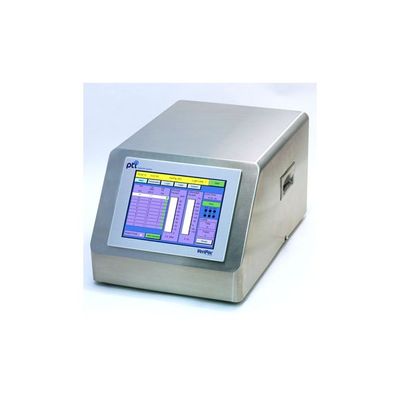
ZebraSci - Nondestructive Vacuum Decay Leak Detection Technology
Nondestructive Vacuum decay leak detection technology is a robust and reliable solution for ensuring Container Closure Integrity (CCI) for critical parenteral applications. The principle behind vacuum decay leak testing make it one of the most simple and effective package integrity tests. A vacuum decay leak tester connects to a test chamber that is specifically designed to contain the package to be tested. The test is performed by placing a package into the test chamber, drawing vacuum on the test chamber and monitoring it for any changes in the vacuum level. If a package is defective, air or vapor will leak from the package into the test chamber causing a change in pressure. Non-leaking packages do not leak any air into the chamber, holding the chamber vacuum level constant. The test cycle takes only a few seconds, is non-invasive and non-destructive to both product and package.
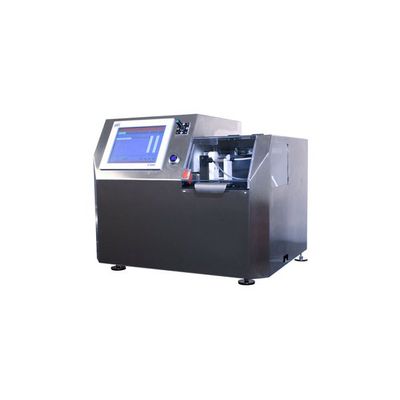
MicroCurrent - Model HVLD - Container Closure Integrity High Voltage Leak Detection
HVLD or High Voltage Leak Detection, is a deterministic, non-destructive leak detection method to evaluate syringes, cartridges and other liquid filled parenteral products for Container Closure Integrity. The principle of high voltage leak detection is based on quantitative electrical conductivity measurements. The technology is simple. By passing a high-voltage probe (or brush) along the exterior of a container, a defect (as small as 1 micron!) results in an increase of recorded electrical conductivity. Robust method development and validation work allows you to easily set pass / fail criteria for your individual container closure system | package. The technology is non-destructive to the container and product – utilizing a non-contact and non-invasive method that requires no special sample preparation.
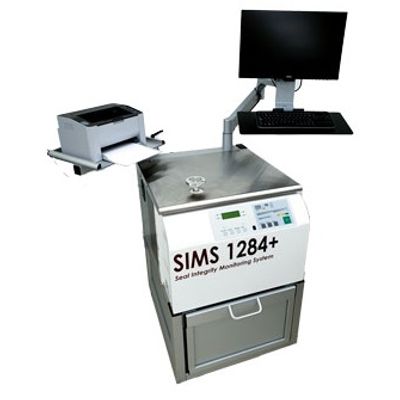
ZebraSci - Container Closure Integrity Helium Leak Detection
Helium Leak Detection is a highly sensitive quantitative test method for evaluating Container Closure System (CCS) components for critical parenteral - injectable applications. Helium Leak Detection (HeLD) technology is the most sensitive leak detection method providing quantitative leak rate data far exceeding the limits of detection of other methods. The technology is so sensitive that it can help determine the inherent integrity between specific primary container closure system components such as syringe barrel/piston combinations.

ZebraSci - Container Closure Integrity Laser-Based Headspace Analysis (HSA)
HSA or Headspace Analysis, is a deterministic, non-destructive leak detection method to evaluate vials, syringes, cartridges and other parenteral products. Oxygen concentration/partial pressure, carbon dioxide concentration/partial pressure, or total pressure conditions inside a container can be measured over time. When sample testing is performed over time, a quantitative measure of a container closure system’s (CCS) leak rate can be determined. The headspace analysis technology operates by passing a near-infrared diode laser light through the gas headspace region of the sealed container. Light absorption, measured using frequency-modulated spectroscopy, is indicative of gas concentration. Transparent or amber vials, syringes, and cartridges with a minimum headspace volume and headspace path length can be tested using an appropriate test fixture.