
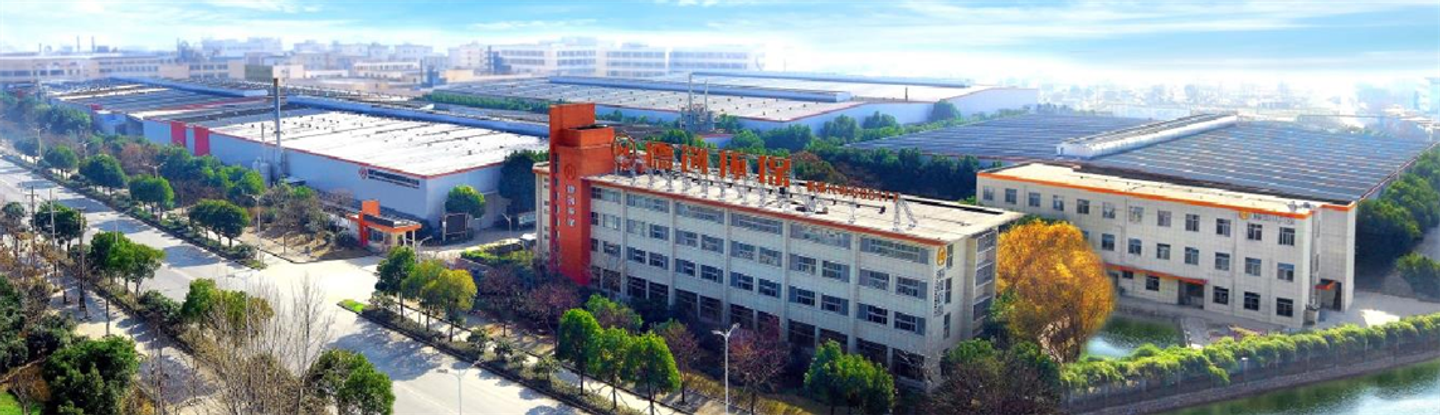

Zhejiang Tuna Environmental Science & Technology Co., Ltd. products
EPC Projects
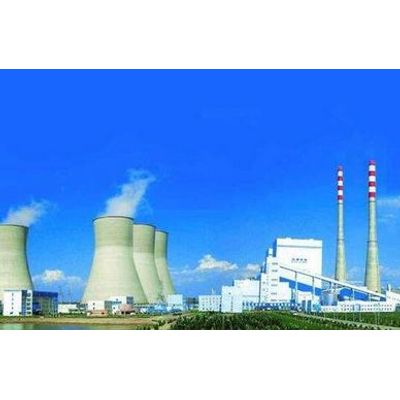
Tuna - Semi-Dry Desulfurization Plant
Flue gas enters the absorption tower from the air distributor at the bottom of the fluidized bed to fully mix with lime hydrate grains. SO2,SO3 and other harmful gases such as HCI and HF then react with lime hydrate to produce Ca SO3.1/2H2O
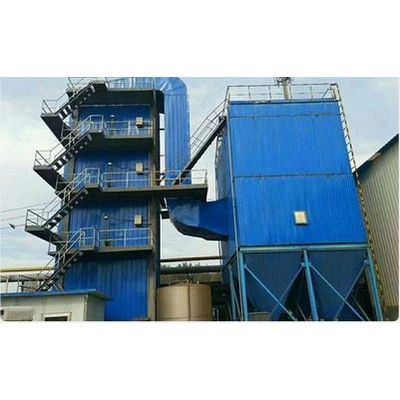
Tuna - NOx Removal Technology
There are three mechanisms of NOx production; first thermal type; second fuel type and third quick type. The density of the discharged NOx is closely related to the boiler type, combustion conditions and the proportion of nitrogen in the fuel. Control measures can be divided into first and second degree. First degree measures refers to the measures taken during combustion and achieved in the boiler, which is low NOx combustion technology. Second degree technology is denitration as a way to clean flue gas, which involves adding reductants and catalysts into the flue gas after combustion to absorb NOx.
FGD Products
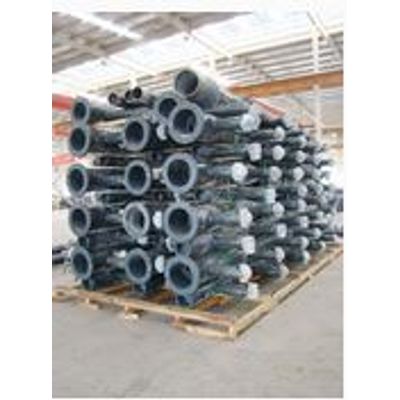
Tuna - Model TSP-I - Spray Bank
We produce TSP-I composite FGD spray lines by introducing foreign advanced technologies and using FRP macromolecule composite material as main, which are made through mixed filling, solidification and moulding. Such spray lines are light in weight, strong in corrosion resistance, high in strength, excellent in wear resistance, high in system reliability and long in service life. Such product is innovative in compound design and fabrication of composite materials. We adopt single forming technologies to products, especially tee junction, during the fabrication to achieve higher hardness and strength. Fillet on inner side to make inner side of product more smooth, reduce frictional resistance on inner side and pump head greatly, save costs and reduce repair work. Apply antiwear agent to outer and inner sides of product to improve its resistance to abrasion and ensure its quality.
Tuna - Model TME - Mist Eliminator
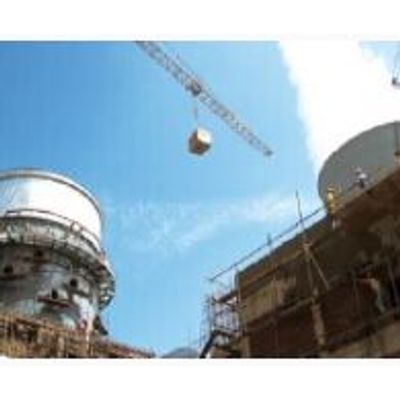
FGD device. Our company imports the overseas advanced technology and can design and produce TME model mist eliminator according to the customer’s process requirements.
Tuna - Model TLD Series - Single-Shaft Double Louver Damper
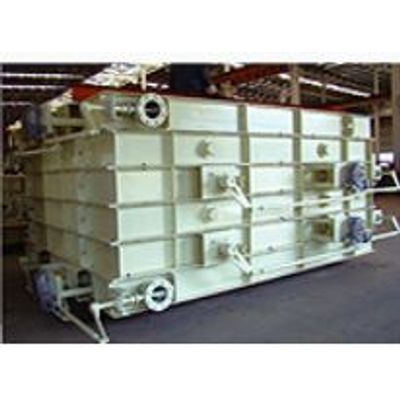
On the basis of absorbing advanced overseas technology and practical experience, Tuna developed single-shaft double louver series door, which has advantages of safety, reliability, seepage free, all-round anti-corrosion and convenient maintenance to meet the customer`s requirements.
Tuna - Model TBF-DU - Belt Type Vacuum Filter
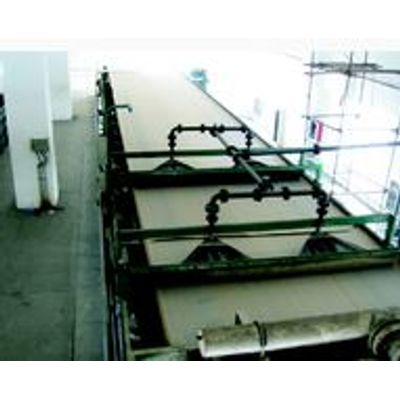
TBF-DU belt type vacuum filter, developed by TUNA Corporation on the basis of absorbing advanced overseas technology and practical experience, has advantages of high filtering efficiency, good washing effect, complete filter cloth regenerating, high control level and convenient using and maintenance.
Dedusting Products
Tuna - Electrostatic Precipitator (ESP)
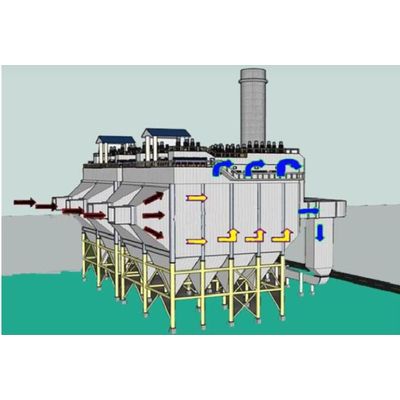
ESP - Electrostatic Precipitator is the most cost effective industrial particle emission control device. It functions by removing particles from gas stream using induced electrostatic charge, which has very minimum impeding of flow. -Electrode point charge particles negatively (e.g. dust or smoke) -Collector plate positively charged -Law of attraction – particles collected at plate -High Collection Efficiency >99% -Easy Operation & Maintenance - 1 operator with no moving parts -High Operating Temperature 200°C-850°C -Wide particles size range 0.01µm to 100µm -Wide Capacity Range - modular to meet any flow rate -Low Pressure Lost < 3 mbar -Life expectancy > 20 years -Robust & reliable construction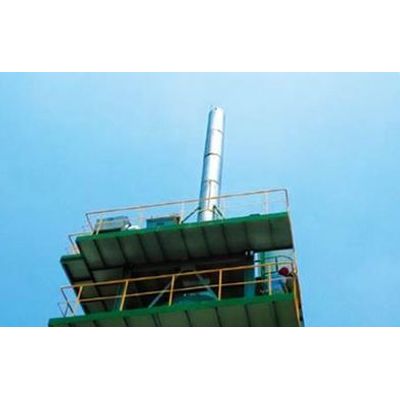
Tuna - Wet Electro- Static Precipitator (WESP)
By introduced American WESP and combined with customer’s requirements, we R&D a wet electro- static precipitator.
Tuna - Dry Dust Remover Technology
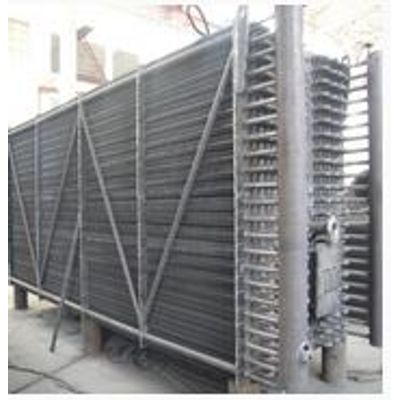
I Flue gas waste-heat recovery low-low temperature saving coal ESP technology. It is the technology to place the heat exchanger (MGGH) after boiler air pre-heater and before the inlet of electric precipitator. By leading condensate water to MGGH, we can make it heat exchanging with hot flue gas from boiler. By doing this, the running temperature can be dropped to around 90 ~ 100℃. It can maximize the property of flue gas treatment and recycling condensate water by rising its temperature.