


Zygo Corporation - AMETEK, Inc articles
A jet engine is a marvel of engineering. Its seamless orchestration of components enables takeoff, flight, and landing—events we’ve come to expect with confidence. But behind this reliability lies a world of extreme conditions and uncompromising standards.
Jet engines operate at temperatures exceeding 3000°F, and this heat is not just a byproduct but a necessity for fuel efficiency and performance. Advances in materials science have made it possible to meet these de
The aerospace industry operates at the outer limits of engineering possibility. Every component (whether a turbine blade, flight control sensor, or optical window) must deliver flawless performance in extreme conditions of heat, stress, and vibration. In such an environment, even the smallest deviation can result in inefficiency, downtime, or catastrophic failure.
For more than 50 years, Zygo-Navitar has supported aerospace manufacturers and operators with cutting-edge metrology and o
To make sure high-performance optical systems don’t crack under pressure, selecting the right material is not a secondary consideration, it is foundational. The substrate used for an optical window or mirror governs the system’s optical performance, thermal stability, and resilience under operational conditions. Zygo™, a global leader in precision optics, distinguishes itself through a material-agnostic capability, manufacturing from an exceptionally wide range of optical (a
Justin E. Turner
Abstract
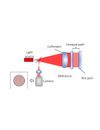
Phase-shifting interferometry1 is the premier measurement technique for high-precision surface form metrology. Generally, the measurement cavity is illuminated with a stationary, on-axis, point-like source of coherent light situated at the interferometer source plane. We describe how to enable a variety of useful functions to aid interferometric metrology applications by dynamically moving the source point during a phase-shifting measurement using steering mirro
Leslie L. Deck;Nate Austin
Abstract
Current variable image magnification methods present problematic issues for high precision metrology instruments. This paper describes a novel approach to providing variable system magnification while avoiding those shortcomings.
An optical zoom generally has multiple lens groups moving in concert to simultaneously adjust the effective focal length and maintain focus. Inevitably, the motion of the elements results in image drift and small variations in f
Nate Austin;Bruce Truax
Situation
The team at a leading university research lab studies bacterial biofilms for insights into their behavior and growth processes. Accurate biofilm measurement is essential for the lab’s work. However, the complexity and variability of biofilms pose unique challenges for conventional imaging tools.
The team at the lab was using an optical profiling instrument that enabled highresolution, three-dimensional imaging of biofilm structures. Labor-intensiv
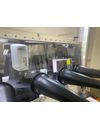
Did you know that you can now use Zygo Optical Profilers within argon chambers? This groundbreaking capability allows for precise metrology in controlled argon environments, commonly referred to as Argon Gloveboxes. This unique and thoroughly tested feature enables optical profiling under argon conditions, opening new possibilities for research and manufacturing applications.
In today’s high-tech landscape, many products increasingly rely on optics for core functionality. However, for organizations outside the optics industry, developing in-house optical capabilities can be both time-consuming and resource intensive. For those without specialized knowledge, mastering optical physics, design, component integration, and best practices in optical assembly can be a daunting endeavor which risks time-to-market, budget, and customer experience.
This complex
Kevin Quist
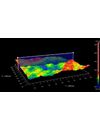
Surface roughness refers to the fine texture of a part`s surface. Every manufactured part`s surface has three key components—form, waviness, and roughness. Together, they influence how well a part performs. The characteristics of these components are tied to the manufacturing process or processes used to create the part. This could be polishing, grinding, cutting, or edging to name a few.
Zygo

There are many factors which contribute to the successful manufacture of vacuum windows. The understanding and use of cutting-edge technology, quality control via state-of-the-art metrology tools, and understanding of material properties are all critical to their design and manufacture. When combined with a culture of innovation and in-depth and broad experience of precision optics manufacture, these technical capabilities can be honed to ensure optimal manufacture of vacuum windows.
Kevin Quist