

Airfield Systems, LLC
- Home
- Companies & Suppliers
- Airfield Systems, LLC
- Downloads
- AirDrain for Golf
AirDrain for Golf
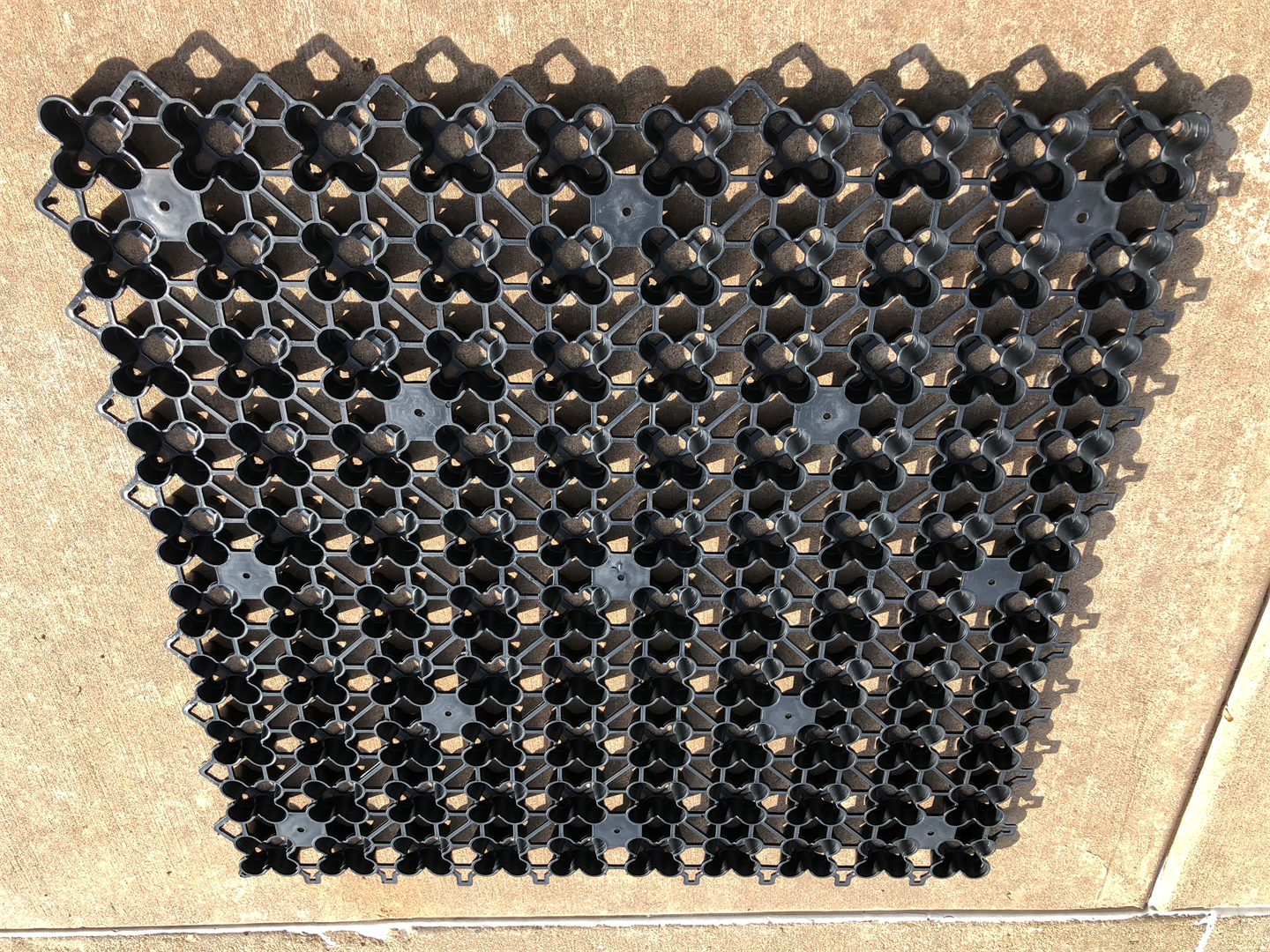
THE ADVANCED GEOCELL FOR MODERN GOLF COURSE CONSTRUCTIONRAPID DRAINAGE, COLLECTION, RETENTION AND REUSE FOR GREENS, TEE BOXES AND BUNKERSAirDrainby AirField SystemsSUSTAINABLEDESIGNwithNote: The information in this article has been adapted from the original workpublished in Crop Science titled "Water Storage in Putting Greens Constructed withUnited States GolfAssociation and Airfield Systems Designs" (Mcinnes and Thomas,2011, 51:1261-1267) and in HortScience titled "Water Flow Though Sand-basedRoot Zones atop Geotextiles" (Rose-Harveyet aJ., 2012, 47:1543-1547). Theresearch was coJlaboratively funded by Texas A&M University, Airfield Systems(Oklahoma City, OK), and the United States GolfAssociation.Figure 1. The highly porous, I-inch deep AirDrain (right) offers analternative to the 4-inch deep gravel layer in the standard USGAputting green design (above left).zones.We became interested in the hydraulic performanceof the Airfield Systems design after Texas A&MUniversity constructed a soccer field with the AirfieldSystem design in 2002. Anecdotal evidence from fieldmanagers suggested that the new field required lessfrequent watering than the University's football fieldthat had been constructed following the USGA design.While the two fields were constructed with differentroot zone mixtures and the physical environmentssurrounding the fields are quite different, we suspectedthat there may have been a difference in the amount ofwater stored in root zones on fields constructed with thetwo designs (i.e., a difference in the verticaldistributions of water content in the root zones). Weknew from the physics of water in sand that the amountof water stored in a root zone decreaseswith increasing tension at the bottom of theroot zone, and we expected because of thegeometrical and physical differences in thedesigns that there would be differences inwater tension at the bottom of the rootAirField Systems GreenGeotextilePrelHued SUb-Base4-inch Gravel LayerAil'Oraill GeogridImperme.,hle lineror Geotextile ---'--=-"'..--- Natural TuffUSGA Putting GreenAirfield Systems offers an alternative to the standardUSGA putting green design. Their design utilizes ahighly porous, I-inch deep plastic grid (AirDrain,Figure 1) in place of a 4-inch deep gravel layer. As withgravel, AirDrain allows rapid lateral movement ofexcess water to drains and thus provides for uniformhorizontal moisture content within the root zone. Whilevoids in AirDrain are very effective in transmittingwater, they are much too large for the sand in the rootzone to bridge for self-support so a geotextile is usedatop the grid to prevent infilling of the void space. Useof geotextiles in putting green construction has beencontroversial due to the perceived potential forclogging of the fabric by migrating fine particles andeventual loss of permeability.©2013 by United States Golf Association. All rights reserved.Please see Policies for the Reuse of USGA Green SectionPublications.TERO Vol. 12(4):6-10 I July - August 2013TGIF Number: 2240576GRASS SURFACE---SPECIFIEDSAND ROOTZONE MIXPREPARED SUBGRADEPER GEO TECHNICALENGINEERS REPORTTo test for differences in tension developed at thebottom of the root zones of the two designs, weconstructed laboratory-based test cells from 4-inchdiameter PVC pipe containing profiles of the AirfieldSystems and USGA greens. Using tensiometers, wewere able to demonstrate that the tension thatdeveloped at the bottom of the root zone in the AirfieldSystems design was appreciably less than that in theUSGA design. At that point we thought it worthwhile toinvestigate this finding on a slightly larger scale and amore realistic setting. To this end, we constructed testgreens in 14-inch diameter PVC pipe. Three sands andthree gravels were chosen such that they covered theranges from coarser to finer sides of the USGArecommendations for particle size distribution. To createroot zone mixtures, the coarser two sands had peat mossadded to increase water retention. The finer sand was0.400.30this area representsthe amount of waterstored in the profile(about 3.5 inches)this area representsthe amount of waterstored in the profile(about 3 inches)0.200.10tension at bottom of profile =2.5 inchestension at bottom of profile =0.5 inchesVIQ).<::uc:N....VIQ).<::u.~N....top of root zonetop of root zoneO+---r--"""T""---.,..-----r--.---~-......._--+---'0.0016 -r---------------------,VI 12Q).<::u.~c:.~ 8c:~~'"3: 4VI 12Q).<::u2-c:.~ 8c:~'-~'"3: 4O=:::=;:==:::;:::==;::::::::::::;:::==::::;::::::::::::;:==:::;::::==w0.00 0.10 0.20 0.30 0.40Water Content (inch of water per inch of root zone)16 -r---------------------,Figure 2. Graphic representation of the dependenceof water-holding capacity on tension at the bottomof the profile for a typical root zone mixture meetingUSGA recommendation for total, air-filled, and ca-pillary porosities. The curved lines to the right rep-resent the relationship between water tension andwater content for the root zone mixture.While the root zone may be saturated above thedrainage layer, the water is under tension so the term"perched water table" often used to describe the stateof water in the root zone immediately above thedrainage layer is a bit of a misnomer. A better termmight be "perched capillary fringe." Capillary fringe isthe saturated zone above a water table where water isunder tension. The further upward from the bottom ofthe root zone the greater the water tension. As distanceincreases upward and water tension increases, the rootzone eventually begins to desaturate as the largestpores drain. As distance increases beyond this heightwater content continues to decrease. As a consequence,the tension that develops at the bottom sets the startingtension and determines the thickness of the saturatedzone and the amount of water stored in the root zoneprofile (Figure 2). The depth and hydraulic properties ofthe drainage layer determine the magnitude of tensionthat develops at the bottom of the root zone.AirDrain is l-inch deep so the maximum tension thatcan develop at the bottom of the root zone duringdrainage in the Airfield Systems design would be 1 inchof water. Gravel is typically 4 inches deep so the tensionthat could develop would be up to 4 inches of water,depending on the hydraulic properties of the graveland the depth to which sand ingresses pores of thegravel. Water is slow to drain from small pores intolarge pores, but if both systems were sealed fromevaporation the tensions would eventually reach 1 and4 inches at the bottom of the root zone in the AirfieldSystems and USGA design greens, respectively. Anoccasional finger of sand penetrating the gravel in theUSGA design green can lead to an appreciably quickerincrease in tension at the root zone gravel interface.Cross-section of a putting green using the AirDraininstead of a 4-inch gravel layer in a USGA green(Drawing courtesy of AirField Systems).©2013 by United States Golf Association. All rights reserved.Please see Policies for the Reuse of USGA Green SectionPublications.TERO Vol. 12(4):6-10 I July - August 2013TGIF Number: 2240577Figure 3. Test greens constructed in 14-inch PVC pipe with either gravel or geotextile atop AirDrain as thedrainage layers. Both types of test greens contained a pair of porous cups connected to plastic tubing thatformed manometer-tensiometers to allow measurement of water pressure or tension at the root zone-drainage layer interface.not amended. These three root zone mixtures wereused in combination with the three gravels to constructtest greens of the USGA design. The gravel layer in all ofthe test greens was 4 inches deep. An intermediatechoke layer of coarse sand was not used. The same threeroot zone mixtures were used in combination with fourgeotextiles atop AirOrain to construct test greens of theAirfield Systems design. We used the Lutradur polyestergeotextile prescribed by Airfield Systems at the timeand chose three additional geotextiles that had thesame apparent opening size (0.2 mm), but differed inmaterial and/or manner of construction. Manometer-tensiometers were used to measure pressure or tensionthat developed at the root zone-drainage layerinterface of both designs (Figure 3). After the test greencolumns were packed with 12 inches of the root zonemixtures they were sprigged with MiniVerdebermudagrass supplied by King Ranch Turfgrass-Wharton Farms (Wharton, TX). Following a period togrow-in the grass, a series of experiments wereconducted that measured the amount of water stored inthe root zone profiles and the water tension thatdeveloped at the bottom of the root zones of thedifferent treatments after irrigation and drainage.Vertically oriented time domain reflectometry TORprobes were used to measure the amount of waterstored in the root zone profiles (Figure 4).Periodically during the course of the study, the testgreens were watered until drainage was observed andthen the amount of water stored in the profiles and thewater tension at the bottom of the root zones wererecorded for 48 hours. As with our preliminary labstudy, we found that the water at the bottom of the rootzones of test greens constructed with the Airfield designwas under less tension than the water in test greensconstructed with the USGA design, by about 2.2 inchesof water tension (Figure 5). This lower tension wasassociated with an increase in water storage of about0.5 inch in the Airfield System design greens above thatin the USGA design greens (Figure 5). This increase inwater retention could lead to less frequent necessity toirrigate.Because of reduced tension at the bottom of the rootzone, these results also implied that the tension at whichroot zone mixtures should be tested for capillaryporosity when intended to be used in an Airfield Systemdesign green should be reduced to achieve similarFigure 4. Test green with vertically installed, 1-ftlong TOR probe used to measure average watercontent within the root zone profile.©2013 by United States Golf Association. All rights reserved.Please see Policies for the Reuse of USGA Green SectionPublications.8TERO Vol. 12(4):6-10 I July - August 2013TGIF Number: 224057moisture retention to greens built according to theUSGA recommendations. In doing so, slightly coarsersand would meet specifications for capillary waterretention in the Airfield design. Conversely, sands thatpush the very fine side of the current recommendationsmight not meet specifications for air-filled porosity.The question of whether or not geotextiles used in agreen will clog with fines migrating out of the root zonewas also studied. To address this issue, we conducted aFigure 5. Range in the mean amount of water storedin 12-inch root zone profiles in Airfield Systems(geotextiles atop AirOrain) and USGA (gravels)design test greens 12 hours after irrigation. Meanswere of the three root zone mixture treatments andvariations shown were from drainage-typetreatments (i.e., type of geotextile or gravel). Storedwater in the profile was measured by TOR and watertension was measured with manometer-tensiometers.year-long laboratory experiment to investigate a rangeof geotextiles that were suited to supporting sand in theAirfield System design and determine whether or notthey limit drainage out of the root zone. In thisexperiment, 6-inch diameter PVC columns were usedto contain combinations of 12 inches of three sandmixes with 10 geotextiles held atop AirOrain (Figure 6).Manometer-tensiometers again were used to measurepressure or tension at the sand-geotextile interfaces.Mix 1 had a particle size distribution that ran down thecenter of the USGA specs. Mix 2 was made by blendingMix 1 with a sandy clay loam (9: 1 by mass) and Mix 3was made by blending Mix 1 with a sand having excessfines (1: 1 by mass). Mix 1 and Mix 2 met USGArecommendations. Mix 3 contained twice therecommended amount of very fine sand. The apparentopening sizes of the geotextiles used ranged from 0.15to 0.43 mm. After the sands were added to the columnsthey were regularly irrigated. Periodically, the rate thatI-inch of irrigation water drained from a column wasmeasured and the pressure/tension at the sand-geotextile interface was recorded.For the first six months, any particles that washed outof the sand through the geotextiles were accumulatedand analyzed for total dry weight and particle sizedistribution. At the end of the study, the saturatedhydraulic conductivity of the sand-geotextilecombinations were measured. Statistical analysesshowed that drainage rate, saturated hydraulicconductivity, and mass of eluviated particles were notdependent on the properties of the geotextiles, butrather on the properties of the sands (Figure 7). Most allof the particles that washed out of the columns were ofclay and silt sizes. This could be construed as evidencethat the geotextiles were sieving out larger particles,but we found that the size of particles in the drainagewater was not related to the apparent opening size of3.50.5 1.0 1.5 2.0 2.5 3.0Water Tension at Bottom (inches of water)/T1\\\\\\v----t Airfield Systems design I~~II USGA design r'"1/t--2.50.03.2Vi 3.1C1l~uc: 3.0.S-.:: 2.9ea.c:-c 2.8~£Vl 2.7~'"~ 2.6Figure 6. Columns used to measure potential clogging of geotextiles by fines migrating out of the root zone.©2013 by United States Golf Association. All rights reserved.Please see Policies for the Reuse of USGA Green SectionPublications.TERO Vol. 12(4):6-10 I July - August 2013TGIF Number: 2240579• Water at the bottom of the test green rootzonesconstructed with the Airfield design was under lesstension than the water in test greens constructedwith the USGA design (about 2.2 inches of watertension).• This lower tension was associated with an increasein water storage of about 0.5 inch in the AirfieldSystem design greens above that in the USGAdesign greens.• Geotextiles with apparent opening size of 0.2 mmworked well in test greens and a woven geotextilewith an apparent opening size twice as large (0.43mm) retained the root zone sand just as well• The geotextiles that were tested prevented themigration and passage of the sand rootzonemixture into the drainage layer, but it appeared thatthe tested sands were responsible for determiningthe particle sizes leaving the columns.• The results gave no reason to prevent morewidespread use of Airfield Systems' design as analternative to the USGA method for putting greenconstruction.Summary PointsJAMES C. THOMAS, CPAg. is senior research associatein the Department of Soil and Crop Sciences at TexasA&M University.KEISHA M. ROSE-HARVEY graduate student in theDepartment of Soil and Crop Sciences, Texas A&MUniversity.DR. KEVIN J. MCINNES is Professor of Soil andEnvironmental Physics in the Department of Soil andCrop Sciences, Texas A&M University. His researchfocuses on water and energy transport in soil.pressure atop any of the geotextiles during drainage, aswould have occurred if the geotextile had beenrestricting drainage out of the column.In conclusion, the results of our studies gave noreason to prevent more widespread use of AirfieldSystems' design as an alternative to the USGA methodfor putting green construction. Airfield Systems designproduces additional water holding capacity above theUSGA design, which leads to more plant availablewater, given the same root zone mixture, and, possibly,less frequent requirement for irrigation. Our data alsosupport the general use of properly sized geotextiles tosupport sand based root zones in putting greens.Geotextiles with apparent opening size of 0.2 mmworked well in our test greens and a woven geotextilewith an apparent opening size twice as large (0.43 mm)retained the root zone sand just as well.0.10.0001 0.001 0.01Particle Diameter (mm)0.0 -i---.......~----+---'---+---~0.??OO11.0 .---------,------r----,...-----r------,"""'..,...Figure 7. Size distribution of particles washed out ofthe three sand mixes through the geotextiles. Thesolid line for each sand mixture represent the meanfraction of particles finer than a given diameter over30 columns containing the mixture (10 geotextileswith 3 replicates) and the dashed lines represent onestandard deviation each side of the mean.0.2 -i----t--+-1H+I1-IlJ'-~"-OJc 0.6 -i--+-+-1f-++u::co'':;u~ 0.4 +--+-+-irttmt-+t-t-:'h-rlt+---+-~"'M-Mt-~-t-:.+_rtlu.0.8 +--+-+-1f-t+the geotextiles, which it should have been if thegeotextiles were acting as sieves (i.e., the geotextileswith the larger AOS would have let larger particles pass,and vice versa, but this did not happen). The geotextilesobviously prevented the passage of particles as theirpurpose is to prevent migration of the root zone sandinto the drainage layer, but it appeared in our study thatthe sands were responsible for determining the particlesizes leaving the columns.Drainage rates from the columns containing the sandwithout added fines increased over the year,presumably because pore channels in the sand werewidened when silt and clay washed out of the profile.Drainage rates of the columns containing the two sandswith additional fines decreased over the year, but thedecrease was not statistically related to the properties ofthe geotextiles. To test if the sands themselves wereclogging, saturated hydraulic conductivities weremeasured as layers of sand were removed fromcolumns. Since saturated hydraulic conductivity wouldnot depend on the depth of sand in a hydraulicallyuniform column, any observed changes would be dueto difference in the conductivity of the layers removedcompared to those remaining. We found that whensurface layers were removed the saturated hydraulicconductivity increased, indicating that the surface layershad lower conductivities. This was not too surprising asthe majority of inter-particle pores of sand meetingUSGA recommendation are smaller than the apparentopening sizes of the geotextiles we tested. In support ofour conclusion that the sands were clogging and not thegeotextiles, we did not notice a build-up of positive©2013 by United States Golf Association. All rights reserved.Please see Policies for the Reuse of USGA Green SectionPublications.TERO Vol. 12(4):6-10 I July - August 2013TGIF Number: 22405710office depotHighlightoffice depotHighlightoffice depotHighlightAirDrain – What drains better than Air? For Golf- Greens, Bunkers, Tee Boxes and Fairways Thru a research project conducted at Texas A&M, it was concluded that you can reduce your irrigation needs using AirField Systems AirDrain. The five year research project was jointly funded by the United States Golf Association and AirField Systems and was a collaborative effort between Texas A&M, AirField Systems and the United States Golf Association. The data from the research showed that the AirField Systems drainage profile provided between one to three more days of plant available water than a United States Golf Association recommended gravel and sand profile. Click here for more information about the study titled “A Comparison of Water Drainage and Storage in Putting Greens Built Using Airfield Systems and USGA Methods of Construction”. Benefits of an AirField System Design include: ? 1 to 3 more days of plant available water stored in the root zone (depending on climate) ? Significantly reduces daily irrigation needs (as told to us by our customers) ? Healthier turf / Stronger root system (as told to us by our customers) ? 100% Vertical Drainage under the entire playing surface ? AirDrain is a 100% recycled copolymer with the impact modifier “metallocene” qualifying it as a “No Break” plastic ? Helps eliminate standing water / Simplifies maintenance (as told to us by our customers) ? Minimal site disturbance / Far less excavation and disposal ? Several Installation days are saved over a gravel installation ? Compact shipping that reduces overall storage and transportation costs Natural Turf 10”-11” Root Zone (USGA Spec Sand Profile) AirDrain’s Perched Water Table AirDrain Geocell Drainage Layer Filter Fabric Compacted Subgrade (Per Geotechnical Engineer) AirDrain Geocell Filter Fabric Filter Fabric (if Liner used) Impermeable Liner (optional) Whether it's a single sports field, a sports field complex, a golf course, or municipal landscaping, it's time to harvest your water. Water allocations are at an all time low, and that trend will continue. Many facilities are sacrificing landscaping to keep sports fields alive, or simply not receiving enough water to do either.An AirField System allows you to get more out of the water you have while it's in use, and then reuse what is left over. WIth a one inch void below the entire surface of a field or green, water is quickly routed to retention ponds or underground harvesting tanks for treatment and later use. Taking rain water and paid-for sprinkler water further by collecting it and reusing it is a great way to recycle, but AirField also allows you to use your water more efficiently.That means you save and utilize water every way you can, lowering the total environmental impact of your facility while saving money, and avoiding continued problems due to lack of water.Dramatically cut your water use.The daily volume of water required for an average golf course is 400,000 gallons. That's over 145,000,000 gallons of water per year. With drastic reductions in water allocation today, what will tomorrow bring? Green building with the AirField System creates up to 4 more days of plant available water compared to a gravel drainage profile, and allows you to reclaim water for later use.With AirDrain as part of your sustainable site design you will enjoy:• Healthier turf and stronger roots with a nearly perfect perched water table• Less frequent irrigation• Reduced damage and loss of play• Reduced site disturbance during installation• Dramatically lower carbon footprint and sustainable site impactAIRFIELD PROUDLY SUPPORTS THESE SUSTAINABILITY FRIENDLY ORGANIZATIONS:To learn more about sustainable sports field design, contact AirField Systems today.Corporate Office:8028 N. May Avenue, Suite 201Oklahoma City, OK 73120Phone: (405) 359-3775Email: info@airfieldsystems.comWeb: www.airfieldsystems.comOr Contact an authorized AirField distributor:--.......... ---•Drawing No. ADCS002.dwgAirfield Systems, LLC 8028 N May Ave, Suite 201 Oklahoma City, OK 73120 (405) 359-3375 www.airfieldsystems.comUnit Panel Specifications: Size: 32" x 32" x 1"Weight: 3.1 lbStrength: 233 psi (unfilled) 6747 psi (filled)Resin: 100% Recycled (PIR) Copolymer with Impact Modifier "No Break" Polymer MaterialColor: Black (3% carbon black added for UV Protection) Yellow Indicator TabAirDrain Cross SectionTypical For AirDrain Grass SystemsScale 0.12:1AirDrain GeocellAnchor Platforms (13 Total)This is a typical drainage profile, your profile may vary. Check with a Geotechnical Engineer for recommendationsfor your site conditions and geographical region.Airfield Systems8028 N. May Ave., Suite 201Oklahoma City, OK 73120(405) 359-3775AirDrain™ Natural Turf Typical DetailAirDrain™ Impermeable Natural Turf Detailwww.airfieldsystems.comAirdrain_Nat_Turf_Typical_Detail_002.idwAirDrain™ GeogridImpermeable Liner*(Optional)Prepared Subbase PerGeo-technical EngineerPrepared Subgrade PerGeo-technical EngineerGeotextile FilterFabricGeotextile FilterFabric (if Liner Present)*Geotextile FilterFabricSpecified SandRoot Zone MixHydroseed or Sand Based Thin Cut SodGeotextile FilterFabric**per geotechnical engineer Varies11223344A AB BC CD DSHEET 1 OF 1 DRAWNCHECKEDQAMFGAPPROVEDGary 8/4/2013DWG NONatural_Edge_PERM_GG_NA001TITLESIZECSCALEREVThe information contained in this drawing is the sole property of Airfield Systems. Any reproduction in part or as a whole without prior written consent is prohibited.Airfield SystemsThis drawing, specifications and the information contained herein is for general presentation purposes only. All final drawings and layouts should be determined by a licensed engineer(s).Hydroseed or sand based thin cut sodSpecified SandRoot Zone MixGeotextile Filter FabricGeotextile Filter Fabric(Trench Liner)Geotextile Filter Fabric(Overlaying Trench)CorrugatedDrain PipeGravel/Bedding Material(2" Minimum Surrounding Pipe)Sod StaplesVariesAirDrain GeocellAirfield Systems8028 N. May Ave., Suite 201Oklahoma City, OK 73120(405) 359-3775AirDrain™ Natural Edge Typical DetailPermeableAirDrain™ Natural EdgeTypical DetailE11223344A AB BC CD DSHEET 1 OF 1 DRAWNCHECKEDQAMFGAPPROVEDGary 12/1/2013DWG NOBunker_Detail_REV002TITLESIZECSCALEREVThe information contained in this drawing is the sole property of Airfield Systems. Any reproduction in part or as a whole without prior written consent is prohibited.Airfield SystemsThis drawing, specifications and the information contained herein is for general presentation purposes only. All final drawings and layouts should be determined by a licensed engineer(s).Gravel/Bedding MaterialPerforated PipeGrass SurfaceLandscape Pins8" w/ 1-12" Washers9 pins per Airdrain GridLandscape StaplesSandFilter Fabric Atop Airdrain GridAirdrain GridBunker Floor Filter FabricFilter Fabric Atop TrenchTrench Lining Filter FabricSubgradeBunker Airdrain Detail0ASTM and ISO Properties 1ASTM and ISO Properties 1ASTM and ISO Properties 1ASTM and ISO Properties 1PhysicalPhysical Nominal Value Test MethodSpecific GravitySpecific Gravity 0.940 ASTM D792Melt Mass-Flow Rate (230°C/2.16 kg)Melt Mass-Flow Rate (230°C/2.16 kg) 20 g/10 min ASTM D1238MechanicalMechanical Nominal Value Test MethodDensityDensity 57.490 lb/ft3 ASTM D1505Tensile Strength (Yield, 73°F)Tensile Strength (Yield, 73°F) 2,145 psi ASTM D638Tensile Elongation (Yield, 73°F)Tensile Elongation (Yield, 73°F) 16% ASTM D638Flexural Modulus (73°F)Flexural Modulus (73°F) 100,175 psi ASTM D790Compression Strength (73°F)Compression Strength (73°F) 233 psi ASTM D6254ImpactImpact Nominal Value Test MethodNotched Izod Impact (73°F, 0.125 in)Notched Izod Impact (73°F, 0.125 in) ASTM D256ThermalThermal Nominal Value Test MethodDeflection Temperature Under Load 264 psi, UnannealedDeflection Temperature Under Load 264 psi, Unannealed 160°F ASTM D648Expansion/Contraction Index1Expansion/Contraction Index1Expansion/Contraction Index1Expansion/Contraction Index1Temperature Humidity Length Width100°F 98% 31.881” 31.817”-5°F 0% 31.765” 31.713”ChangeChange .116” .104”Joint Expansion/Contraction CapacityJoint Expansion/Contraction Capacity .420” .572”Safety FactorSafety Factor 362% 550%Examples of UsageExamples of UsageExamples of UsageExamples of UsageApplication Required Strength Safety FactorSafety FactorAuto 40 psi x 168x 168Truck 110 psi x 61x 61DC10 250 psi x 27x 27Space Shuttle 340 psi x 19x 19General InformationGeneral InformationGeneralGeneralConstruction 100% Post-Manufactured Content Injection Molded CopolymerComposition Copolymer Polypropylene Using Impact Modifier and 3% Carbon Black for UV ResistanceDimensions 31.784” x 31.880” x 1.000” (7.03 sq ft.)Unit Weight 3.100 lbs.Forms PelletsShippingShippingParts Per Pallet 114Pallet Dimensions 33” x 33” x 48”Pallet Weight 390 lbs.Area Per Pallet 798 sq. ft.Pallets Per Trailer 114 (3 wide x 2 tall x 19 deep)Area Per Trailer 90,972 sq. ft.1 Independent laboratory testing conducted by TRI/Environmental, Inc., TSI/Testing Services, Inc. and Wassenaar.100% Post Manufactured Content Recycled The AirDrain GeoGrid is made of 100% post-manufactured material, so you can feel good about helping the planet while adding valuable LEED Points to your project. We also add an impact modifier for incredible strength and superior performance in extreme heat and cold - on top of the already durable AirDrain design. AirDrain Co-Polymer with an Impact Modifier Performance and Temperature Durability ?Attached you will find the specification of the resin used to produce both the 32 x 32 and the 32 x 18 Geo cells. This material is a co-polymer polypropylene that is 100% recycled resin. In order to be able to produce a consistent recycled resin a PIR (post industrial resin) is used for the base resin. This is the only way to produce a consistent material as opposed to a PCR (post consumer resin) which is dependent on the consumer to supply a consistent material. Using the PIR as a base resin 3% carbon black is added to insure good UV stabilization and metallocene (an ethylene base material) is used as an impact modifier. Impact Modifier The impact modifier is added in an amount to achieve a 10.0 Notched Izod Impact which comfortably qualifies this material as a NO BREAK material (4.0 and greater are normally considered no break material). The AirDrain resin offers an advantage over many ethylene and HDPE products since the AirDrain resin is often superior when it comes to pliability, warping and internal stress related issues. Referring to the attached specification sheet you will notice that all testing is done to specific ASTM Standards.? Resin Blends AirDrain’s blend of resins gives it the ability to perform in extreme temperatures. AirDrain does not need a temperature above 50 degrees Fahrenheit to be installed or warmed in the sun to be pliable on site for install. In addition, AirDrain's unique resin blend also helps prevent breakage and cracking in extreme temperatures. Giving it the ability to withstand repeated freeze thaw cycles. Airfield posts its resin content and performance values with ASTM test methods and guide lines to measure the properties of our grid. Proper Sequencing and Orientation of AirDrain GeoCell Panels for Rapid Installation Pallet Staging: AirDrain pallets cover approximately 795sqft. per pallet and should be staged accordingly within the installation area so that you minimize the amount of time to stage the AirDrain grid along the install lines across the project. 1. Orientate the AirDrain GeoCell materials with the integral indicator tab to the panel's bottom left corner (painted yellow). Install the AirDrain units by placing units with the connectors and platforms up creating a flat surface for the profile above. 2. Install the AirDrain panels across the field in a rowed pattern. Staggering of rows will allow for multiple row completion by a multi-manned crew. 3. Once the first row has progressed across the project, start with a second row. Have a person staging the panels in three's snapped together along the row. The crew can then install the left side of the panel while elevating slightly the top portion ( so the male and female connectors don't sync ) once the left side has been snapped with a pull along the row direction, the top portion should fall into place and with a bottom vertical pull snap all three parts in place. 4. AirDrain panels can be shaped to individual field areas as needed with appropriate cutting device. A. If only a few parts need to be trimmed, use tin snips. B. If many parts require trimming, set up a table and use a circular saw with a no melt, plastic cutting saw blade. Visit www.AirFieldSystems.com to watch a video of a 74,000 sq ft project for Chesapeake Energy illustrating a 3 man crew installation. (Near the middle of page) DISCLAIMER: The preceding and following drawings and/or general installation guidelines are provided only to show a concept design for installation and are not instructions for any particular installation. These drawings and general instructions are not complete and are provided only to assist a licensed Geo-Technical Engineer, a Landscape Architect and/or Civil Engineer in preparing actual construction and installation plans. These drawings and instructions must be reviewed by a licensed Geo-Technical Engineer, a Landscape Architect and/or Civil Engineer and adapted to the condition of a particular installation site and to comply with all state and local requirements for each installation site. THESE DRAWINGS AND/OR GENERAL INSTRUCTIONS DO NOT MODIFY OR SUPPLEMENT ANY EXPRESS OR IMPLIED WARRANTIES INCLUDING MERCHANTABILITY AND FITNESS FOR A PARTICULAR PURPOSE, IF APPLICABLE RELATING TO THE PRODUCT. Thomas Turf Services, Inc. will Consult on Natural Turf Profiles for AirField Systems AirDrain Mr. Blackwood: Thank you for your call today and congratulations on your new projects. I would be pleased to work with you and your customers to help select appropriate sands and/or amendments if needed to use with your AirField Systems for natural turf. As you know, we have been pleased with its performance here in Texas and I think we can help others have equally good experiences with it. Please feel free to have people contact me at the following cell phone, fax, and E-mail address. Samples may be mailed to me at the address below. Sincerely, Jim Thomas James C. Thomas, Pres. Thomas Turf Services, Inc. 11183 State Hwy. 30 College Station, TX 77845 Fax: 979-774-1604 Mobile: 979-575-5107 E-mail: soiltest@thomasturf.com SOil AN/.I Y":r.:: "'HI] TURf MM-l /;['.1' Ur HI golf-brochure
Most popular related searches