


- Home
- Companies
- Wessex Institute of Technology
- Events
- Short Course on Computer-Assisted Oil ...

Short Course on Computer-Assisted Oil Spill Environmental Assessments in Land and Water
The huge volume of hydrocarbons transported through pipelines and by ships poses a continuous risk to the environment due to accidental spills. Understanding the processes determining oil trajectory and fate, and learning oil spill simulation tools, allows environmental professionals to design better response plans, and help with mitigating future events. This course provides insight into the main processes that govern overland and water oil spills and offers practical training to perform oil spill simulations using the OilFlow2D computational model. The course offers hands-on experience in setting up and running a variety of scenarios including pipeline spills hitting sensitive areas and spills in sea and riverine environments, allowing us to determine where the oil will go, giving the spill location and volume.
Learning topics include:
- Type of hydrocarbons and their characteristics.
- Crude oil properties databases.
- Behaviour of hydrocarbons in the environment.
- Concepts and theories of the process of oil spreading on the surface of the water and land.
- Influence of the wind, currents and waves in the spreading processes.
- Formulation to calculate Evaporation, infiltration, emulsification, dissolution, interaction with shore, etc.
- Effect of oil fate processes on oil viscosity and density.
- Modelling as a tool to support oil spill preparedness and response activities.
- OilFlow2d spill simulation model.
- How to use the oil spill model more effectively to evaluate overland and water spills.
- How to apply oil spill models for planning and decision-making.
- How to setup spill scenarios to assess spill response.
- How use OilFlow2D and Geographical Information Systems (GIS) to assess overland spills using Contingency Plans, and Environmental Risk Assessments.
The course will cover the following topics:
- Evaporation, emulsification, dispersion and sinking.
- Change of physical properties such as viscosity and density.
- Influence of the wind, currents and waves in the spreading processes.
- Advantages and limitations of modelling.
- Methods of control of spills.
- Dispersants.
- Application of simulation models for the design of contingency plans.
- Creating oil spill trajectory animations,
- Use GIS tools to create oil spill location maps.
After completing this course participants will be able to understand the main processes determining the fate and trajectory of oil spills and to apply the OilFlow2D model to assess overland spills and oil spills in rivers and coastal areas.
The course includes a USB drive containing:
- OilFlow2D computer model with a 3-month license.
- Course Presentations.
- Videos.
- Tutorials.
- Oil property database
- Comprehensive model documentation.
Lectures will be presented on the following topics.
Day 1
- Introduction, review training objectives, and course agenda.
- Type of hydrocarbons and their characteristics.
- Crude oil properties databases.
- Behaviour of hydrocarbons in the environment.
- Concepts and theories of the process of oil spreading on the surface of the water and land.
- Influence of the wind, currents and waves in the spreading processes.
- Formulation to calculate Evaporation, infiltration, emulsification, dissolution, interaction with shore, etc.
- Effect of oil fate processes on oil viscosity and density.
Day 2
- Overview of basics of - dimensional flooding: hydraulics, equations, boundary conditions and numerical methods. Assumptions and limitations.
- Introduction to QGIS Geographic Information System
- Introduction to the OilFlow2D QGIS plugin
- Setting up an OilFlow2D project application. Importing terrain elevations and bathymetries, defining the model boundary, entering boundary conditions, refining the mesh, running the model.
- Data review and preparation of a selected Project. Data file format requirements. Guidelines for reviewing data and modelling results.
- Hands on session: Creating and running an overland oil spill using real-world data.
- Hands on session: Creating maps and animations
- Hands on session: Develop a simple project – start to finish.
Day 3
- Hands on session: Creating and running an oil spill in a river using real-world data.
- Hands on session: Creating and running an oil spill in coastal are using real-world data.
- How to apply oil spill models for planning and decision-making.
- How to setup spill scenarios to assess spill response.
- How use OilFlow2D and Geographical Information Systems (GIS) to assess overland spills using for Contingency Plans, and Environmental Risk Assessments.
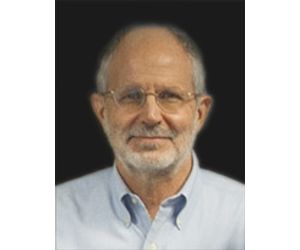
Reinaldo Garcia is a former Research Fellow at the Wessex Institute. He obtained his MSc in Hydraulic Engineering from the Ecole Polytechnique Montreal, Canada and his PhD from the University of Central Venezuela. He is a consultant for the World Bank and the Interamerican Development Bank. Dr Garcia is the creator and leader of the development team of the OilFlow2D and RiverFlow2D flexible mesh models. He has more than 38 years of experience developing and applying models to simulate oil spills, river flow, and hazard assessments. Dr Garcia has worked in hundreds of modelling projects in the USA, and in over 20 other countries in Europe, Asia, and South America, and is considered an international expert in the field.
Dr Garcia has taught more than 50 international courses on environmental modelling worldwide. He lectured at the University of Miami, Florida from 2004 to 2006. In 2006 he was appointed Senior Research Scientist at the Applied Research Centre of Florida International University (FIU). Presently Dr Garcia shares his research activities at the Florida International University Institute of Water and Environment with his model development and consulting at Hydronia USA and Hydronia Europe, private firms that commercialize OilFlow2D and other computer models.
The course does not require previous modelling experience.
This is a hands-on course. To take advantage of the practical sessions it is advisable that participants bring a laptop computer with the following minimum specifications.
- Windows 10 operating system
- 4 GB RAM
- USB port (required for installing software that will be provided)
- Administrative privileges to install the software.
- 1280x1024 or higher screen resolution recommended
- Mouse (recommended)