


Atmospheric dispersion model evaluation methods report published
20 May 2026 — CERC has published a comprehensive study, commissioned by the Atmospheric Dispersion Modelling Liaison Committee (ADMLC), examining the performance evaluation methods used for atmospheric dispersion models. The study surveys 70 evaluation metrics across nine case studies and more than 30 models, and proposes threshold criteria for non-dimensional metrics. The work compares proposed thresholds with established acceptance criteria. Model evaluation calculations were performed using CERC's Model Evaluation Toolkit, with an updated version to be released prior to the workshop.
The full report is available to stakeholders for review and use in regulatory assessment, model validation, and policy-support analyses.
11 May 2026 — A workshop focused on atmospheric dispersion model evaluation metrics and threshold criteria is planned for 11 June 2026 in Harwell, Oxfordshire. The event aims to present proposed threshold criteria, discuss their applicability across modelling contexts, and gather feedback to support potential community adoption. Registration is required; the workshop is targeted at practitioners, researchers and regulators and carries no attendance charge. The workshop agenda and registration details are provided in the notice.
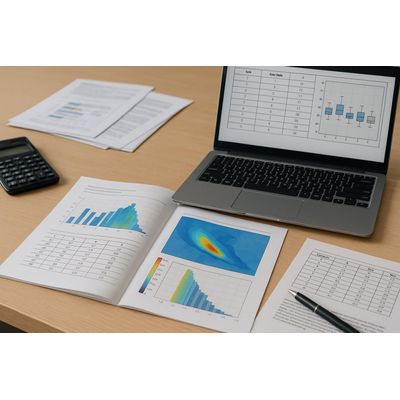
The report includes illustrative figures and tables, such as thresholds for Normalised Absolute Error (NAE), showing interquartile range results, tabulated results, and case studies assessed against established acceptance criteria from the literature.
29 April 2026 — Tribute to Julian Hunt published. Julian Hunt, a founder of CERC and a leading figure in atmospheric dispersion modelling, passed away on 20 April 2026. His contributions include developments in fast environmental models and the Atmospheric Dispersion Modelling System (ADMS), among others. He served as CERC chairman until 2022, and his work significantly shaped contemporary modelling practice.
24 April 2026 — Air Quality Lifecourse Assessment Tool (AQ-LAT) featured in Air Quality News. AQ-LAT links high-resolution air quality modelling outputs with health and economic impact estimates to inform policy development. Developed by the University of Birmingham, with CERC producing high-resolution exposure maps using ADMS-Urban for input data. The approach supports local-scale health and economic impact assessments for policy scenarios in WM-Air and OxonAir projects.
14 April 2026 — HARMO conference papers and other recent co-authored publications. CERC researchers contributed to four peer-reviewed papers in 2025, with an additional 2026 article published, reflecting ongoing collaboration with universities, government bodies and research institutes. Presentations included assessments of thermally driven flows on regulatory dispersion modelling, and comparisons of deposition modelling approaches, including concentration-dependent deposition methods against UK guidance. The extended abstracts and papers are available through HARMO proceedings, with companion work continuing under ongoing collaborations in WM-region projects.
These activities, alongside ongoing development of CERC tools such as ADMS-Urban, the Model Evaluation Toolkit, and related data products, underpin ongoing efforts to standardise and improve model evaluation practices in atmospheric dispersion modelling.
Original: http://www.cerc.co.uk/about-us/news.php?newsitem=455#news455