

Compressed Gas Contamination: Guidelines for Control in Aseptic Manufacturing
Compressed air is often a vital utility in aseptic pharmaceutical manufacturing processes, particularly in environments where it comes into close contact with the final product. To ensure product integrity, it is crucial to control the cleanliness of compressed gas systems. This article outlines essential guidelines for maintaining the purity and quality of compressed gas, focusing on contaminants, monitoring, and preventive maintenance.
Before establishing a compressed air system, it’s important to consider the materials used in construction, the function of subsystems, and design parameters. Identifying potential contaminants is key to determining the compressed air’s purity class. The primary threats to air quality in compressed gas systems include:
- Particles
- Water
- Total Oil
These contaminants must be maintained within regulatory limits. For instance, the FDA mandates that compressed gas purity must meet or exceed the cleanliness of the surrounding environment, while the EU GMP Annex 1 requires specific quality parameters.
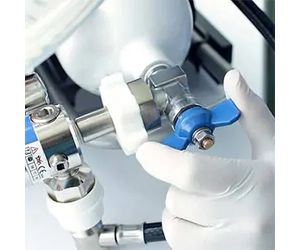
During the qualification phase of a compressed air system, the installation quality must be confirmed. This involves setting limits for particle count, microbial concentration, moisture, and total oil. Properly located and accessible sampling points are essential for ongoing quality control. These points should be strategically identified through a risk analysis to prevent cross-contamination.
Routine monitoring of compressed air systems is vital. The frequency of monitoring should be determined based on risk analysis, ensuring contaminants are detected before they affect product quality. Regular checks and trend analysis can help adjust monitoring frequencies over time.
According to ISO 8573, there are various full-flow or partial-flow (isokinetic) sampling methods to measure contaminants.
All equipment used for sampling must be clean and made from appropriate materials, such as stainless steel, to avoid introducing new contaminants.
Though rare, microbial contamination can occur in compressed gas systems. Regular microbiological sampling helps ensure that potential sources of contamination are identified and mitigated.
At Particle Measuring Systems (PMS), we offer comprehensive support throughout the lifecycle of compressed gas systems, from installation to monitoring. Our services include:
- System Qualification: Verifying cleanliness and free from contaminants.
- Risk Analysis: Identifying potential contaminants and establishing monitoring plans.
- Sampling Equipment: Utilizing tools like the MiniCapt® Mobile Air Sampler and HPD™ High Pressure Diffuser for effective contamination control. The MiniCapt® Mobile Air Sampler allows for viable microbiological measurements, while the HPD™ offers a straightforward solution for particle contamination control.